When heat rises, farmers shift gears: How extreme temperatures are reshaping agricultural input use decisions in West Africa
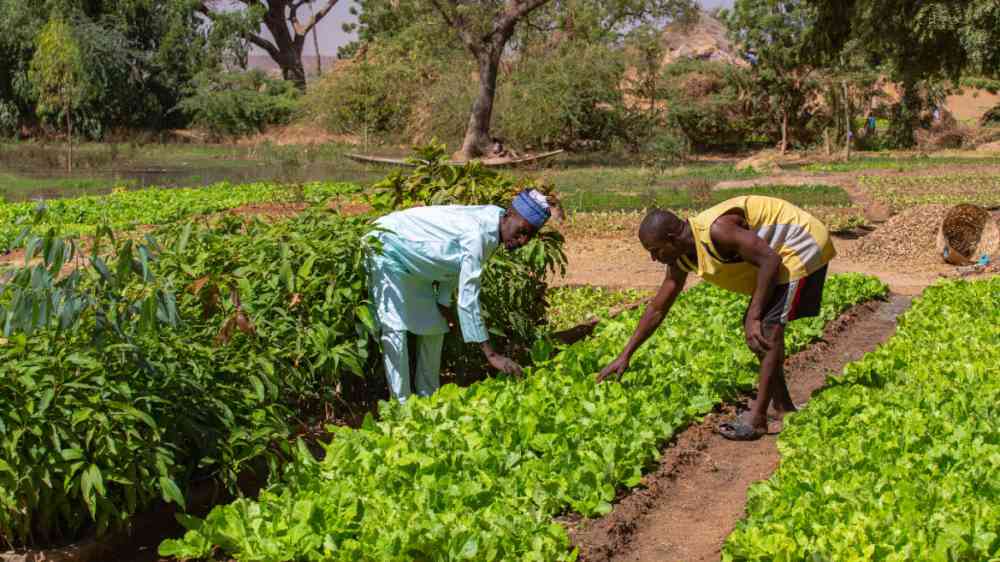
Rising temperatures are no longer a distant threat. They are an immediate, season-by-season reality forcing farmers into difficult trade-offs. A new study of groundnut farming in Ghana, Mali, and Nigeria asks : when temperatures soar, how do farmers change what they put into the ground? The report reveals risks to food security, agricultural productivity, and rural livelihoods, and points to ways to mitigate them.
A tale of two inputs: fertilizers down, pesticides up
Drawing on a household panel dataset of nearly 2,900 farming households tracked across three countries between 2017 and 2019, combined with high-resolution earth observation temperature data, the study identifies a clear and consistent behavioral pattern: under extreme heat defined as cumulative exposure to temperatures above 32°C, farmers systematically shift away from productive inputs like fertilizers (Figure 1) toward defensive inputs such as pesticides, fungicides, and herbicides (Figure 2).
The study documents striking cross-country variation. Nigerian farmers show the sharpest decline in fertilizer use while Malian farmers show the most pronounced increase in pesticide use. Ghanaian farmers, facing lower average heat exposure, show no statistically significant changes, suggesting that the effects are most pronounced where heat stress is most severe. The study also finds that credit, market access, and higher income don't stop farmers from cutting fertilizer use during heat waves, though owning livestock helps lessen this impact.
Why this matters for food security
The shift from productive to defensive inputs may protect individual farmers against total crop failure in the short run. At the aggregate level, however, the implications are troubling. West Africa already has among the lowest fertilizer application rates in the world. Further reductions driven by climate stress could have severe long-term consequences for soil health, crop yields, and food production capacity.
The study also cautions that while reduced fertilizer use might incidentally lower nitrous oxide emissions, this is not a trade-off that makes sense for a region where food insecurity is already acute. For West African smallholders, reduced fertilizer use is a distress response, not a deliberate environmental choice.
Implications for development policy
Four policy implications stand out:
- Fertilizer subsidy programs and extension services need to be redesigned with climate in mind. Blanket subsidies that assume a stable relationship between inputs and yield may miss the farmers who need support most. Targeted, climate-informed guidance on timing and calibrating fertilizer use under heat stress would be more effective.
- The study's findings challenge a core assumption embedded in many flagship agricultural programs: that giving farmers better access to credit, higher incomes, and stronger market connections will translate into greater investment in productive inputs and, ultimately, higher yields. Under conditions of extreme heat, financially empowered farmers reduce fertilizer use too, because the profitability signal says fertilizer is not worth it under heat stress. This does not mean that credit access, income growth, and market integration are misguided goals. Rather, this suggests that these interventions alone are insufficient as climate adaptation strategies. A farmer with a loan and a market buyer will still reduce fertilizer use if temperatures make that investment unprofitable. The missing piece is not liquidity or market access; it is the agronomic and technological conditions that make productive investment worthwhile even under heat stress. Development programs that treat financial inclusion as a proxy for climate resilience risk a false sense of security. Improving income and credit access without simultaneously addressing the agronomic constraints that extreme heat imposes may simply enable farmers to make more commercially rational but climatically maladaptive decisions at greater scale. This has specific implications for how we sequence and bundle interventions. Financial support programs need to be paired explicitly with climate-smart agronomic guidance on input timing, soil moisture management, and heat-tolerant practices so that improved liquidity translates into sustained productive investment rather than a more efficient retreat from it.
- Given significant cross-country variation, uniform solutions will be ineffective. Strategies must be tailored to specific countries and regions, using local data to ensure effectiveness.
- Investment in climate-resilient seed varieties must complement any input support strategy. Varieties that can maintain nutrient uptake and resist disease at higher temperatures would directly address the mechanism driving the shift away from fertilizers and would restore the conditions under which financial inclusion and market integration can genuinely drive productive investment.