By Christopher Flavelle
Last fall, two towns at opposite ends of the country entered a new kind of contest run by the federal government. At stake was their survival: Each is being consumed by the rising ocean, and winning money from Washington would mean the chance to move to higher ground.
On the western edge of Alaska, the remote town of Newtok was losing 50 to 100 feet of coastline each year to sea-level rise and melting permafrost. It was about to lose its drinking water, its school and maybe even its airport. Its 350 or so residents had been trying to move to safety for 20 years; in 2003, they obtained new land, about 10 miles to the south.
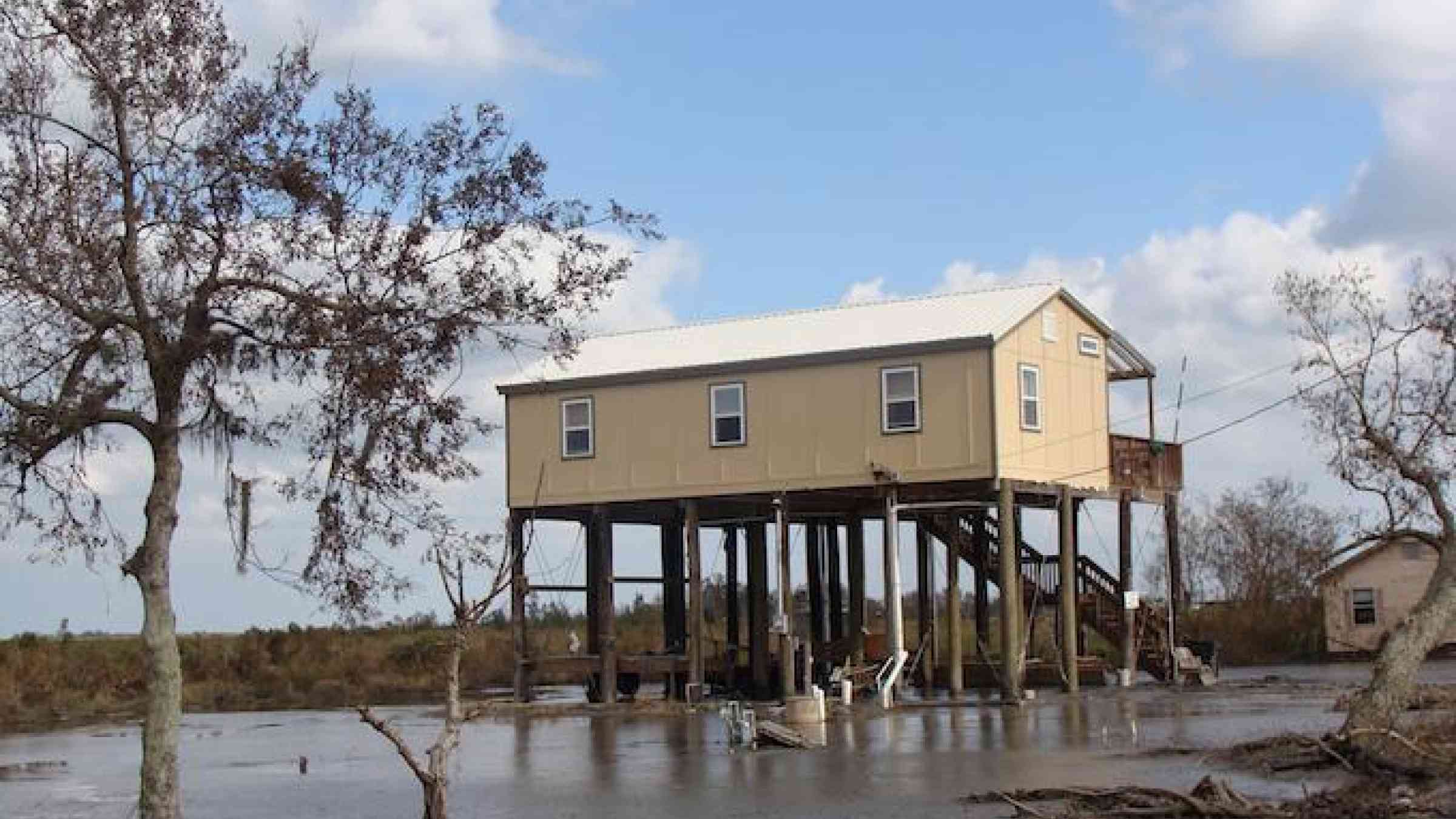
Four thousand miles away on the Louisiana coast, another town, Isle de Jean Charles, was also starting to drown. It was home to just 25 families, some of whom remained ambivalent about relocating. It wasn’t losing land at the rate of Newtok. Its residents didn’t face the same risk of losing access to key facilities. And they had yet to select a new site, let alone secure the rights to it.
In January, the government announced its decision: Isle de Jean Charles would get full funding for a move. Newtok would get nothing.
[...]
The contest, called the National Disaster Resilience Competition, was the first large-scale federal effort to highlight and support local solutions for coping with climate change. It wound up demonstrating something decidedly less upbeat: The federal government is still struggling to figure out which communities should be moved, and when, and how to pay for it.