Three ways to de-risk investments in climate-resilient agriculture
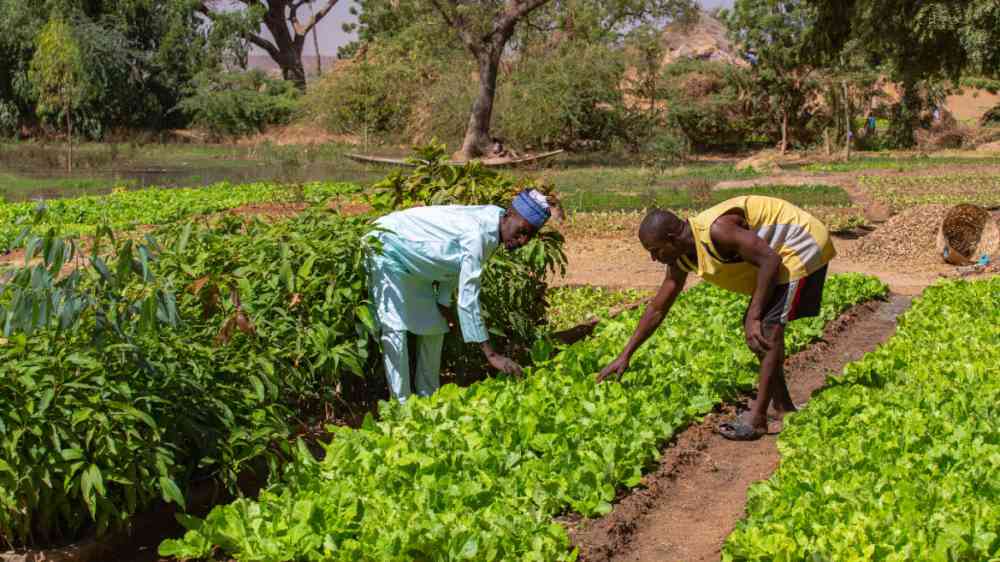
Agriculture is on the frontlines of climate change impacts. Droughts, floods, erratic rainfall and seasonal changes are already affecting crop yields, livestock productivity and rural livelihoods, particularly in developing countries. Many adaptation solutions already exist.
Farmers can become more resilient by practicing conservation agriculture and agroforestry, adopting drought-tolerant crop varieties, improving grazing and soil management, and building more water-efficient irrigation infrastructure. Yet, investment in these solutions is lacking.
Private investment in climate-resilient agriculture is often constrained by real and perceived risks . For farmers, adopting new practices can require significant upfront costs, while the benefits may take years to materialize or could be wiped out by a single failed rainy season. For lenders and investors, agricultural markets can appear too unpredictable. With weather patterns changing, supply chains may be fragmented, and there is often limited data to help assess climate risks or estimate returns.
To be able to attract investments in climate-resilient agriculture , we need to de-risk them, reducing the barriers and uncertainties that discourage investment and creating confidence in long-term returns. Derisking can take many forms. Governments can provide incentives that lower costs for farmers, insurance products can help absorb climate shocks, better weather and risk data can strengthen decision-making, and certification systems can help producers access premium markets. Together, these measures can make climate-resilient agriculture more viable, affordable and attractive to investors.
Drawing from our work under the UNDP-FAO SCALA programme , here are three practical approaches for de-risking climate-resilient agriculture.
1. Create policy incentives that reduce uncertainty
When policy frameworks are unclear, or when incentives shift unpredictably, private actors tend to hold back from investments in climate resilience. This is not because they are uninterested, but rather because risks can seem to outweigh the expected returns when the policy environment is uncertain.
Well-designed policy incentives can help change that calculation. They provide clarity on government priorities and signal the long-term direction of the sector. Subsidies, tax incentives, results-based payments or other forms of targeted support can help offset the costs and risks associated with adopting climate-resilient practices. They can also establish institutional responsibilities, so that farmers, agribusinesses and investors know who to engage with, what rules apply and how support can be accessed.
In Ethiopia, the SCALA programme is supporting the development of a framework for a national financing mechanism for climate-smart agriculture . Established under the Ministry of Agriculture, this mechanism would create a dedicated fund that employs a results-based financing approach to advance climate-smart agriculture practices.
The proposed framework also relies on the use of incentives, such as results-based payments, input vouchers, credit guarantees and insurance premium support, to address some of the financial barriers that can prevent farmers and other actors across agricultural value chains from adopting more resilient practices.
By providing an effective incentive framework, Ethiopia aims to turn climate-resilient agriculture from a public priority into an investment proposition with clear rules of engagement for private actors.
2. Use insurance to manage climate risks that markets cannot absorb alone
Physical climate risks are one of the biggest deterrents to investment in agricultural value chains. A farmer may want to invest in improved seeds, irrigation or climate-adapted crop varieties, but hesitate if one drought or flood could wipe out an entire season’s income. Banks and lenders face similar concerns. If climate shocks make harvests too unpredictable, agricultural lending can appear too risky.
Insurance is not a substitute for adaptation. It will not stop droughts, floods or extreme heat. But it can help farmers and businesses recover more quickly after disasters, protect investments and create greater confidence to invest in the first place.
Weather-index insurance can be particularly relevant for agriculture more exposed to climate change impacts. Unlike traditional agricultural insurance, which often requires individual farm inspections to assess damage, weather-index insurance triggers payouts automatically when a specific weather condition is reached, such as rainfall dropping below a certain level or temperatures exceeding a threshold. This can make insurance faster, less expensive to administer, and therefore easier to scale across remote rural areas.
But insurance only works as a de-risking tool if the foundations are in place. It requires reliable weather data, appropriate product design, affordable premiums, trusted delivery channels and clear rules for how claims are triggered and settled. If the index does not reflect farmers’ actual losses or if farmers do not understand and trust the product, insurance can quickly lose credibility.
In Nepal, weather-based index insurance was piloted for apple farmers in the Karnali Province. The pilot used rainfall parameters to trigger payouts, aiming for faster and more transparent compensation without individual farm inspections. Participation grew from a few hundred insured farmers in the first year to more than 7,000 in 2024. But the pilot faced challenges with delivering payments in a timely way. It eventually lost trust with the farmers and was halted in 2025.
In this context, the SCALA programme developed a de-risking strategy for index insurance in Nepal , proposing several steps to strengthen the wider system around insurance. These include improving weather and hydrological data, providing clearer regulatory arrangements, initiating zone-specific pilots, implementing stronger grievance mechanisms, building farmer awareness, and reinforcing trust among farmers, insurers, cooperatives and public institutions.
3. Turn resilience into market value
Climate-resilient agriculture practices become more investable when they are connected to market signals that create tangible value, for instance a certification, a standard, a buyer requirement, a traceability system, or a financial product that rewards stronger environmental performance. Without such incentives, resilience measures may be perceived simply as additional costs to farmers. When the market recognizes and rewards them, however, they can become a pathway to market access, price differentiation or preferential finance.
This is becoming increasingly important as sustainability requirements in global value chains continue to rise. Producers who can demonstrate compliance with credible environmental and climate-related standards may be better positioned to retain buyers, access higher-value markets or secure finance. But meeting these standards often requires upfront investment, and many smallholder producers face practical barriers, including limited technical capacity, weak traceability systems and difficulty accessing finance.
In Costa Rica, the SCALA programme helped develop a deforestation-free beef certification standard together with the National Livestock Corporation (CORFOGA), which was integrated into the International Trade Centre’s Standards Map, increasing its visibility to producers, buyers and other market actors.
This certification showed how market-facing standards can do more than verify performance. They can help structure the conversation between producers, buyers and financiers by making the costs, benefits and gaps more visible. When a producer can point to a recognized standard and a credible pathway to compliance, the investment case becomes easier to articulate, both for the producer seeking finance and for the lender or buyer assessing and managing risk.
What these three approaches teach us is that de-risking needs to be systemic. No single instrument will make climate-resilient agriculture investable on its own. Policy incentives reduce uncertainty, but do not eliminate weather risk. Insurance can help manage weather risk, but depends on data infrastructure, regulation and trust. Certification can create market signals, but producers still need the technical and financial capacity to respond.
These approaches work together, not in isolation.
Because de-risking is not a technical fix. It is a process of building the conditions, piece by piece, that allow private actors to participate in climate-resilient agriculture. Investments will not flow simply because the need is urgent. It will flow where risks are better understood, incentives are clearer, and investment opportunities are deliberately built, sequenced and sustained over time.
By linking insurance to reliable data, strong institutions, clear rules and the real needs of farmers and value chain actors, this work shows how insurance can be used to manage climate risks that markets alone cannot absorb.