Preparing better for monsoons: Lessons from the 2025 flash floods in Pakistan
Story highlights:
1. Early warning systems must be strengthened as a value chain: from risk knowledge, monitoring and analysis, forecasting, communication, warning dissemination, to response action. Community networks, including mosques and neighborhood connections, are a critical last-mile link.
2. Disasters hit hardest where inequality already exists. Hiring and retaining women as responders and staff is not optional – it is the only way to effectively reach half the population at a time of crisis, particularly where gender gaps in mobility, communication access, and public presence are already severe.
3. Shortage of heavy machinery required for rapid debris removal is often a significant obstacle to reaching affected communities – in a mountainous terrain such as Khyber Pakhtunkhwa province, mapping and pre-positioning of such machinery is essential.
On August 15, 2025, 150 millimeters of rain fell on Buner district in a single hour. Water, boulders, and debris cascaded down mountain slopes into valleys below, devastating homes and roads in minutes. In one hour, the sky had delivered nearly 15 percent of the district's entire annual rainfall.
“It was normal raining with no signs of the disaster it would cause. The cloudburst did not give us time to plan,” a district official in Khyber Pakhtunkhwa, Pakistan, recounted.
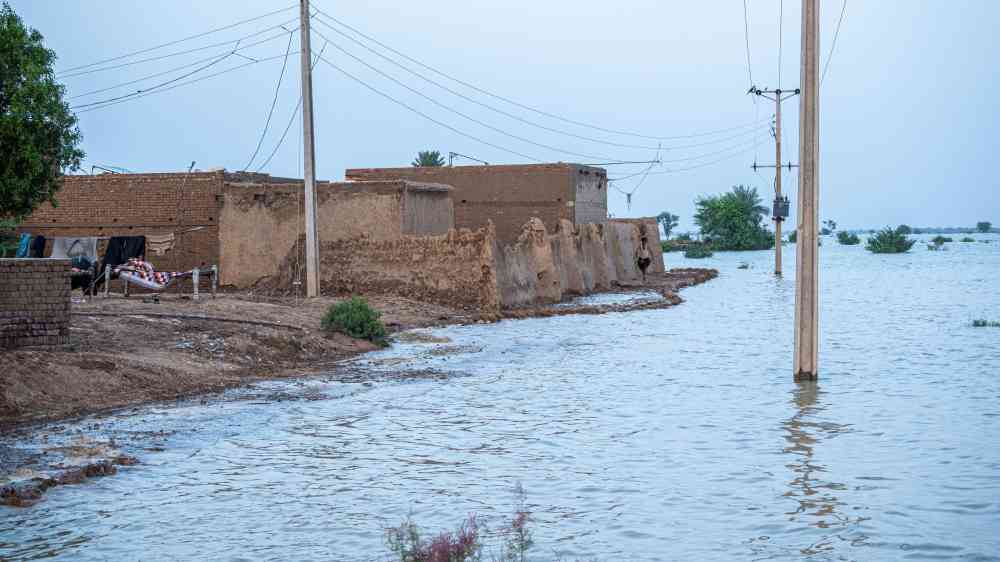
Within days, torrential rainfall in the region's steep terrain triggered flash flooding across districts, destroying homes, infrastructure, and livelihoods. The death toll was unprecedented, with 509 lives lost – even surpassing the historic 2022 floods.
Pakistan is no stranger to monsoon floods, but the 2025 flash floods were different. The sudden and extraordinary volume of water in a very short period gave people almost no time to act. And for most, no warning ever came.
An upcoming report, “The Last Mile and the First Hours: Lessons & Recommendations from the 2025 Flash Floods in Khyber Pakhtunkhwa,” a joint initiative of the Government of Khyber Pakhtunkhwa and the World Bank Group, captures major lessons from this emergency to inform future policy, investment, and institutional reform.
The silence before the flood
A survey of 1,207 households across three severely affected districts (Buner, Shangla, and Swat) revealed that 85 percent of families received no warning before the flood waters arrived. For those that did, half had less than thirty minutes to act.
A resident reflects, “My father received a call from relatives regarding a fast approaching and violent flood towards our area, but it only gave us a couple of minutes.”
The most effective early warning technology was a man with a microphone.
In one village, the early warning came via a phone call from a local government official to a mosque imam. He rushed to his loudspeaker and warned the community. His actions saved lives.
In fact, most households in the survey received early warnings through traditional community channels – mosque announcements, phone calls from families, and door-to-door alerts by neighbors.
The unexpected risk
In the household survey, 85 percent of respondents did not believe their village was at risk of flooding- yet 56 percent confirmed their village had flooded in earlier years. Flood risk was perceived as a series of isolated accidents rather than a persistent condition of exposure.
This is a systemic gap. Currently, multi-hazard vulnerability and risk assessments (MHVRAs) exist for only three of Khyber Pakhtunkhwa’s 36 districts. Emergency preparedness planning in Khyber Pakhtunkhwa has also focused largely on riverine flooding, while flash flooding in mountain terrain is faster, more localized, and harder to predict. In the 2025 flash floods, mountainous districts – with limited experience of large-scale riverine flooding on record – fell into that blind spot.
Rescuers walking through debris for hours
Of the 44 percent of families – 530 households – who reported needing rescue services, 95.5 percent said rescue services never reached them.
Roads and paths were blocked by debris. Rescue officials describe traveling on foot for four hours to reach a destination that usually takes less than an hour. Equipment was scarce. "We were forced to stop because we couldn't see anything. No searchlights were available,” a Rescue 1122 official recalled.
The shortage of heavy machinery was acute. Earthmoving equipment, the kind needed to clear a blocked road or reach a trapped community, was not available in sufficient quantity.
In Shangla district, when 100 people were trapped by floodwaters, a volunteer hired a commercial crane to lift them to safety. Elsewhere, rescuers and communities worked together, using shovels and smaller equipment that communities could salvage.
Half the population, 1.8 percent of the rescue service
Pakistan has the widest mobile phone ownership gender gap of the 14 low- and middle-income countries surveyed by the Global System for Mobile Communications Association (GSMA). Nationally, 93 percent of men own mobile phones against 68 percent of women. In Khyber Pakhtunkhwa, female literacy stands at 37.1 percent against 64.5 percent for men. These are not background statistics; they are the underlying conditions that shape disaster vulnerabilities.
In 51 percent of warned households, women heard of the floods second-hand through a male family member. Women rescuers comprised only 1.8 percent of Rescue 1122, Khyber Pakhtunkhwa's primary emergency service.
This creates structural gaps in who can access relief and grievance systems, and who cannot.
One woman described, “A man can stand in a crowd and ask for a blanket; a woman thinks ten times before asking for pads, underwear, medicine, or a private place to sit.”
A local councilor pointed to the need for dedicated channels for women and vulnerable groups to safely raise issues, given their constrained access to public spaces and to male officials.
Building better systems
Key recommendations emerged for improving Khyber Pakhtunkhwa’s emergency preparedness and response:
Strengthening early warnings to reach people
The imam's loudspeaker saved lives because it was trusted, local, and immediate.To strengthen this last-mile delivery, the upcoming report emphasizes that investment is needed across the whole early warning chain. Khyber Pakhtunkhwa's observation network needs to expand across complex terrain to capture the localized rainfall patterns that triggered the 2025 floods. Provincial and federal departments also need the technical capacity to monitor, model, and forecast floods. These roles and responsibilities for monitoring and forecasting need to be clearly defined between departments. Finally, community-based networks, including mosque announcements and trusted local figures, should be formally integrated into that chain, not treated as a last resort.
Understanding risk before the next flood
Better understanding flood risks requires completing MHVRAs for all 36 districts in Khyber Pakhtunkhwa.A broader flood risk management plan for the province is also needed that establishes a quantified, spatially explicit understanding of flood risk exposure and drivers of such risks across Khyber Pakhtunkhwa under current conditions and climate change scenarios, and to translate such understanding into a prioritized, costed, and investment-ready program. The upcoming report also stresses that while legal frameworks for risk-informed planning largely exist, they need to be enforced. The risks need to be communicated to local level governments and their residents in an easily accessible manner. In the survey, more than half of affected households confirmed their village had flooded before, yet most did not believe they were at risk.
Equipping responders before the emergency
A province-wide inventory of rescue equipment and facilities is needed to understand gaps.Standing agreements with private heavy machinery vendors will help mobilize non-business as usual equipment in an efficient manner. Formalized incident command structures for emergencies agreed in advance, practiced in annual exercises involving communities and government departments, can support better coordination on the ground. The upcoming report also proposes relief warehouses in each of Khyber Pakhtunkhwa's seven administrative divisions, district emergency operations centers, and pre-mapped shelter sites to support future emergency response.
Making response work for everyone
Recruiting, training, and retaining women staff in the rescue service is an operational necessity.The upcoming report makes recommendations to strengthen inclusive emergency response. Women health workers, teachers, community organizations, and female NGO staff should be formally recognized as channels for early warning dissemination and emergency relief – with due consideration of gender segregation norms that may make direct information relaying difficult. Governance and communication channels for religious minorities should be similarly integrated, with community leaders and minority councilors recognized as critical links. Community-level records and mapping of vulnerable people including women-headed households, persons with disabilities, and the elderly, should be maintained and consolidated at the tehsil level so that inclusive response is planned in advance, not improvised under pressure.
Looking forward
The upcoming World Bank report informs the design of future investments, analyzes opportunities and gaps, and provides detailed recommendations and actions on the way forward for Khyber Pakhtunkhwa province. The real measure of impact will be whether, the next time there is a cloudburst on a mountain valley, we do not rely on one man rushing to a microphone – but rather, an emergency and preparedness system in place.