1. Home
  2. Knowledge Base | PreventionWeb

DRR Community Voices

The DRR Community Voices share personal stories and perspectives from the disaster risk reduction trenches on reducing risk and building resilience.

  • Our posts from both practitioners and academics reach a global audience and can influence policy, practices and approaches.
  • We invite you to propose your own blog and submit it for review.

Republishing guidelines

  • Please contact us if you wish to republish a blog article.
  • Most articles can be republished under CC BY-NC-SA 3.0 IGO Deed.
  • You must give appropriate credit, provide a link to the license, and indicate if changes were made.
  • You may not use the material for commercial purposes.
Uploaded on
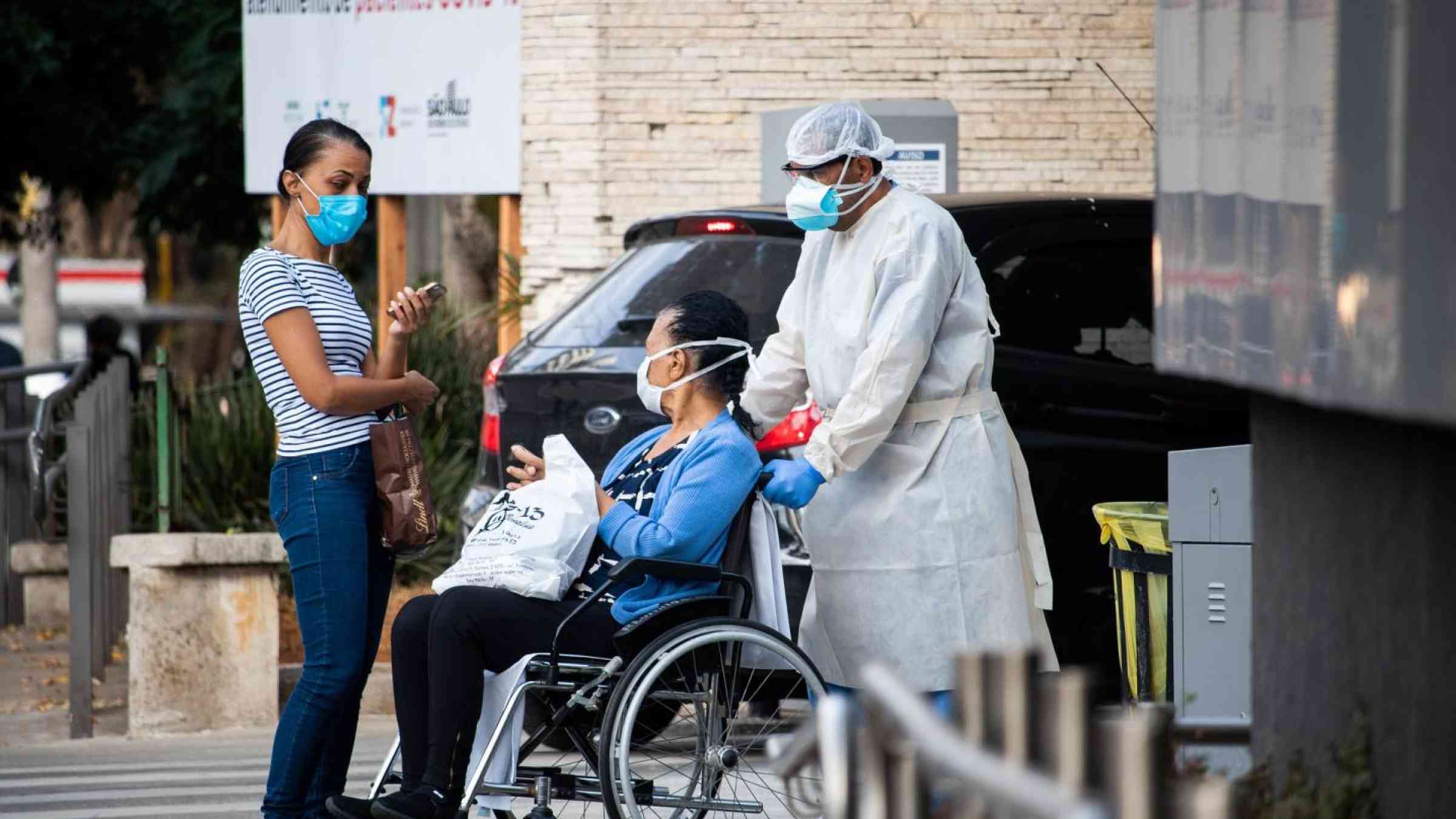
Picture of three people, a patient in a wheelchair, a doctor and one more person exiting a hospital.
Sapana Basnet Bista, PhD Researcher/Research Associate, Liverpool John Moores University
Risk communication should aim to ease feelings of fear and panic among the affected population, not exacerbate them.
SasaStock/Shutterstock
Aaron Clark-Ginsberg, RAND Corporation

Authors: Aaron Clark-Ginsberga and Sonny S. Patelb,c

Impact assessments of the novel coronavirus outbreak (COVID-19) tend focus on how COVID-19

Opsorman/Shutterstock
Torill Tandberg

The COVID-19 pandemic is a stark reminder that borders cannot stop disasters. Viruses, ash clouds, radiation and chemical spills do not need passports

Shutterstock
Veronica Collins, European Institute for Gender Equality, The

The covid-19 crisis is an opportunity for governments to put in place lasting structures that protect women from violence.

As covid-19 has spread

fotogestoeber/Shutterstock
Costis Toregas, George Washington University

In recent weeks, stay-home COVID-19 mandates have pushed crowds of people to work from home, often for the first time. Workers have turned to

Ollyy/Shutterstock
Daniel Aldrich, Northeastern University

As I write this, the novel coronavirus has infected more than 1,400,000 people and killed 75,000 across the world. While many governments are seeking

Michelle Patrick/Shutterstock
Dickie Whitaker

The Lighthill Risk Network recently published two reports on developing scenarios, one for the insurance industry and one for the DRR community. Co

Engineer studio/Shutterstock
Kerry Bowman, University of Toronto
We must pay attention to the root causes of zoonotic diseases. The more we change the environment, the more likely we are to disrupt ecosystems and provide opportunities for diseases to emerge.