1. Home
  2. Knowledge Base | PreventionWeb
  3. Hazards

Landslide

Landslide is the downslope movement of soil, rock and organic materials under the effects of gravity, which occurs when the gravitational driving forces exceed the frictional resistance of the material resisting on the slope. Landslides could be terrestrial or submarine (Varnes, 1978).

Landslides can be triggered by geological and physical causes such as glacier or snow melts, heavy rains and water pressure, earthquakes, volcanic eruptions and overly steep slopes. Landslides can also be triggered by human action, the most common being building on unstable slopes. Submarine landslides, or massive slides and rock falls hitting the sea can also cause tsunamis.

Landslides can reach speeds of over 50 km/h and can bury, crush or carry away people, objects and buildings. Landslides cannot be predicted but warning systems measuring rainfall levels can provide warning to people living in landslide-prone areas.

Instrumental monitoring to detect movement and the rate of movement can be implemented, for example, extensometers, global positioning system (GPS), seismometers, aerial photography, satellite images, LiDaR (Highland and Bobrowsky, 2008), with varying degrees of success. Increasingly, the science of landslide physics is allowing the nature of these hazards to be understood, which is leading to better techniques through which they can be managed and mitigated (HIP).

Risk factors

  • Population growth
  • Rapid urbanisation
  • Environmental degradation (deforestation and inappropriate use of lands and slopes)
  • High population density, heavy rainfall and rapid land use changes increase the instability of slopes

Risk reduction measures

  • Early warning systems to observe and alert before landslides happen
  • Hazard maps to identify landslides risk and vulnerabilities
  • Integrate landslide risk assessment into urban planning strategies
  • Building codes and standards for materials that reinforce landslide resilience
  • Improve drainage, building tunnels and trenches to stabilise slopes
  • Protect forest cover and regulate logging
  • Raise awareness of landslide risk
  • Regular drills and community evacuation exercises
  • Establish national, regional, and local evacuation plans

Latest Land Slide additions in the Knowledge Base

Uploaded on
Update

The convergence of peak tourist seasons and monsoon hazards is causing dangerous ‘temporal compression’ in the Himalayas — intensifying ecological stress, amplifying disaster risks, and exposing the urgent need for climate-sensitive tourism.

Observer Research Foundation
Extreme natural events and bridge collapses: statistical insights in Italy thumbnail
Documents and publications

This study investigates bridge collapses and severe damage events in Italy over the last three decades, focusing on the role of natural hazards under changing climatic conditions.

International Journal of Disaster Risk Reduction (Elsevier)
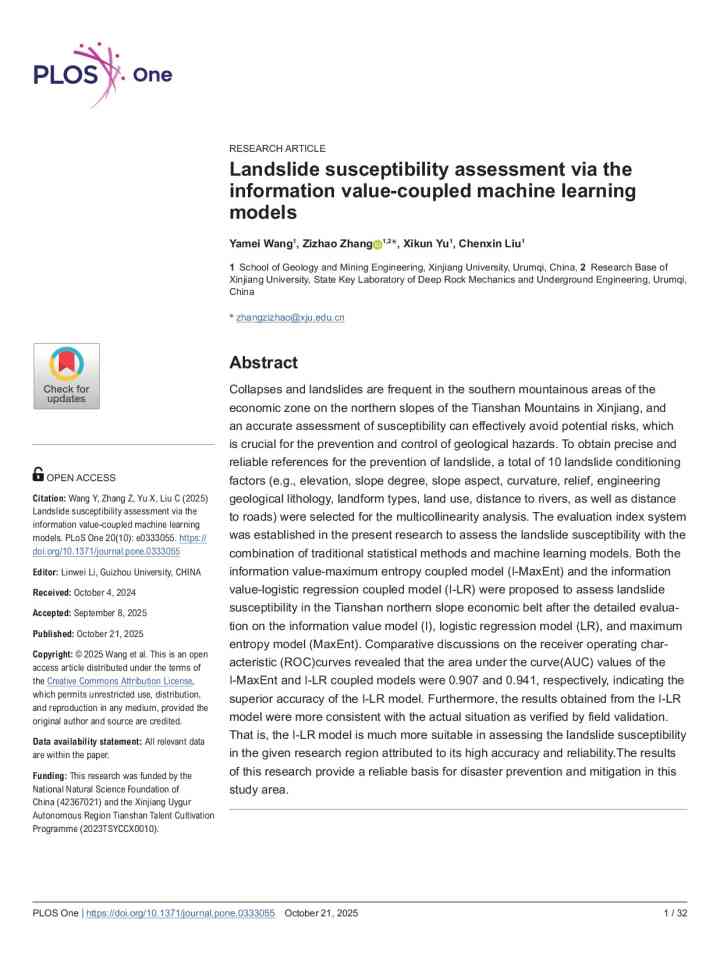
Landslide susceptibility assessment via the information value-coupled machine learning models thumbnail
Documents and publications

This study sought to obtain precise and reliable references for the prevention of landslide, and a total of 10 landslide conditioning factors were selected for multicollinearity analysis.

PLOS ONE
Case study
Location: Bosnia and Herzegovina
This case study examines the impacts of flooding on the 2024 Bosnian and Herzegovinian municipal elections.
  • International Institute for Democracy and Electoral Assistance (IDEA)
Group of school children in Sri Lanka
Update

In the wake of disasters, the emotional and psychological toll on affected communities can be profound, and the situation demands a holistic approach that encompasses both physical and psychological care.

Connecting Business initiative
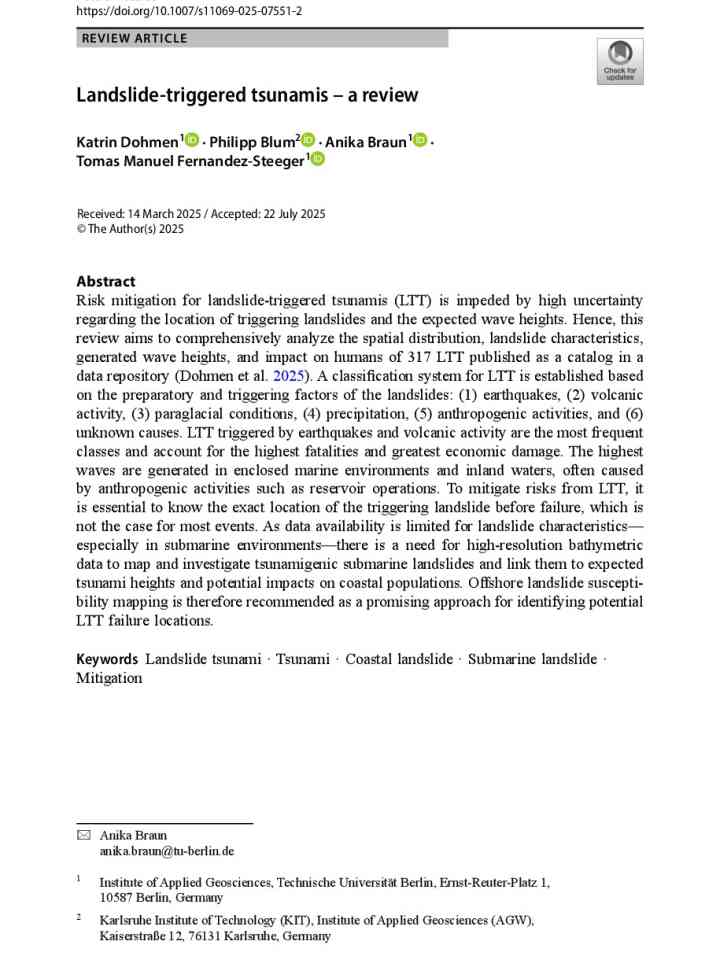
Landslide-triggered tsunamis – a review thumbnail
Documents and publications

This review aims to comprehensively analyze the spatial distribution, landslide characteristics, generated wave heights, and impact on humans of 317 landslide-triggered tsunamis (LTT) published as a catalog in a data repository.

Natural Hazards (Springer)
Repairs to an active landslide site on U.S. Route 101 in 2021
Update

Australia has one of the world’s longest road networks. It was hard and expensive enough to maintain this network before climate change began causing havoc. Now, climate change is a major cause of their accelerated deterioration.

Conversation Media Group, the
UK-Indonesia partnerships for advancing geohazard science for disaster risk assessment in Indonesia thumbnail
Documents and publications

This report, co-developed by Indonesian and United Kingdom (UK) multi-disciplinary hazard experts and disaster managers, presents a strategic roadmap to significantly reducing the impacts of geohazards in Indonesia by 2035.

British Geological Survey
Uploaded on