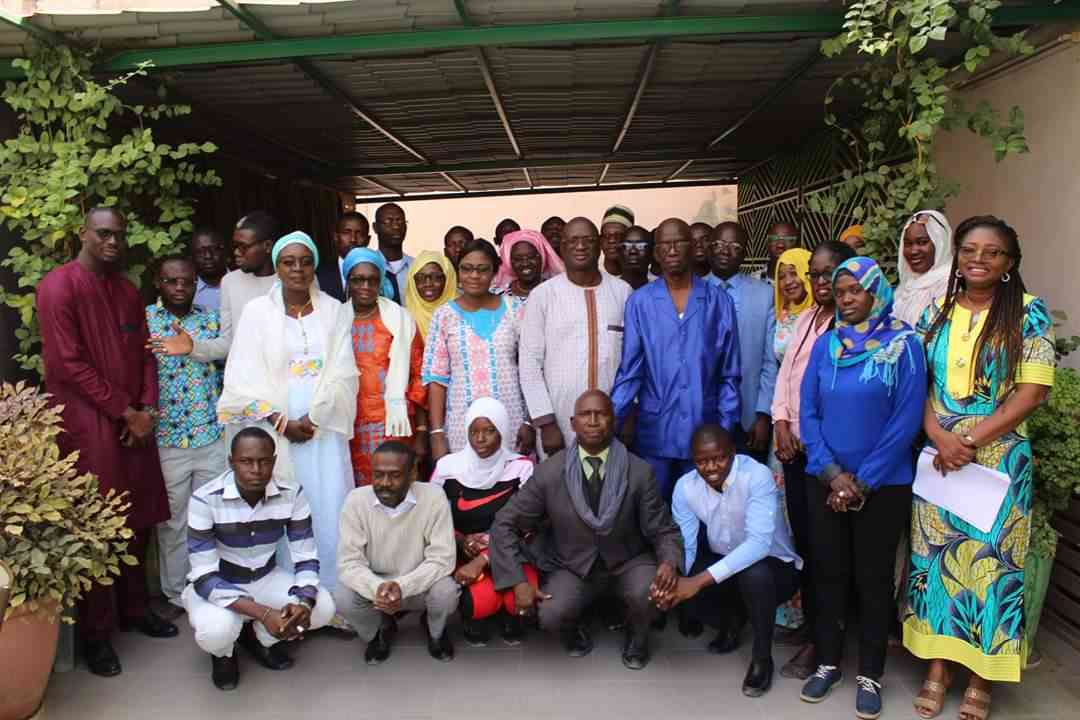
Agora30 for the resilience of Senegal
A platform of stakeholders working on resilience in Senegal has been set up. The objective of the Agora 30 of Resilience is to promote the synergy of initiatives for building resilience to climate extremes and other disasters.
Description
The objective of the platform Agora 30 of Resilience is to promote the synergy of initiatives for building resilience to climate extremes and other disasters. The specific objectives are:
- Conduct research initiatives to generate knowledge and evidence on building resilience to climate change and disasters;
- Building stakeholder capacity on resilience,
- Mutualize the results of initiatives on building resilience to climate change and disasters;
- Capitalize research findings on disaster resilience;
- Promote climate change resilience experiences and best practices;
- Influence policies to build resilience to climate change and disasters;
- Ensure access to information and understanding to improve disaster resilience.
For this, we organize some training and workshops for Agora 30 members. All this information could be found in the Activities' Report 2016 -2018 (French version available). Enda Energie, IED Afrique/ project Decentralizing climate Funds (DCF) and CRES/ project living with water also organized a workshop in March 2018 to share lessons learned in the Building Resilience and Adaptation to Climate Extremes and Disasters (BRACED) Programme. This workshop gathered around 200 participants including members of Agora30 for the resilience of Senegal.
A new work plan has been validating on Thursday 14 March 2019. The work plan is available and the draft, report of the validation workshop. All partners are welcomed to co-organized some activities with Agora30. Please have a look in the work plan 2019.
Did the Sendai Framework change or contribute to changes in your activities/organization? If so, how?
Sendai Framework contribute to changes in our activities/ organization. Because we run project in resilience like Building Resilience and Adaptation to Climate Extremes and Disasters (BRACED). This project contribute to Sendai Framework priorities. The programme give us the opportunities to have a better understanding of the framework. Enda Energie as a member of the Knowledge Management consortium was fully engaged in promoting knowledge base-evidence on resilience issue and working to get this knowledge to be used.
We develop partnership to share knowledge. That's why in April 2016 Enda Energie received the mandate from actors working on resilience to propose a structure of the platform Agora 30 for the resilience of Senegal.
What led you to make this commitment/initiative?
What was your position before making this Voluntary Commitment / prior to the Sendai Framework?
Members of the platform realized that Agora 30 could serve as an Observatory to ensure the Monitoring and Evaluation (M&E) of projects with analysis of socio-economic and environmental impacts, institutional, etc. It could include the capitalisation of good practices (identifying observed changes).
The institutions members of Agora 30 increased from 2016 to 2019. It starts with around 20 members to around 40 members.
Deliverables and Progress report
Deliverables
Deliverables are the end-products of the initiative/commitment, which can include issuance of publications or knowledge products, outcomes of workshops, training programs, videos, links, photographs, etc.
Porgress report
Agora 30 de la résilience du Sénégal frequently organizes face to face meetings. At those meetings, our platform facilitates several capacity building sessions for our members. The health and other challenges posed by the COVID-19 pandemic have affected the pace of achievement for physical meetings and taking important decisions. Nevertheless, we made progress with some activities, the presence of Agora 30 internationally and developing additional perspectives.
Achievements were reached mainly on three levels. First, there was progress with our usual activities. For example, we continued to share information and capacity development support through digital means (email, WhatsApp, Zoom, etc.) as preparations for physical meetings (when sanitary conditions allow) and the elaboration of the annual action plan. Second, we contributed to the IUCN World Conservation Congress (Marseille, France) by organizing a session on indigenous knowledge linked to nature-based solutions for DRR and Climate Change, among others. Third, we continue building future perspectives on the action plan, fundraising, membership, and resilience.
Organizations and focal points
Implementing Organization(s)
Focal points