Early detection, stronger protection: CLIMOS’ early warning systems and the fight against Sand Fly-Borne Diseases (SFBD)
The CLIMOS project, aims to reduce the impact of climate change on the spread of vector-borne and zoonotic diseases, using Eco-health and One Health approaches.
The project focuses on understanding how climate and environmental factors affect sand fly presence and density to assist fight against sand fly-borne diseases (SFBD), including leishmaniasis and phlebovirus infections across Europe. By developing an Early Warning System (EWS) and decision support tools, CLIMOS will help improve climate and health predictions, infection risk forecasts, and adaptation strategies. The project will include a socio-economic analysis to guide decision-making.
CLIMOS data results links climate change to shifts in sand fly distribution, escalating leishmaniasis concerns
When we think of arthropods carrying infectious diseases, mosquitoes and ticks often come to mind. However, there's a third vector that's relatively unfamiliar but equally relevant: sand flies.
Sand flies are tiny, hairy-winged insects that belong to the Phlebotominae subfamily. They can be found in warm and tropical climates worldwide. However, the impact of climate change is dramatically altering their geographical landscape reaching into new regions of Europe. Often active during twilight hours, female sand flies feed on blood predominantly from mammals, facilitating the transmission of viruses and parasites. These pathogens cause diseases including summer meningitis and leishmaniasis that can affect both humans and animals.
Leishmaniasis is classified as a neglected tropical disease by the World Health Organization. However, there is an estimated 700,000 to 1 million new cases annually. Leishmaniasis can lead to severe health issues and, in some cases fatality if not treated. CLIMOS's mission is to raise awareness of the sand fly, the diseases they transmit, and how to prevent their spread.
The results on sand fly collection
Sand fly specimens collection throughout 2023 season, has been completed for most countries, with pathogen detection efforts now underway. These findings will be integrated into the Early Warning System (EWS) dataset. By correlating sand fly presence and density with variables like temperature, humidity, or altitude, we aim to enhance our predictive models. The ultimate goal of CLIMOS is to deliver a comprehensive platform for public health management and to develop prevention and adaptation strategies for sand fly-borne diseases.
Almost all partners processed the sand fly specimens collected during the first season. Of the more than 35,000 specimens processed, around 93% were identified to the species or subgenus level.
A total of 19 sand fly taxa, belonging to seven subgenera, have been identified so far. Most of the specimens were found to be members of the Larroussius subgenus. Among them, Ph. perniciosus, Ph. perfiliewi, and Ph. tobbi comprised the majority of the catches. Partners have begun screening pools of sand flies for disease-causing agents, including the ongoing identification of blood meals in engorged females.
On the pathogen detection front, the screening for Leishmania has already been completed in Austria, Croatia, Germany, Italy, and Slovenia. Likewise, Phlebovirus analysis was completed in Austria, Croatia, Corsica, Germany, and Slovenia specimens.
Manuscripts on the vector competence of Ph. perniciosus and Ph. tobbi for Leishmania species are under review, while new research study on Sergentomyia minuta is in preparation. Additionally, the design of a new semiochemical-sticky trap for sand flies has been finalized, while the development of a prototype traping device featuring a camera and battery pack is in progress. These innovations promise to significantly enhance sand fly monitoring and control efforts in affected regions that could be expanded to other vector's control.
Research of recombinant salivary antigens as markers of exposure to sand flies is being conducted, which will be used to estimate exposure in both dogs and humans, providing critical information for disease risk assessments.
CLIMOS Early Warning System (EWS)
The CLIMOS project is developing an EWS platform to help veterinarians, public health authorities, and the general public to monitor sand fly presence and density. It provides predictive insights on where these vectors are most likely to appear by analyzing climate, temperature, and altitude data. CLIMOS EWS helps stakeholders take proactive measures to mitigate disease risks.
CLIMOS is preparing different co-creation workshops that will soon be launched across nine countries to gather local stakeholders' inputs on how best to implement the EWS for sand fly-borne diseases, ensuring that the system meets the needs of public health authorities, veterinarians, and other local communities.
Five specific aims:
- To develop CLIMOS frameworks for prediction, fast screening, economic assessment, decision support, and sand fly surveillance, based on the ecosystem diversity, stakeholder needs and requirements.
- To conduct data collection from cross-laboratory field studies in 10 (ten) countries, perform qualitative data collection, data analysis, and risk assessments, as inputs to policymaking and communication activities.
- To develop decision support models for assessment of SFBD-related health and socio-economic vulnerabilities and to provide better quantification of SFBD-related losses, cumulative effects of climate measures, and climate change on SFBDs development and spread.
- To systematically validate developed models, tools, and surveillance system, in 10 (ten) countries, using a proposed general public risk assessment method for policy-relevant usage.
To implement a comprehensive scientific and public dissemination policy and outreach programme to communicate project results to a broad audience; to standardize vector and pathogen surveillance sampling and identification; and to maximise big data ontologies.
CLIMOS Consortium
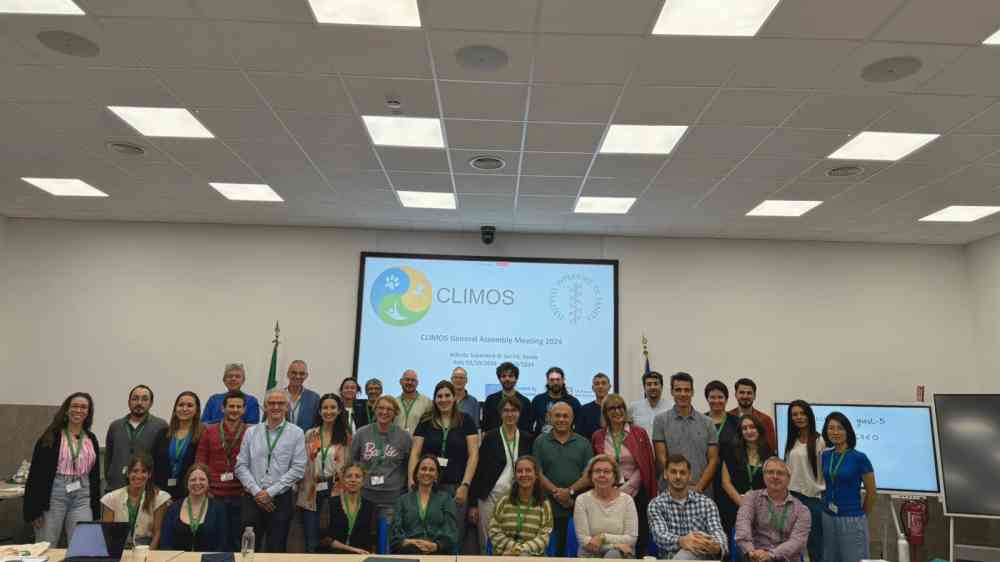
CLIMOS brings together researchers, healthcare and veterinary practitioners, technology platform designers and at-risk communities, from 29 entities from 16 different countries.
- Universidade Nova De Lisboa (UNL);
- Istituto Superiore Di Sanita (ISS);
- Univerzita Karlova (CUNI);
- Wageningen University (WU);
- Institut Za Medicinska Istraživanja (IMR);
- Karlsruher Institut Fuer Technologie (KIT);
- Univerza Na Primorskem Universita Del Litorale (UP);
- Universidad De Murcia (UM);
- Helmholtz-Zentrum Fur Umweltforschung Gmbh (UFZ);
- Ege University (EGE);
- Privredno Drustvo Zentrix Lab Drustvo Sa Ogranicenomodgovornoscu Pancevo (ZENTRIX LAB);
- University of Haifa (UH);
- F6S Network Ireland Limited (F6S);
- Institut National De La Sante Et De La Recherche Medicale (INSERM);
- Hacettepe Universitesi (HACETTEPE);
- Trilateral Research Limited (TRI IE);
- Universite De Reims Champagne-Ardenne (URCA);
- Erevnitiko Panepistimiako Institouto Tilepikononiakonsystimaton (TSI);
- Ministry of Health (CSO-MOH);
- Predictia Intelligent Data Solutions Sl (PREDICTIA);
- Ministero Della Salute (MoH, Italy);
- Medizinische Universitaet Wien (MEDUNI VIENNA);
- Universita Degli Studi Di Napoli Federico Ii (UNINA);
- Gligorijevic Vladan (Cubex);
- Turkiye Cumhuriyeti Saglik Bakanligi (MOH);
- Open Geospatial Consortium Europe (OGC);
- Universite D'aix Marseille (AMU);
- The University of Warwick (WARWICK);
- University of Lancaster (ULANC).
For more information on CLIMOS and the latest project developments, please visit https://climos-project.eu/