
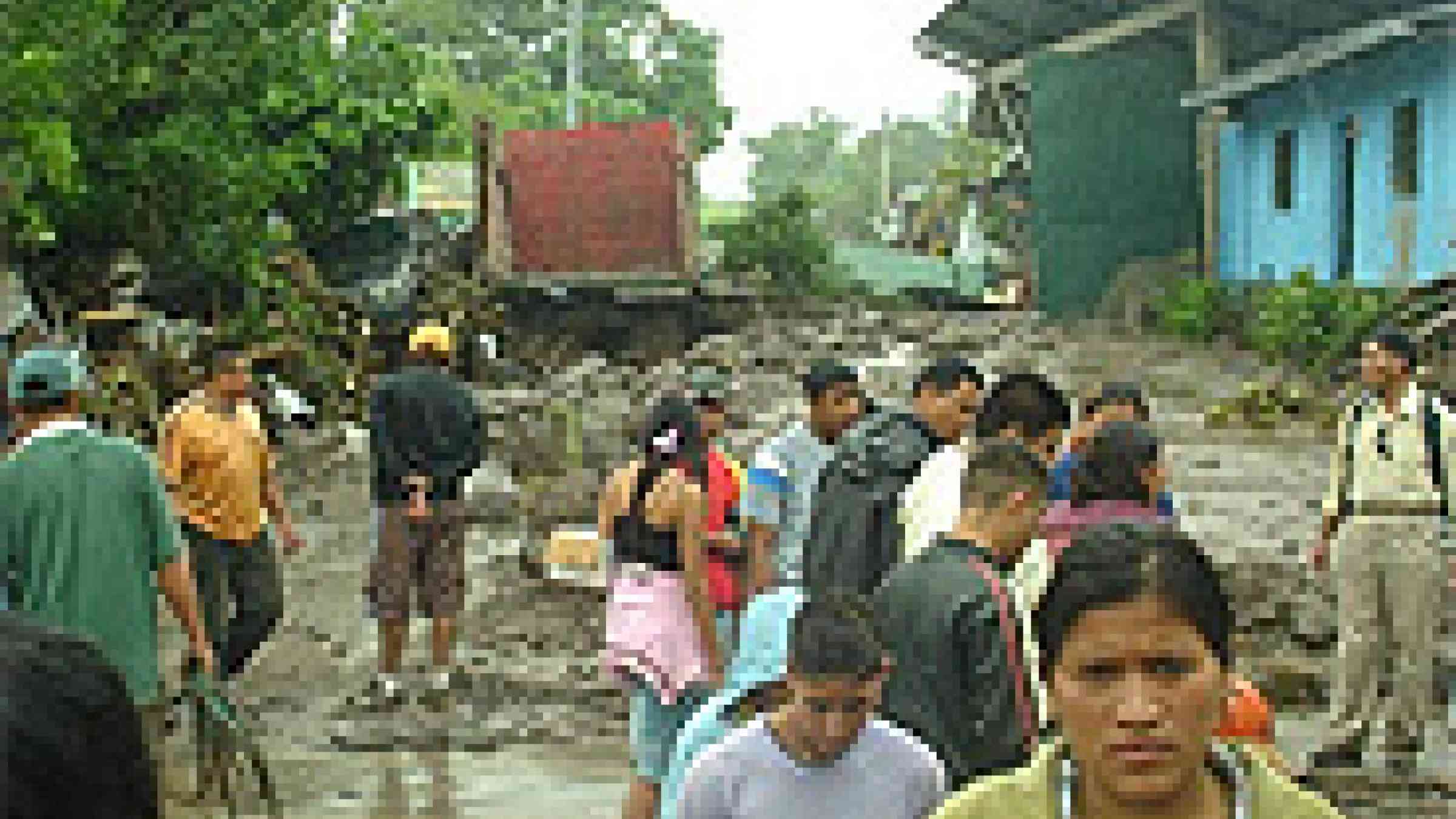
In July 2008, the people of Melara, Palmera and Cerco de Piedra woke up in the middle of the night, facing one of their worst nightmares. The Huiza River had overflowed, the bridge was destroyed, their houses were being rapidly covered by water and mud, and their lives were at serious risk. They didn't know what to do.
Thanks to the common sense of a few natural leaders and members of the community association (ADESCO), they were able to save many lives, but 12 died during the tragedy, and practically everybody lost all their material belongings.
Less than 18 months later, a new emergency arose, but this time the situation in this community was different. Since last year's tragedy, they have been receiving training on Disasters Risk Reduction. Therefore, when the crisis struck again, they were better prepared to respond quickly and efficiently.
Monitoring and swift action
The Civil Protection Committee had been monitoring the river since November 1st, when the rains had started and the river began to swell. This was confirmed by the data collected from pluviometers provided by Plan. They immediately made arrangements to evacuate children to a shelter, previously identified as the safest place in the area. When the waters leveled, the children went back to their homes, but the Civil Protection Committee kept watch searching for signs of flash floods.
The flood came at midnight on November 7th. As the Civil Protection Committee had kept watch, they were able to start alerting people as early as 10:00 pm. With the aid of a megaphone equipped with an alarm, the Civil Protection Committee donned their ID vests and started waking everybody up, dividing themselves among the different communities, and making sure that everybody was alerted and on the move.
Erika (21), Heliodoro (19), Jackeline (14), Ezequiel (17) and Nahum (19) are four of the young people involved in the Civil Protection Committee. The Committee had previously established several brigades to respond to emergencies. Alongside adult and youth members of the Civil Protection Committee, other people joined the brigades in an effort to save as many lives as possible during the first critical hours.
"Life is what matters the most"
14 year old Jackeline noticed a sound that the river made as it flooded. She alerted the coordinator, who sounded the alarm Plan had provided, and started the process of alerting people and evacuating children and senior citizens. With the aid of ropes to prevent anyone from getting lost or being carried away by the winds and rain, the evacuated children were taken to the designated shelter: A church on higher terrain, which it was hoped the river would not reach. However, later on the waters started to reach the church. Children and adults were then taken to a secondary shelter, a school nearby.
Meanwhile, the brigades helped people to gather basic belongings, convincing those who resisted the evacuation. "Your life is what matters the most", explained young Jackeline to an adult who refused to leave his home. Thanks to the efficient organisation and prompt response, some were able to rescue clothes and other basic belongings which could help them in the bleak nights ahead.
Once in the shelters, the Civil Protection Committee (adults and children alike) helped provide for people's immediate needs: food, hot beverages, blankets, mattresses and ensuring the care and protection of children. This self-help ensured they were able to make it through the night and wait for further assistance.
"Now we know how to respond"
Comparing this experience against the one she lived through a little over a year ago, Ericka explained that although property damage was even worse this time, they were able to save the lives of almost everybody in the area. This was thanks to the training on Disaster Risk Reduction that they have received for almost a year. "Now we know how to respond in many types of emergencies, and we are aware that we are responsible for all these people, because we know what to do, which we didn't know last year."
Their previous experience was the key reason Erika and other young people got involved in the Civil Protection Committee. They knew from experience that immediate response is the most important thing when a disaster strikes. "I know what it means to lose everything", says Erika. "Last year's flood left us with nothing, and we were just starting to recover. Things might look worse now, but at least we managed to save most people, and we were only unable to save one lady".
The next morning volunteers and members of the Civil Protection Community took account of the damage, started distributing any aid that was delivered, and began rescuing articles of clothing, food, and whatever was worth salvaging. They gave special attention to children, making sure they felt safe.
Ovidio Rivera, President of the community association of San Alfonso (ADESCO) and leader of the Civil Protection Committee has been actively involved in Plan's Disaster Risk Reductions projects such as DIPECHO VI. He strongly believes that this training and knowledge has made a difference to the response of this community compared to their response during Hurricane Stan, when they weren't as well prepared. He believes that now more people will get involved in this type of projects, because they have proven to be of great value in emergency situations. He hopes many more people and communities get this level of training.
"You can always replace your stuff, but you can never replace life." Jackeline stated during the emergency. She can see that many adults have difficulty leaving their belongings behind, which is understandable. But she is also aware that people have to respond immediately to save themselves, and that being prepared can help ensure children and elderly people's safety. Afterwards, once everyone is safe, there will be time to rebuild and recover.