1. Home
  2. Knowledge Base | PreventionWeb

DRR Community Voices

The DRR Community Voices share personal stories and perspectives from the disaster risk reduction trenches on reducing risk and building resilience.

  • Our posts from both practitioners and academics reach a global audience and can influence policy, practices and approaches.
  • We invite you to propose your own blog and submit it for review.

Republishing guidelines

  • Please contact us if you wish to republish a blog article.
  • Most articles can be republished under CC BY-NC-SA 3.0 IGO Deed.
  • You must give appropriate credit, provide a link to the license, and indicate if changes were made.
  • You may not use the material for commercial purposes.
Uploaded on
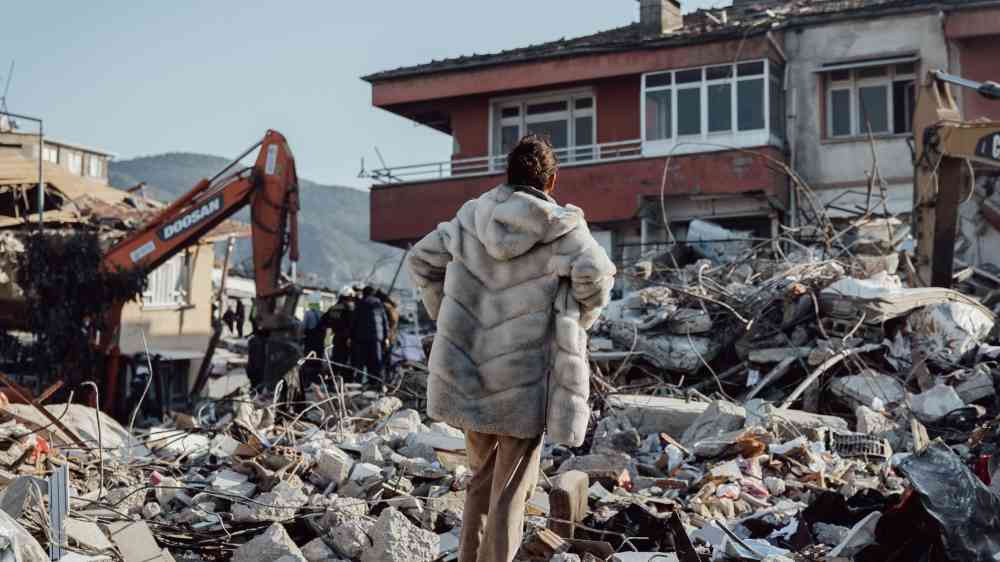
A woman in a fur coat stands amidst earthquake rubble, observing damaged buildings and an excavator.
Tanjir Hossain
The author raises a fundamental question: what do States actually owe people before, during and after disasters, and how should those obligations be reflected in international law? And, if protection begins only once disaster strikes, it begins too late.
A modern architectural building in bright orange and blue serves as a temporary evacuation center for the tsunami disaster in Bantul, Yogyakarta
Rama Nassif
This blog poses that trust is a critical performance condition in DRR. Early warnings, shelters and preparedness plans may exist, but protection depends on whether people see them as credible, accessible, understandable and accountable.
Search-and-rescue teams work through the rubble of a collapsed building in El Paraíso, southwest Caracas
Stefano Pampanin
In this blog, the author highlights that one of the central DRR questions is not simply how much disasters cost after they occur. It is how much we are willing, and actually capable, to keep paying by failing to reduce risk before disasters happen.
Risk Management Alert
Eliot Christian
Public emergency alerting has traditionally been associated with regulated communications infrastructures. Now, official emergency alerts worldwide are increasingly published in the freely available machine-readable Common Alerting Protocol format.
Aerial view showing severe tornado damage in Chattanooga, Tennessee neighborhood.
Lakshman Srikanth David Petley
Why is counting disaster fatalities harder than it looks? This blog examines how deaths are defined, attributed, verified and revised, and why better fatality data is essential for understanding and reducing disaster risk.
A stark landscape of cracked dry earth beneath a clear blue sky, depicting arid climate and drought.
Cedrick Moriggi
This blog highlights a UNDRR CCRO Network advisory urging boards to treat the projected 2026-2027 El Niño as a strategic risk. It recommends assessing impacts on people, operations, supply chains and margins, and strengthening resilience planning.
Drone surveying large industrial site enrichment plant with gps tracking markers at sunrise.
Tyler Smith
Drone mapping helps cities identify changing disaster risks by providing detailed data on buildings, terrain and infrastructure. Combined with GIS, hazard models and local knowledge, it supports better planning for floods, wildfires and urban resilience.
The view of yurts nomad village in Tash-Rabat in Kyrgyzstan
Salavat Baktybek
Case study of 15 households affected by Kyrgyzstan’s 2024 mudflow reveals how poverty, low insurance coverage and infrastructure gaps prolonged recovery. Residents want stronger drainage, risk reduction investments and community participation.