
Translating risk into local languages: lessons from Sierra Leone
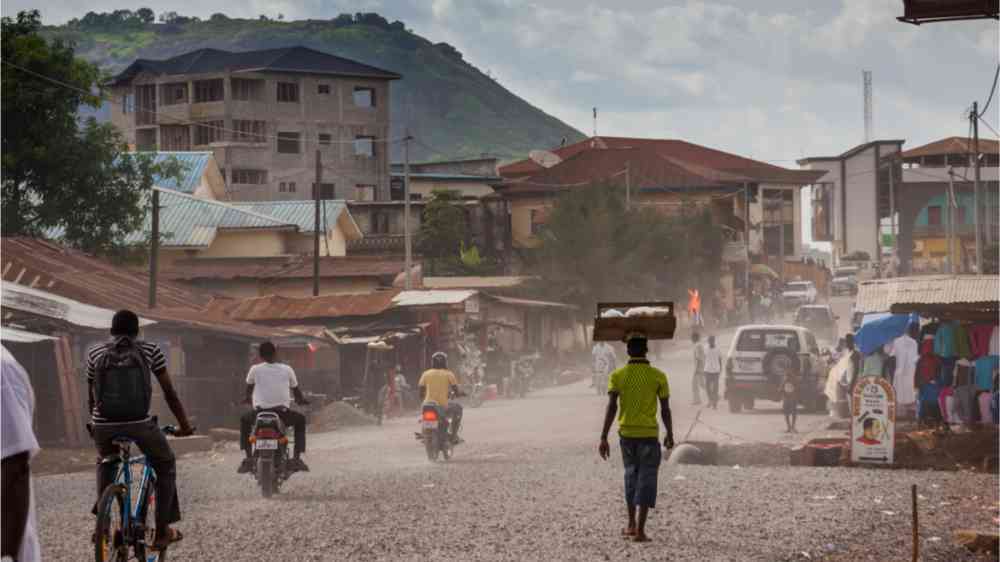
In 2021, during the peak of the COVID-19 pandemic in Sierra Leone, I saw how language gaps could become safety gaps. Risk information was shared, yet many people could not fully understand it. Misinformation and weak translations meant that life-saving guidance did not consistently reach those most at risk. Speaking with community members who had heard announcements but could not explain what to do convinced me that language barriers are risk factors. This motivated me to lead the development of Sierra Leone’s first disaster risk reduction terminology dictionary translated into five local languages.
When language becomes a barrier to safety
Sierra Leone is multilingual, and most people communicate primarily in local languages, including Krio, Mende, Temne, Limba and Kono. However, disaster risk reduction materials and official communications are often produced only in English. While English is the official language of the country, it is not the language that many people use in daily life, particularly in rural and vulnerable communities.
During the COVID-19 pandemic, this social disconnect led to significant gaps in understanding essential information. Communities struggled to interpret prevention measures, risk advisories and technical terms that were unfamiliar in everyday speech. In some cases, misinformation spread faster than official guidance, because it was communicated in familiar language.
Through my field experience and collaboration with my colleague Jonas Knauerhase, we recognized that improving language accessibility was essential for effective disaster risk reduction. We approached Professor Federico M. Federici of University College London (UCL) to explore how translation could strengthen crisis communication in Sierra Leone. This became the starting point for the terminology dictionary project, led by YMCA Sierra Leone in collaboration with the National Disaster Management Agency, the United Nations Development Programme, UCL, linguistic lecturers from the University of Sierra Leone, translators and community leaders.
Building a locally grounded translation model
The project, the first of its kind in the country, began in October 2021, with the goal of translating fundamental terms related to disaster risk reduction into Sierra Leone’s five most spoken languages. The obvious choice was to translate the official UN Disaster Risk Reduction terminology. From the outset, we understood that translation had to go beyond word substitution. Translating the terminology would be a first step to create those resources that the project members found were lacking: bilingual datasets, sentences, paraphrases, or any specialist glossary in the five Sierra Leonean languages. The translation of the UNDRR Terminology required context, cultural sensitivity and validation by consensus, so that the terms would be accurate and usable in practice to create resources for immediate and future uses.
We recruited translators across the country and provided training led by Professor Federici a researcher in risk communication in multilingual settings who trains translators, and Chloe Franklin, a doctoral researcher at UCL who specializes in accessible health-related information communication and is a professional translator. The training focused on translation accuracy and crisis communication. Translation workshops were then held in the regions where each language is predominantly spoken. Working within language communities supported authenticity and ownership.
To ensure clarity, translated terms were tested with native speakers. We also introduced visual icons to support understanding, particularly for audiences with lower literacy levels. The first phase of the dictionary was completed in November 2022.
Expanding access through audio and digital innovation
While the printed dictionary was a milestone, alongside its downloadable PDF version we quickly recognized that literacy barriers could still limit access. Many people speak local languages fluently but cannot read or write them, and a text-based resource alone could not reach everyone.
To address this, we developed a mobile application that provides both text and audio versions of the translated terminology. Users can listen to disaster risk reduction terms in their local language, ensuring access for non-readers and expanding the reach of information.
Today, the dictionary is used by the National Disaster Management Agency to strengthen community risk communication and preparedness. Copies have been distributed to regional libraries, and students and researchers use it to support studies in disaster risk reduction, translation and crisis communication. The work also helped catalyse the formation of the first ever translation body, the Sierra Leone Association of Language and Mediation, strengthening capacity in crisis translation.
Using gamification to strengthen climate risk education
Beyond translation, we have also explored gamification as a practical approach to climate change and disaster risk education. We co-create educational games with communities, integrating local languages, visuals and real-life risk scenarios.
Gamification makes learning interactive. Participants engage actively, reflect on risks and discuss practical solutions. This approach is useful for young people and community members who may not respond to traditional training methods, and it can also help address literacy barriers.
Lessons for strengthening inclusive disaster risk communication
Our experience demonstrates that disaster risk reduction depends on accessible communication. When people understand risk information in their own language and through culturally relevant methods, they are better equipped to make informed decisions and protect themselves and their communities.
Key lessons include engaging local translators, validating terminology with communities, using audio and visual tools to overcome literacy barriers, and adopting innovative learning approaches such as gamification. Language accessibility is a core component of effective disaster risk reduction.
This model can be adapted in other multilingual contexts where language barriers limit access to critical information. Ensuring that people understand risk in their own language is a necessary step towards building safer, more resilient communities.

Pious Mannah is the Education Manager at YMCA Sierra Leone and a specialist in disaster risk reduction education, multilingual crisis communication and climate risk learning. He led the development of Sierra Leone’s first disaster risk reduction terminology dictionary translated into five local languages, and the accompanying audio enabled mobile application. He also led the formation of the Sierra Leone Association of Language and Mediation, the country’s first professional translation body. Pious has contributed to publications on language access and risk communication, and has established youth-led climate groups across Sierra Leone, promoting inclusive disaster risk education, community resilience and local leadership in climate action.