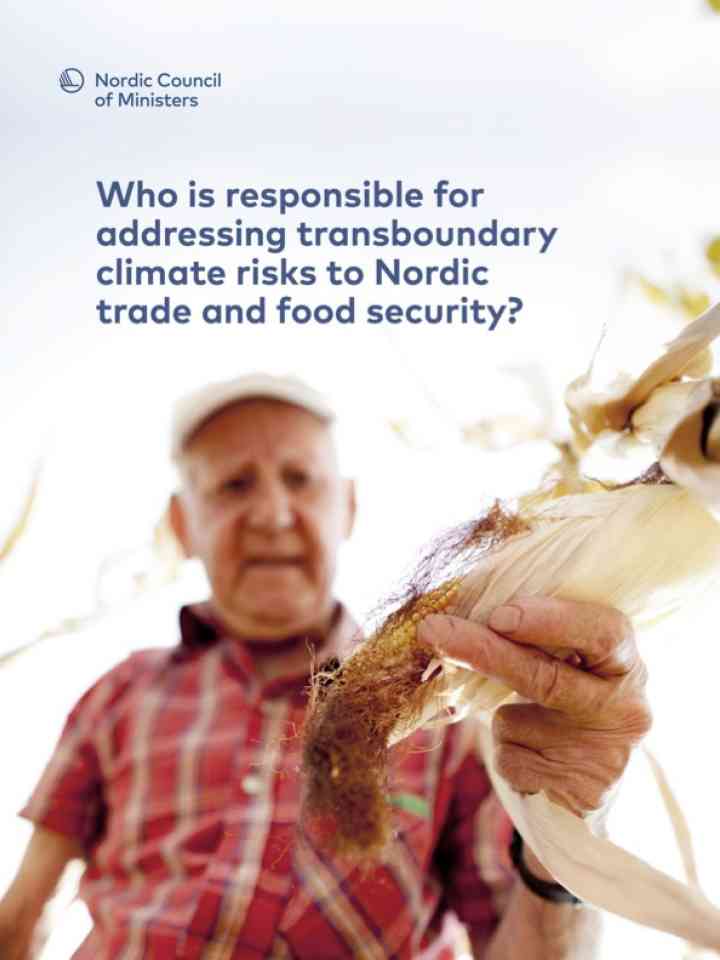
Who is responsible for addressing transboundary climate risks to Nordic trade and food security?
This policy brief investigates how climate change impacts outside the Nordic region—referred to as transboundary climate risks (TCRs)—threaten Nordic countries’ food security and trade systems. The Nordic region, which includes Norway, Sweden, Finland, and others, relies heavily on global trade for food and agricultural inputs. The study explores how climate events like droughts and floods in key supplier countries can cascade through global value chains, impacting the availability and affordability of food in the Nordics. It emphasizes the need for regional cooperation, improved risk assessments, and stronger public-private partnerships to enhance resilience.
Findings suggest that Nordic countries and businesses are largely unprepared for TCRs. National policies often overlook these external climate risks, and businesses lack the tools and incentives to assess or mitigate them. Despite high dependence on imports—such as Norway sourcing 90% of aquaculture feed from abroad—strategic planning for such vulnerabilities is minimal. The brief identifies governance fragmentation, inadequate data access, and limited cross-sector coordination as key barriers. It recommends joint Nordic efforts, possibly through a climate intelligence agency, to map vulnerabilities, share costs, and build resilient food supply chains.
Explore further