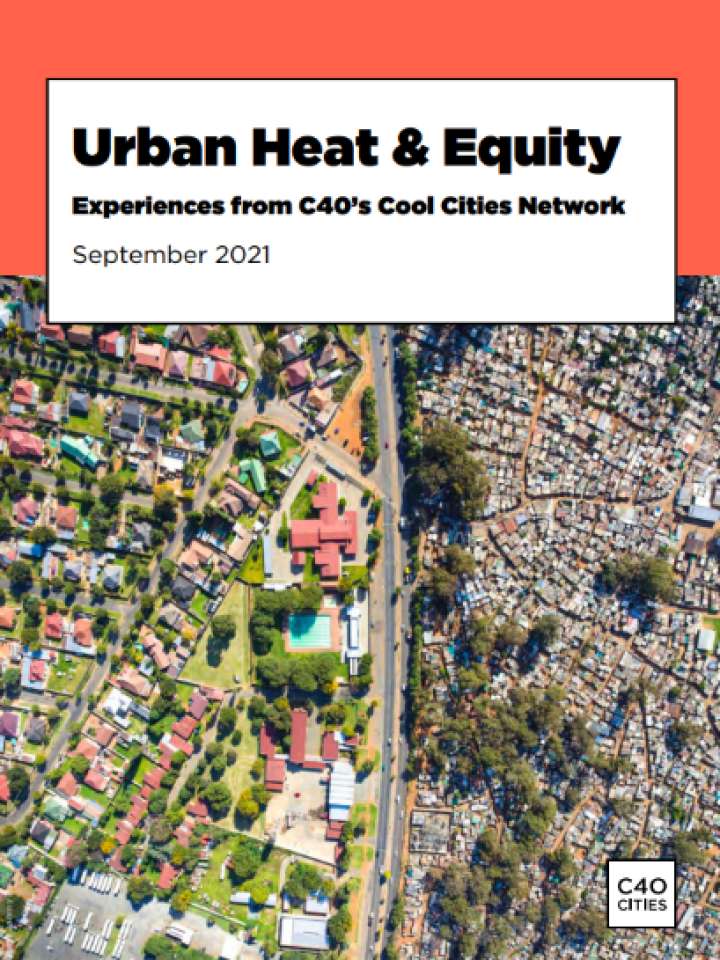
Urban heat & equity: Experiences from C40's Cool Cities Network
This report provides case studies from 12 cities that are working to reduce the inequitable distribution of heat risks across populations and urban areas. As cities are becoming hotter, the impacts are often not experienced equally by all residents - some neighbourhoods and population groups are more affected by urban heat than others. At the same time, some policy responses to heat impacts can be unfair. To address this, cities can apply environmental justice principles in efforts to mitigate heat risk and prepare for extreme heat events. The case studies look at how cities are: integrating inclusivity and equity in heat actions; bringing the voices of the most heat-vulnerable to the decision making table; and tailoring responses to heat to meet the needs of the most at-risk residents.
This report indicates key recommendations for inclusive planning & delivering of heat actions including: collecting temperature, socio-economic and health data to develop a heat-vulnerability index for the city; including heat risk stakeholders in the decision making process, and listening to their needs; using effective heat risk messaging in multiple languages and multiple modes of communication; prioritising cooling solutions in areas and communities most at risk; structuring programmes to be widely accessible; and measuring and tracking progress.
Explore further