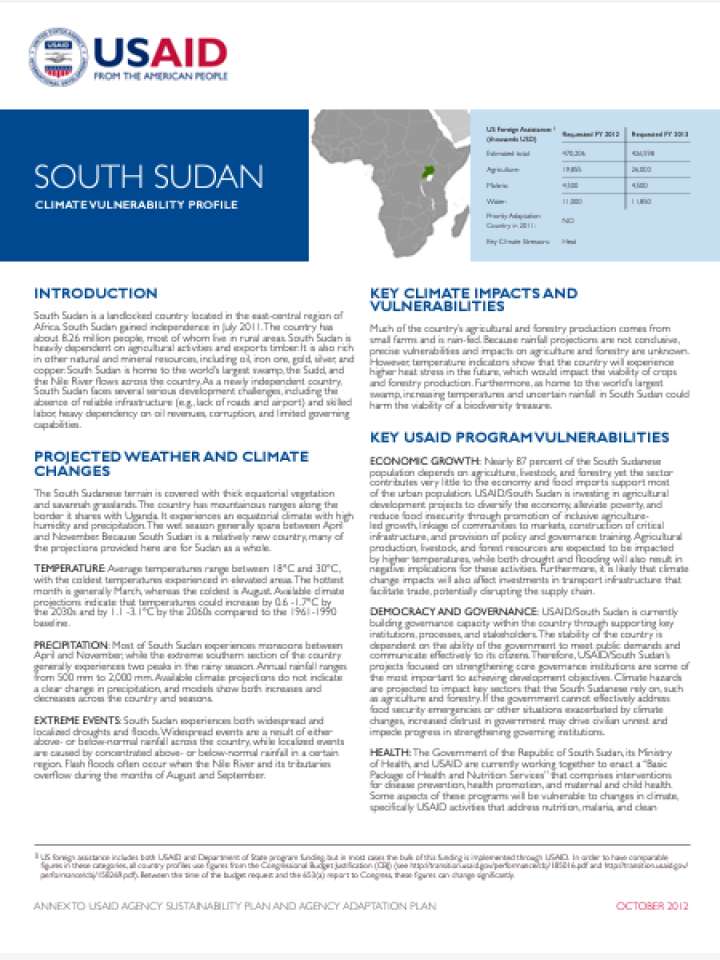
South Sudan climate vulnerability profile
South Sudan experiences both widespread and localized droughts and floods. Widespread events are a result of either above- or below-normal rainfall across the country, while localized events are caused by concentrated above- or below-normal rainfall in a certain region. Flash floods often occur when the Nile River and its tributaries overflow during the months of August and September.
Much of the country’s agricultural and forestry production comes from small farms and is rain-fed. Because rainfall projections are not conclusive, precise vulnerabilities and impacts on agriculture and forestry are unknown. However, temperature indicators show that the country will experience higher heat stress in the future, which would impact the viability of crops and forestry production. Furthermore, as home to the world’s largest swamp, increasing temperatures and uncertain rainfall in South Sudan could harm the viability of a biodiversity treasure.
Explore further