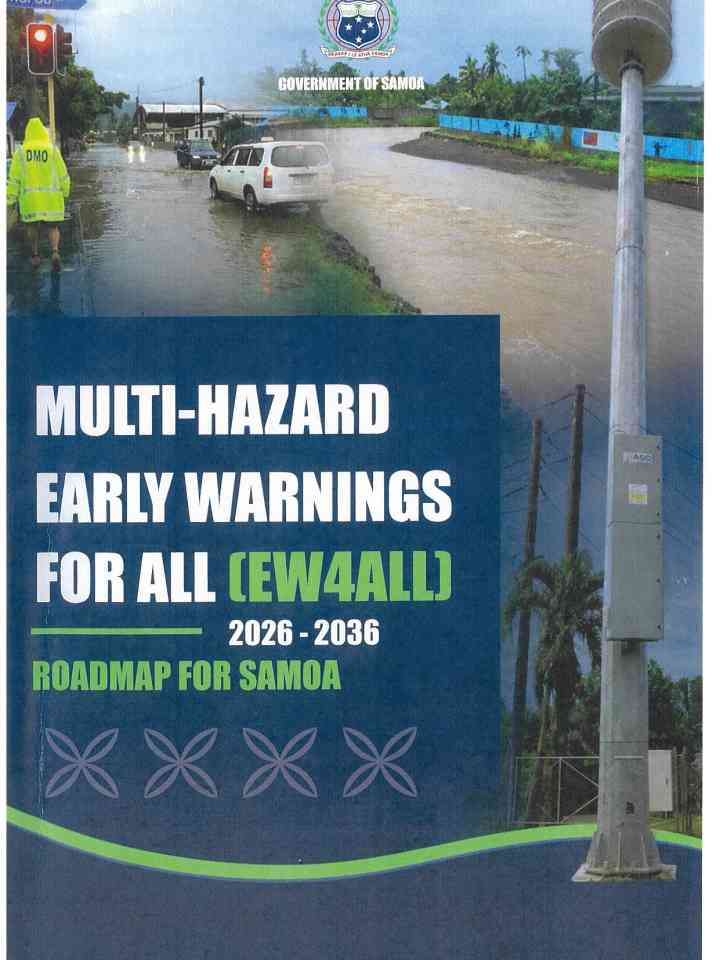
Multi-hazard early warnings for all: Roadmap for Samoa
The Multi-Hazard Early Warnings for All (EW4All) Roadmap for Samoa 2026–2036 outlines Samoa’s strategy for strengthening its national early warning systems to better prepare for and respond to natural hazards and climate-related disasters. Developed under the United Nations’ Early Warnings for All initiative, the roadmap aims to ensure that all people in Samoa are protected by effective, risk-informed warning systems. It adopts a multi-hazard approach that integrates risk knowledge, monitoring and forecasting, warning dissemination, and preparedness and response, while emphasizing coordination among government agencies, communities, and other stakeholders. The roadmap is designed to enhance resilience, support disaster risk reduction, and contribute to sustainable development in one of the world's most climate-vulnerable island nations.
The roadmap highlights Samoa’s high vulnerability to hazards such as tropical cyclones, floods, droughts, tsunamis, and sea-level rise, which pose significant risks to lives, infrastructure, livelihoods, and economic development. It stresses that strengthening early warning systems is a cost-effective way to reduce disaster impacts and improve preparedness. The document identifies the need for stronger institutional coordination, improved forecasting and monitoring capacities, more inclusive communication strategies, and greater community engagement to ensure warnings reach and are understood by vulnerable populations. Overall, the roadmap emphasizes that comprehensive, people-centered early warning systems are essential for enhancing resilience and reducing disaster risk in Samoa over the coming decade.
Explore further