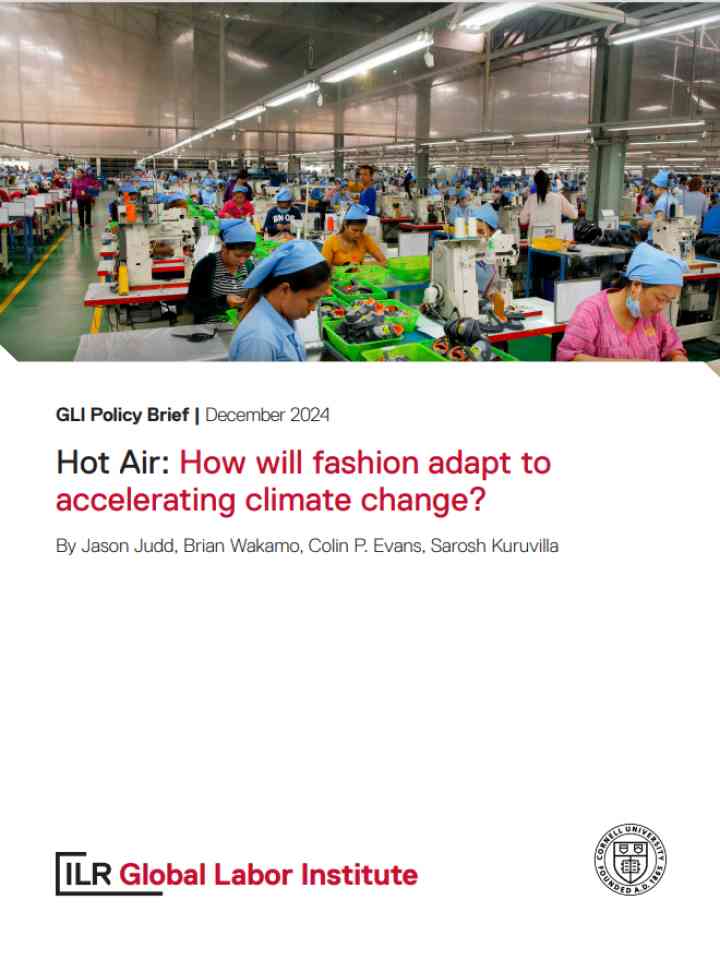
Hot Air: How will fashion adapt to accelerating climate change?
This brief focuses on weather data over the past twenty years of in 23 cities to find out that, asking how workers, brands and retailers, manufacturers and governments should react and adapt to our warming future in a world of corporate due diligence.
Key findings are as follows: for workers, the need for urgent adaptation is clear enough: higher earnings, healthier bodies, more jobs. For manufacturers, the recouping of heat- and flood-related shortfalls in earnings makes adaptation feasible, if not attractive. For buyers and investors, unmeasured and unmet climate risk can mean long-term losses. For governments, new jobs and export earnings are crucial. In short, urgent adaptation investments can yield rewards. Of the changes outlined in Higher Ground? none seems more urgent than the setting of heat thresholds and climate event protocols. Excessive heat in apparel and footwear factories is reducing output and earnings, and damaging worker health. In some key producing countries excessive heat is a violation of national law and the implementation of due diligence legislation in Europe will soon mean that not knowing or not acting on extreme heat creates legal liability for lead firms.
Explore further