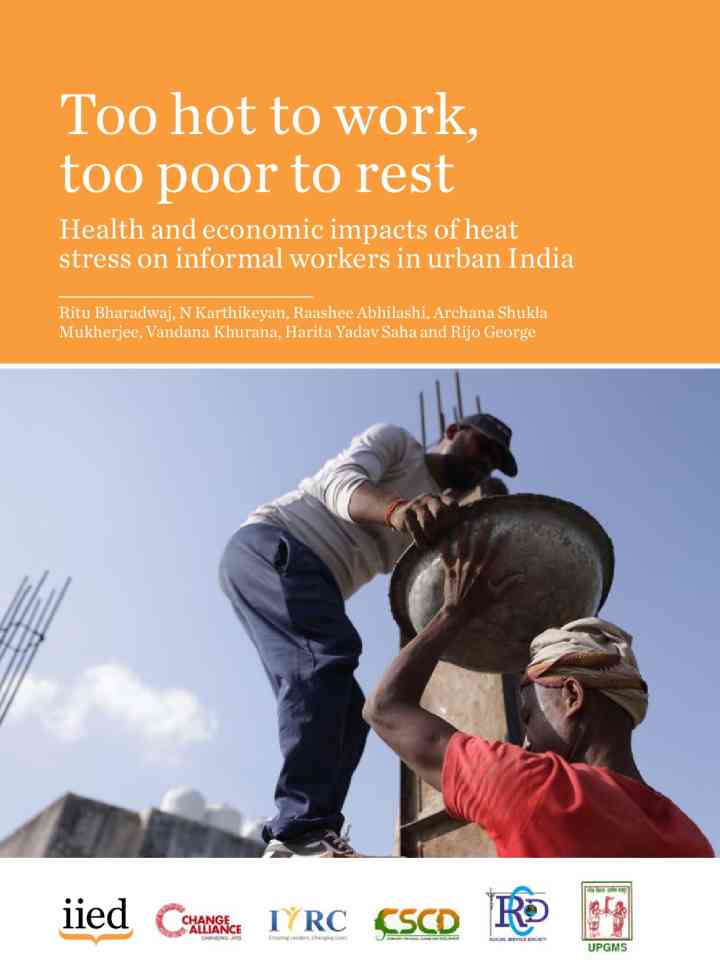
Too hot to work, too poor to rest: health and economic impacts of heat stress on informal workers in urban India
This report quantifies the health and economic loss and damage that extreme heat inflicts on informal workers, a group that makes up close to 90% of India's workforce yet remains largely invisible in heat-risk assessments. Drawing on the Comprehensive Climate Impact Quantification toolkit and a survey of 538 worker households across Agra, Ajmer and Delhi, it shows heat cuts productivity, deepens living-wage deficits and raises chronic kidney disease risk, generating national losses near 2% of GDP. It is intended for policymakers, labour and social-protection agencies, and climate adaptation planners.
The report finds heat exposure does not end at work: heat-trapping housing, water and food insecurity and weak social protection leave workers unable to recover. It recommends anticipatory measures using systems already in place — a heat-triggered cash transfer via Direct Benefit Transfer and the e-Shram register, improved migrant access to Ayushman Bharat and the Public Distribution System, and enforceable workplace heat thresholds — noting every US$1 in anticipatory action yields US$2.06–5.17 in avoided losses.
Explore further