Strengthening England’s heat resilience: from warnings to long-term adaptation
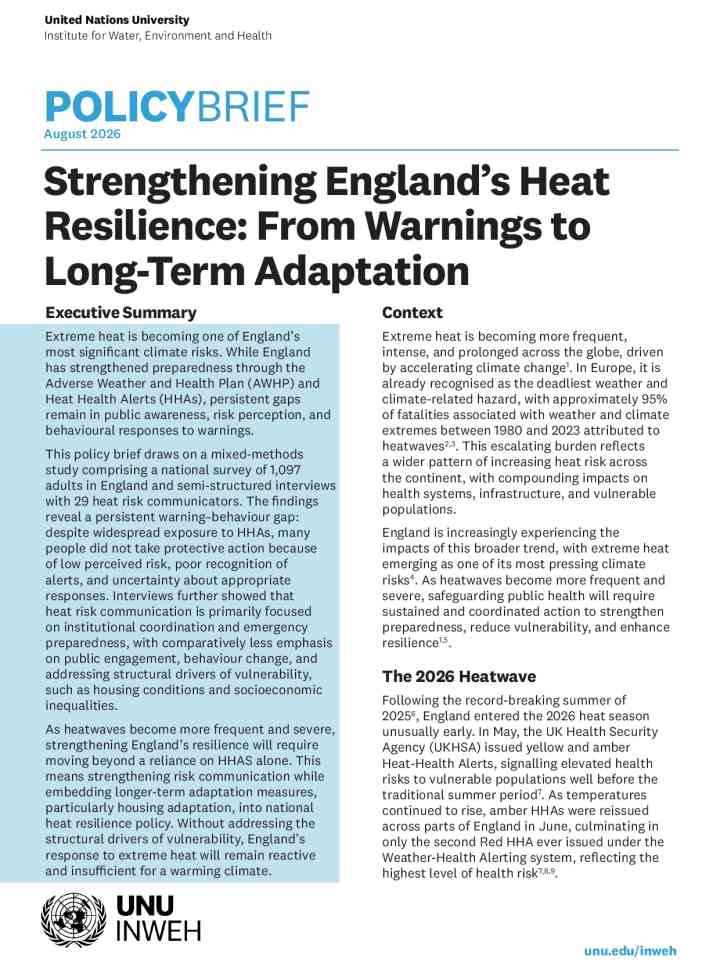
This policy brief draws on a mixed-methods study comprising a national survey of 1,097 adults in England and semi-structured interviews with 29 heat risk communicators. Extreme heat is becoming one of England’s most significant climate risks. While England has strengthened preparedness through the Adverse Weather and Health Plan (AWHP) and Heat Health Alerts (HHAs), persistent gaps remain in public awareness, risk perception, and behavioural responses to warnings.
The findings of this brief reveal a persistent warning–behaviour gap: despite widespread exposure to HHAs, many people did not take protective action because of low perceived risk, poor recognition of alerts, and uncertainty about appropriate responses. Interviews further showed that heat risk communication is primarily focused on institutional coordination and emergency preparedness, with comparatively less emphasis on public engagement, behaviour change, and addressing structural drivers of vulnerability, such as housing conditions and socioeconomic inequalities.
Explore further