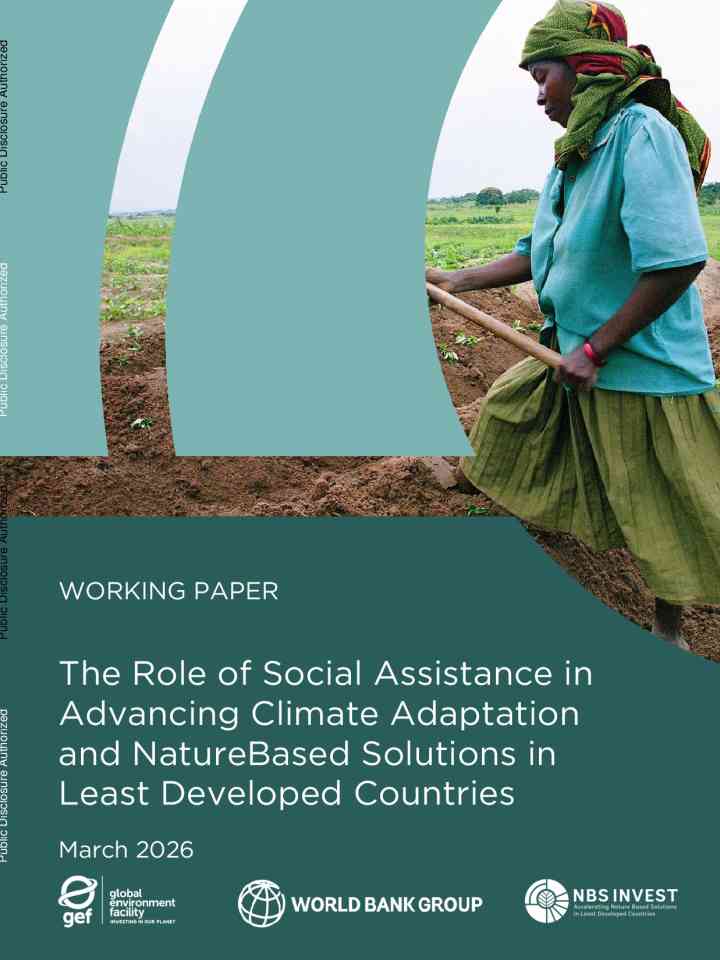
The role of social assistance in advancing climate adaptation and nature based solutions in least developed countries
This working paper examines how social assistance can advance climate adaptation and nature-based solutions (NbS) in least developed countries (LDCs). LDCs are home to more than half the world's extreme poor and are among the most climate-vulnerable nations, given their economic dependence on climate-sensitive sectors like agriculture, fishing, and forestry. Since adaptation finance covers only 27–41% of LDCs' estimated needs, the paper argues that social assistance programs—already embedded in national delivery systems capable of reaching poor households at scale—offer an effective and inclusive channel to deliver adaptation support directly to vulnerable populations, through the "adaptive social protection" (ASP) approach.
The key learning is that social assistance can support climate resilience through two complementary pathways: livelihood- and system-supporting interventions (cash/food transfers, public works, economic inclusion programs that diversify incomes and strengthen market access), and NbS-oriented practices (soil and water conservation, agroforestry, ecosystem restoration) that reduce climate exposure over time. However, realizing this potential requires overcoming persistent challenges—targeting inefficiencies, inadequate benefit levels, limited fiscal and institutional capacity, and the need for specialized technical expertise—as well as establishing enabling conditions such as deliberately integrating resilience objectives into program design, strengthening cross-sector coordination, aligning with national climate plans (NDCs/NAPs), and unlocking additional international adaptation finance.
Explore further