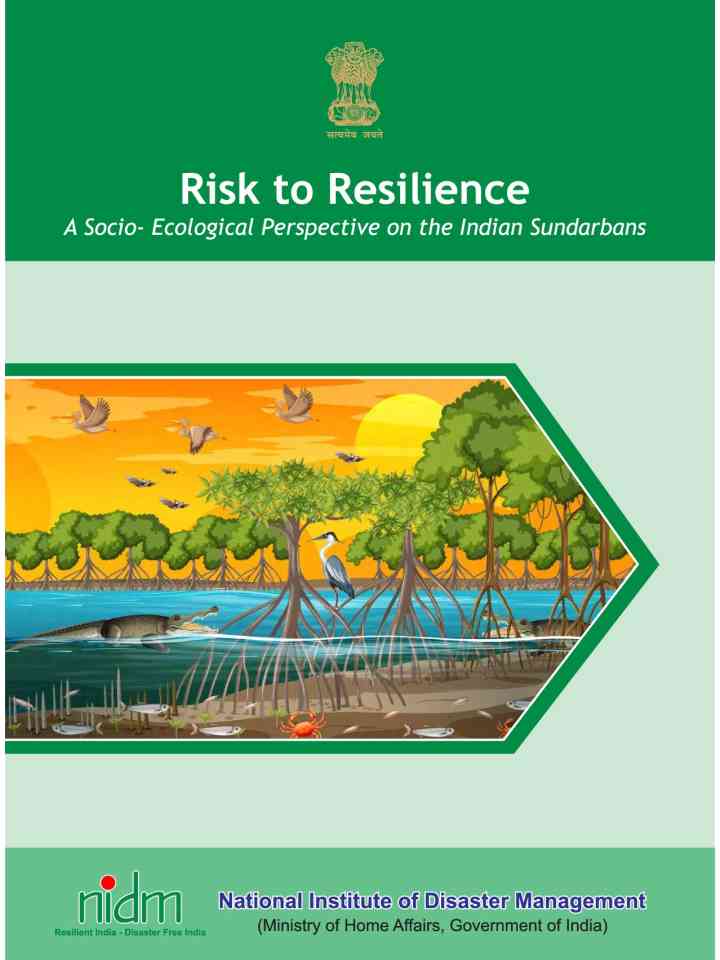
Risk to resilience: A socio-ecological perspective on the Indians Sundarbans
The book explores the complex socio-ecological system of the Indian Sundarbans, one of the world’s largest mangrove ecosystems and a highly vulnerable coastal region. It highlights how environmental hazards such as cyclones, tidal surges, erosion, and climate change interact with social and economic vulnerabilities, including poverty and limited infrastructure, to increase risk. The region’s ecological importance is emphasized, alongside the challenges faced by local communities living in fragile and hazard-prone environments.
Adopting a transdisciplinary approach, the book presents strategies to move from risk to resilience through ecosystem-based disaster risk reduction, community participation, and sustainable development practices. It draws on case studies, participatory research, and GIS-based analyses to propose practical solutions, including mangrove restoration, social capital strengthening, and adaptive governance. The work underlines the importance of integrating local knowledge with policy and scientific approaches to build long-term resilience
Explore further