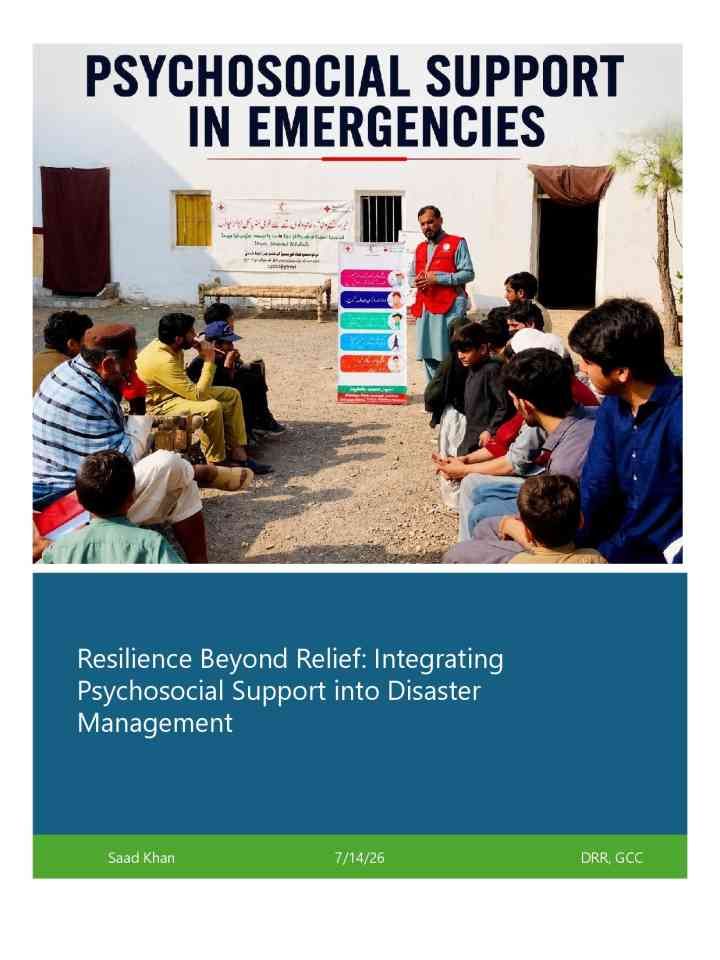
Resilience beyond relief: Integrating psychosocial support into disaster management
This guide, “Resilience Beyond Relief: Integrating Psychosocial Support into Disaster Management,” was developed by the National Disaster Management Authority (NDMA), Pakistan. It outlines the psychological and social impacts of disasters, describes operational guidelines for psychosocial support (PSS), and contextualizes these within Pakistan’s disaster risk reduction framework. The document synthesizes international standards such as the IASC Guidelines, Sphere Handbook, and WHO frameworks, alongside national policies and case studies. Key methodologies include literature review, policy analysis, evidence from humanitarian practice, and stakeholder consultation. The geographic focus is global with detailed emphasis on the Pakistani context, highlighting vulnerable groups, legal frameworks, operational procedures, and integration into broader emergency response systems.
Key findings and recommendations include:
- In the early phase of an emergency, social supports are essential to protect and support mental health and psychosocial well-being.
- Pre-disaster MHPSS (Mental Health and Psychosocial Support) improves readiness and coping capacity; post-disaster, immediate goals are stabilization and community support, with PFA as the recommended acute-phase intervention.
- PSS reduces risk of clinical mental disorders and supports long-term recovery, especially for vulnerable groups (women, children, persons with disabilities, minorities, displaced persons).
- SOPs should specify coordination, phased response, tiered services, inclusive access, and culturally adapted delivery.
- Main challenges are inconsistent training, limited funding for local actors, system integration gaps, and weak continuity post-emergency. The authors urge that MHPSS be integrated as “central to the 2030 Agenda” for sustainable development, not as a stand-alone humanitarian add-on.
Explore further