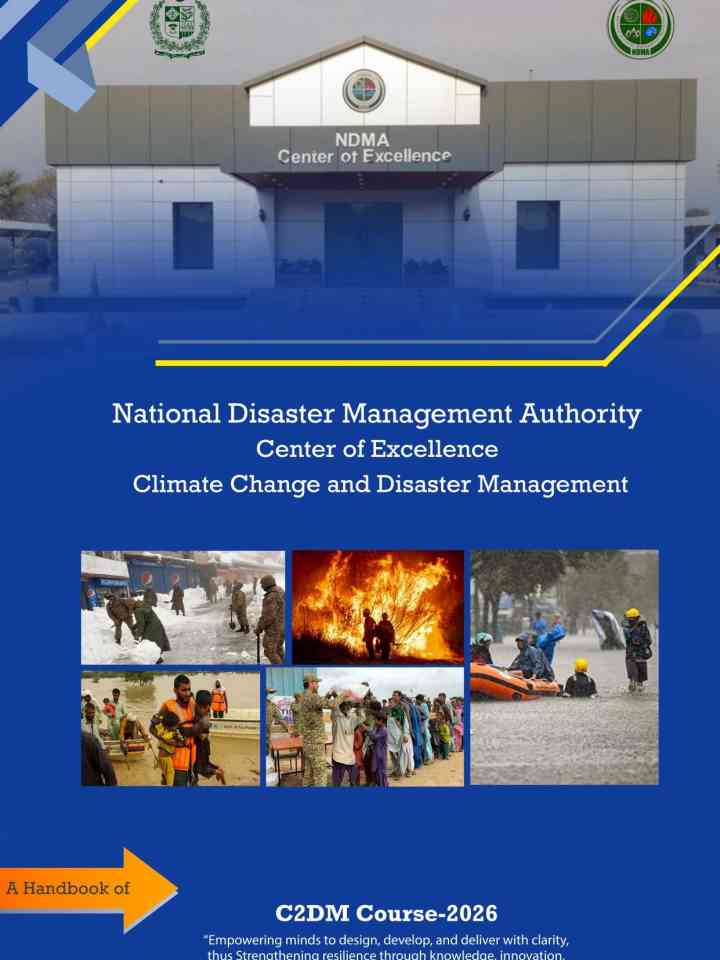
NDMA's Handbook of climate change and disaster management (C2DM) course-2026
Drought is a recurrent hazard in Pakistan, particularly affecting arid and semi-arid regions such as Sindh (especially Tharparkar) and Balochistan. It is primarily caused by low rainfall, increasing temperatures, and inefficient water management systems, all of which are exacerbated by climate change. These conditions reduce water availability for agriculture and livestock, making rural livelihoods highly vulnerable and increasing the risk of food insecurity.
The findings show that droughts have wide-ranging socio-economic impacts, including reduced agricultural productivity, lower household incomes, and declining nutrition levels, which disproportionately affect already vulnerable communities. With climate change expected to intensify the frequency and severity of drought events, the results highlight the urgent need for improved water management, climate adaptation strategies, and stronger disaster risk reduction frameworks in Pakistan.
Explore further