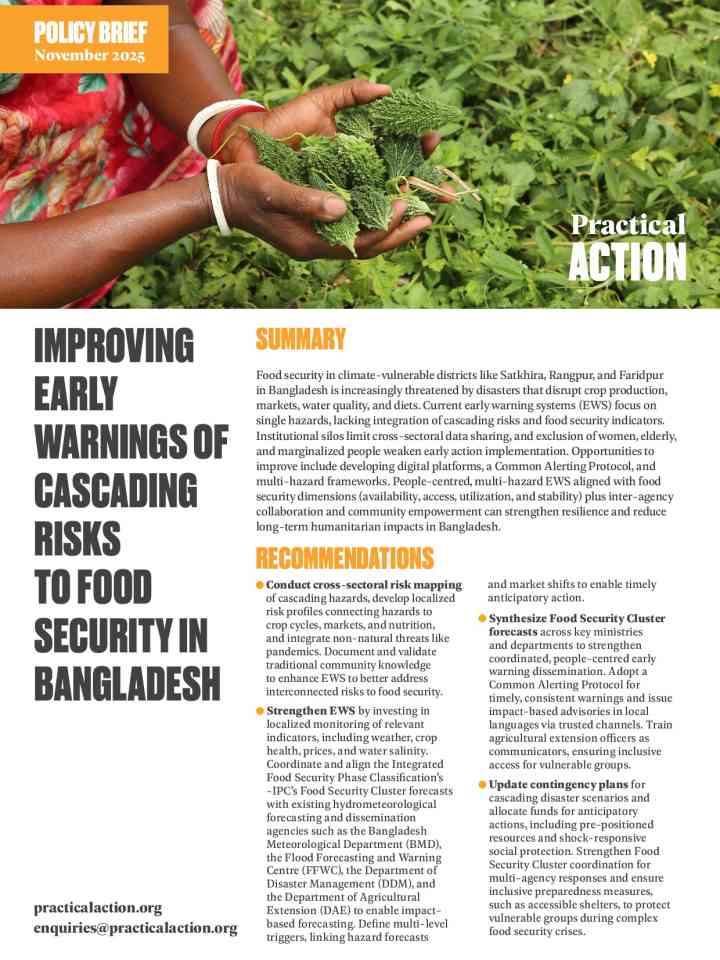
Improving early warnings of cascading risks to food security in Bangladesh
This policy brief presents findings from the Bangladesh case study under the Early Warning and early Action for Cascading risks to food security (EWAC) project. Food security in climate-vulnerable districts like Satkhira, Rangpur, and Faridpur in Bangladesh is increasingly threatened by disasters that disrupt crop production, markets, water quality, and diets.
Current early warning systems (EWS) focus on single hazards, lacking integration of cascading risks and food security indicators. Institutional silos limit cross-sectoral data sharing, and exclusion of women, elderly, and marginalized people weaken early action implementation. Opportunities to improve include developing digital platforms, a Common Alerting Protocol, and multi-hazard frameworks. People-centred, multi-hazard EWS aligned with food security dimensions (availability, access, utilization, and stability) plus inter-agency collaboration and community empowerment can strengthen resilience and reduce long-term humanitarian impacts in Bangladesh. The brief highlights the need for people-centred, multi-hazard early warning systems aligned with food security dimensions (availability, access, utilization, and stability) plus inter-agency collaboration and community empowerment can strengthen resilience and reduce long-term humanitarian impacts in Bangladesh.
Explore further