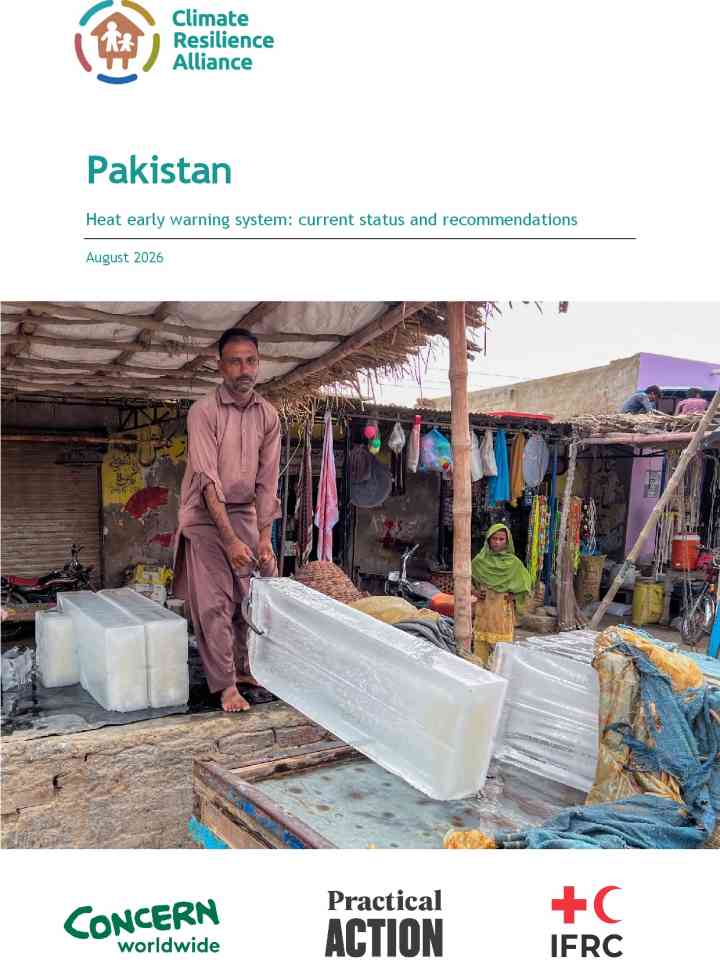
Heat early warning system in Pakistan: Current status and recommendations
This case study examines the current state of the heat early warning system in Pakistan, including how heat risk is understood and monitored, and how warnings are issued, communicated, and acted upon across institutions. It finds a strong and growing evidence base on extreme heat and its impacts, supported by a national heat monitoring and forecasting system with regionally and monthly differentiated thresholds. Warning dissemination is well established through government agencies, media and telecommunications providers, while preparedness is supported by a formalized architecture operating across national, provincial and city levels.
This case study is based on a combination of semi-structured interviews and a targeted review of
peer-reviewed literature and grey documentation related to extreme heat and the heat early
warning system in Pakistan.
Key recommendations:
- From hazard warning to impact-based heat warnings
- Strengthen the warning to action flow across institutions
- Operationalize multi-hazard and compound risk management
- Strengthen inclusive first-mile communication and feedback
- Institutionalize and resource community-based early warning and preparedness
Explore further