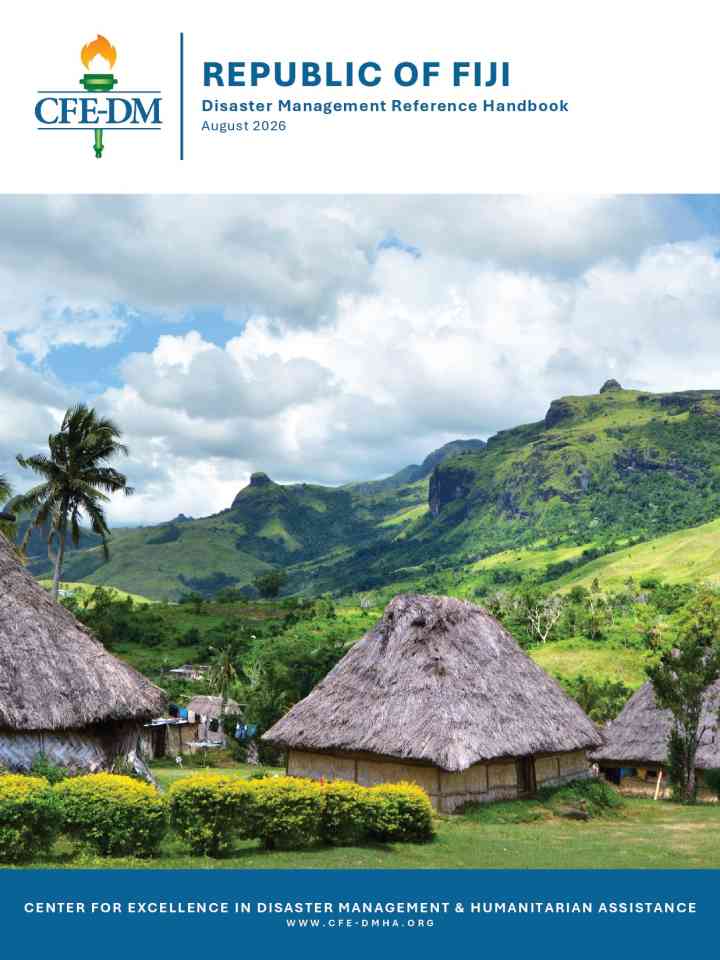
Fiji disaster management reference handbook (2026)
This updated Disaster Management Reference Handbook provides a comprehensive picture of Fiji’s disaster management architecture, socioeconomic vulnerabilities, hazard profile, and logistical infrastructure. The Republic of Fiji (hereafter Fiji) is a diplomatic, economic, and logistics hub in the South Pacific. It hosts many international organizations’ regional and sub-regional headquarters. However, its archipelagic geography and complex socioeconomic landscape create significant vulnerabilities to natural hazard impacts. Disasters routinely damage the critical coastal tourism sector, wipe out subsistence agricultural yields, and force an already over-leveraged state to finance recovery operations.
While the country holds upper-middleincome status, national averages mask severe localized hardship, with nearly 30% of Fijians living below the basic needs poverty line. Informal urban squatter settlements are exceptionally prone to flooding and waterborne disease outbreaks due to insufficient municipal infrastructure. Meanwhile, remote maritime and rural farming communities frequently experience cyclonic and rainfall-driven damage to their livelihoods. For responders, a primary operating challenge is logistical access. Damaged unsealed rural roads, washedout bridges, and limited domestic shipping capacity sever supply lines and make the rapid deployment of route clearance and maritime assets essential to reaching isolated populations.
Explore further