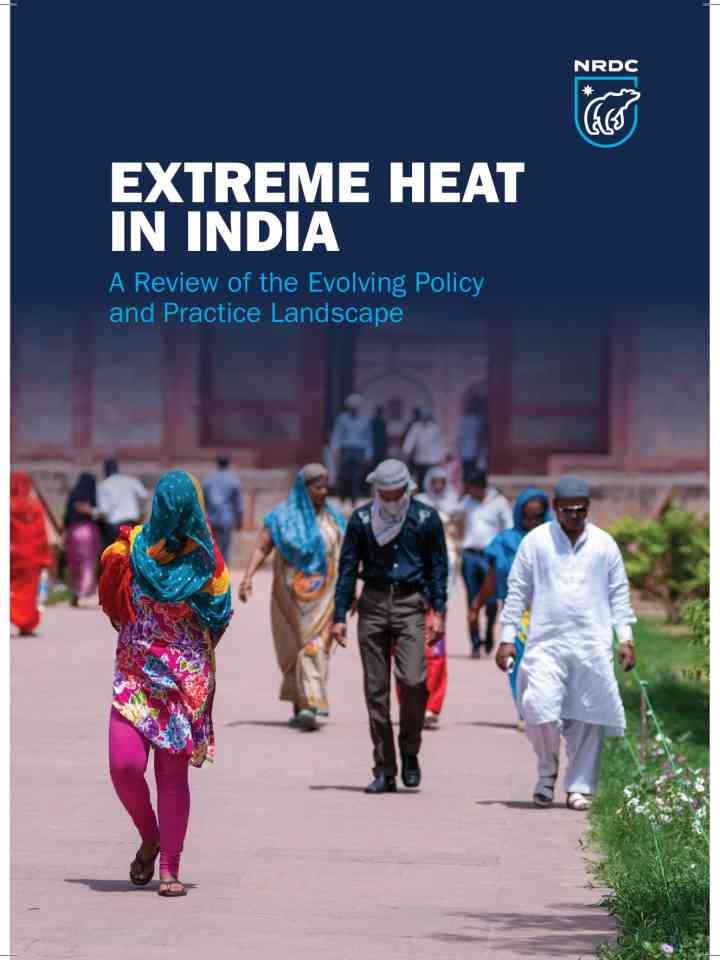
Extreme heat in India: A review of the evolving policy and practice landscape
This report examines how rising temperatures, increasing heatwave frequency, and widespread exposure are reshaping public health, economic productivity, infrastructure systems, and governance requirements across the country. It reviews the evolution of India’s policy and practice landscape for heat risk management, with particular emphasis on Heat Action Plans (HAPs) and institutional responses.
The report traces the development of heat governance from early state-level initiatives to the widespread adoption of HAPs across states, cities, and districts. It highlights emerging approaches that incorporate heat vulnerability and risk assessments, sustainable cooling solutions, early warning systems, financing mechanisms, community engagement, and inter-agency coordination. Case studies from states including Tamil Nadu, Maharashtra, Uttar Pradesh, Telangana, Rajasthan, Kerala, and Delhi illustrate innovative approaches to strengthening heat resilience. The publication concludes by identifying critical implementation gaps and presenting operational pathways to strengthen heat governance through improved data systems, financing, institutional coordination, monitoring frameworks, and long-term climate-responsive planning.
Explore further