Closing the gender data gap to enhance climate adaptation in urban Zimbabwe
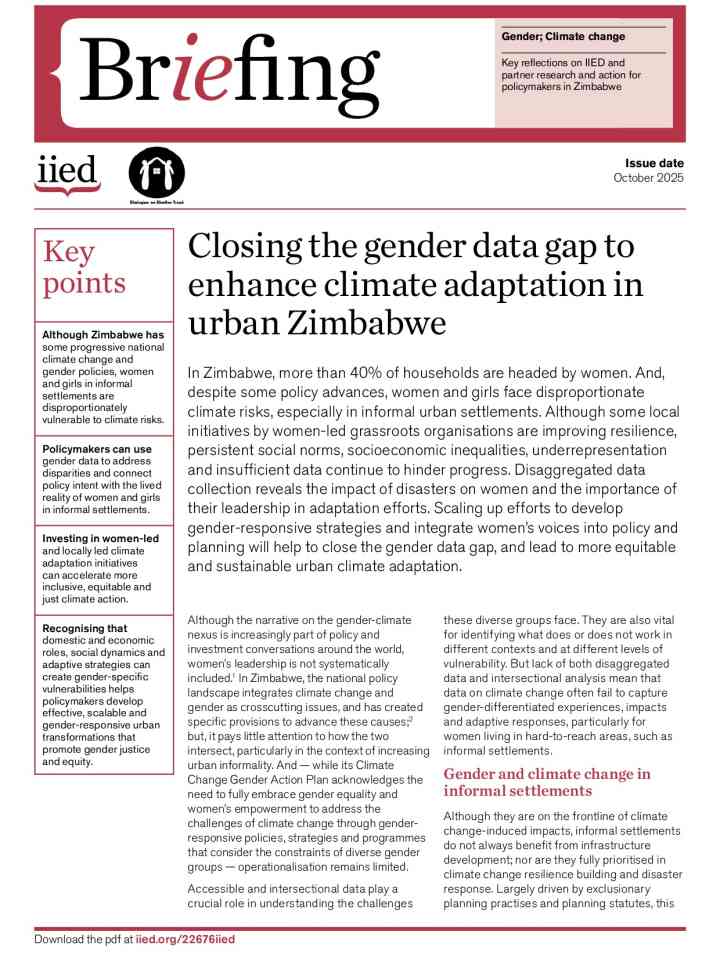
This briefing on Zimbabwe presents how Climate Adaptation and Gender policies are crosscutting issues, but despite some policy advances, women and girls face disproportionate climate risks, especially in informal urban settlements. Although some local initiatives by women-led grassroots organisations are improving resilience, persistent social norms, socioeconomic inequalities, underrepresentation and insufficient data continue to hinder progress.
Key points of this briefing, include:
- Although Zimbabwe has some progressive national climate change and gender policies, women and girls in informal settlements are disproportionately vulnerable to climate risks;
- Policymakers can use gender data to address disparities and connect policy intent with the lived reality of women and girls in informal settlements;
- Investing in women-led and locally led climate adaptation initiatives can accelerate more inclusive, equitable and just climate action;
- Recognising that domestic and economic roles, social dynamics and adaptive strategies can create gender-specific vulnerabilities helps policymakers develop effective, scalable and gender-responsive urban transformations that promote gender justice and equity.
Explore further
Country and region
Zimbabwe
ISBN/ISSN/DOI
978-1-83759-173-2 (ISBN)
Number of pages
4 p.
Publication year
2025