Climate risk profile: South Sudan
This profile provides an overview of climate risk issues in South Sudan, including how climate change will impact agriculture and pastoralism, water resources and ecosystems. The brief includes information on South Sudan, the climate and projected changes and information on sector impacts and vulnerabilities to climate change, the policy context and ongoing climate change projects in South Sudan.
South Sudan has a humid equatorial climate characterized by:
- Annual rainfall ranging from 200 mm in the southeast to 1,200–2,200 mm in the forest zone in Western Equatoria and the Equatorian highlands. In the northern states, rainfall varies between 700 and 1,300 mm. The rainy season is from April to December and results in seasonal river flooding.
- Mean average temperatures vary between 26°C and 32°C.
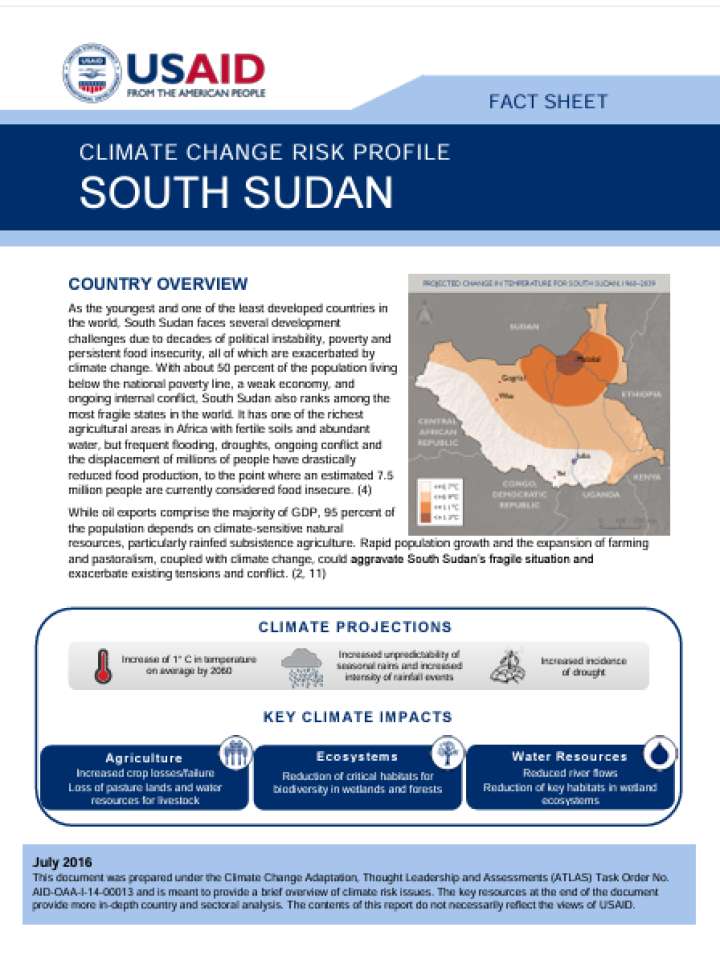
- All projections agree that South Sudan will get warmer by an average of 1°C by 2060, with lower increases in the south.
- Projections of rainfall patterns are less certain, with some models suggesting increases and others decreases.
Explore further
Country and region
South Sudan
Number of pages
5 p.
Publication year
2016