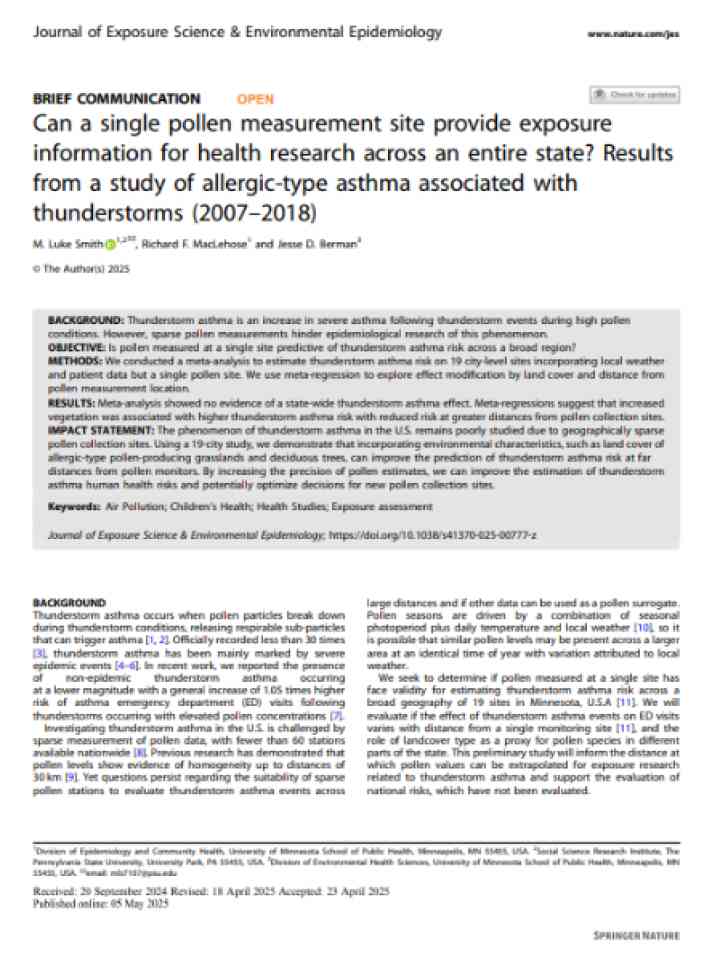
Can a single pollen measurement site provide exposure information for health research across an entire state? Results from a study of allergic-type asthma associated with thunderstorms (2007–2018)
Thunderstorm asthma is an increase in severe asthma following thunderstorm events during high pollen conditions. However, sparse pollen measurements hinder epidemiological research of this phenomenon. This study explores if pollen measured at a single site can be predictive of thunderstorm asthma risk across a broad region.
The authors conducted a meta-analysis to estimate thunderstorm asthma risk on 19 city-level sites incorporating local weather and patient data but a single pollen site. They use meta-regression to explore effect modification by land cover and distance from pollen measurement location. Meta-analysis showed no evidence of a state-wide thunderstorm asthma effect. Meta-regressions suggest that increased vegetation was associated with higher thunderstorm asthma risk with reduced risk at greater distances from pollen collection sites.
Explore further