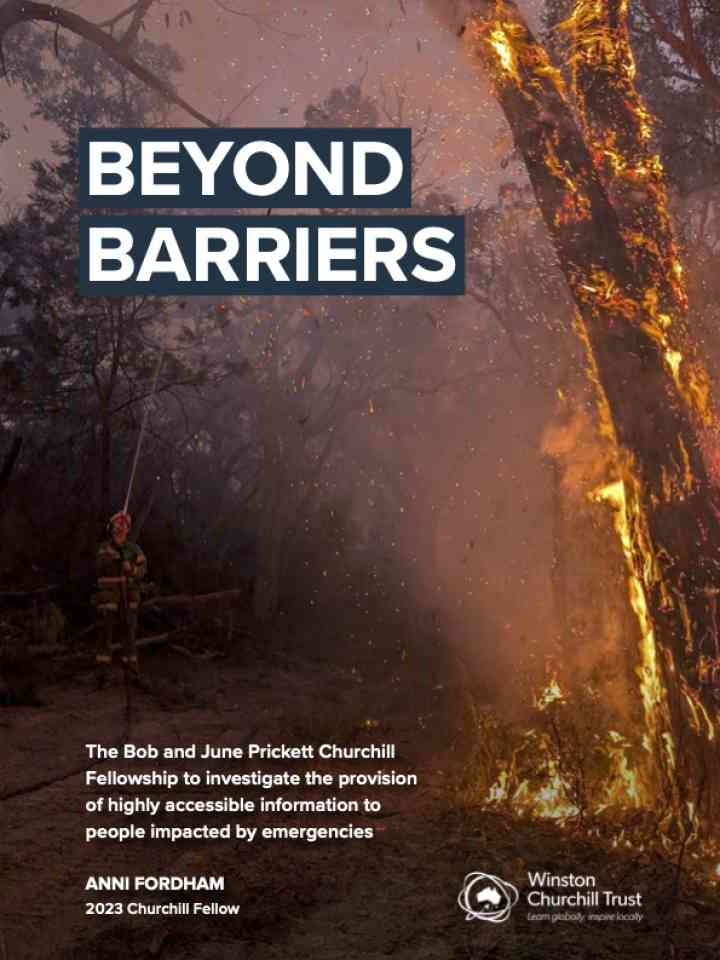
Beyond barriers
This study, led by Anni Fordham as part of the 2023 Churchill Fellowship, investigates how emergency information can be made more accessible to all people, especially those affected by disabilities, language barriers, cultural differences, or limited access to technology. The goal is to ensure that during emergencies, such as disasters or public safety threats, everyone receives timely, accurate, and actionable warnings. Drawing on international best practices from Switzerland, the United States, Japan, and New Zealand, the study explores innovative methods and structural strategies for inclusive emergency communication. It also emphasizes building trust and partnerships with communities to improve the reach and effectiveness of warnings.
The report highlights that the most effective emergency systems blend advanced technology with strong human networks. Key findings include the importance of standardized message construction, the need for specialist public information teams, and the benefits of multi-language, multi-channel delivery. It stresses that inclusion must go beyond basic accessibility to integrate cultural relevance and lived experiences. Notable practices include tsunami flag systems in Japan, FEMA’s disability integration in the U.S., and New Zealand’s community-led communication models. Ultimately, the study calls for Australia to adopt both structural reforms and grassroots partnerships to ensure emergency messages reach every individual, regardless of background or ability.
Explore further