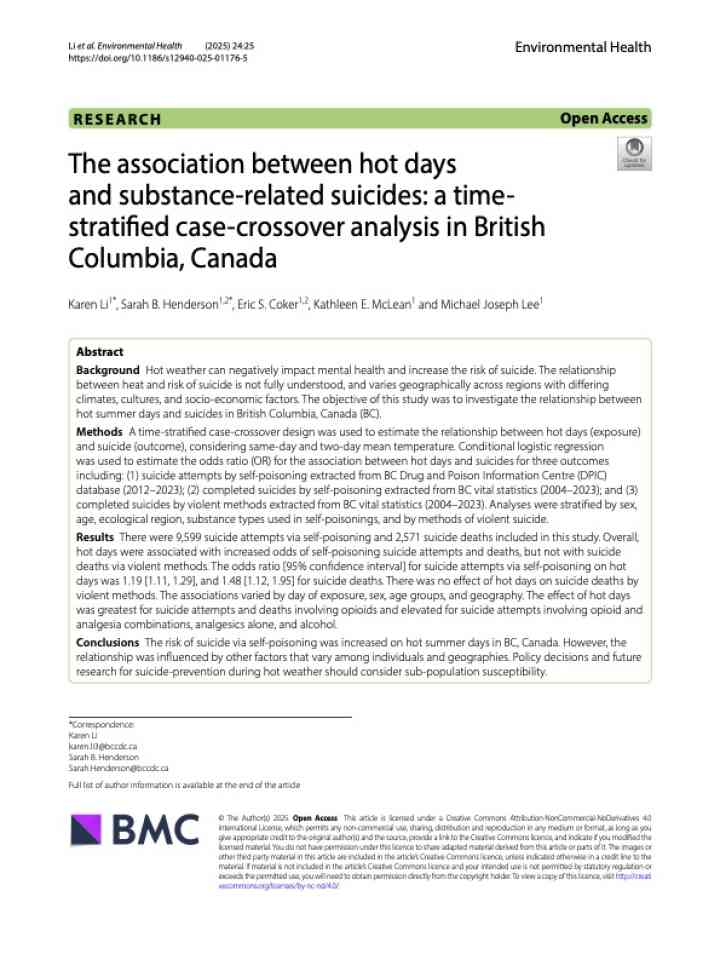
The association between hot days and substance-related suicides: a time-stratified case-crossover analysis in British Columbia, Canada
This study investigates the relationship between hot summer days and substance-related suicides in British Columbia, Canada. Using a time-stratified case-crossover design, the researchers analyzed data from the BC Drug and Poison Information Centre (2012–2023) and BC vital statistics (2004–2023). They assessed the impact of high temperatures—defined relative to local and seasonal norms—on suicide attempts and deaths, focusing on self-poisoning and violent methods. The study further examined how this relationship varied across demographics (sex, age), regions (ecological zones), and substance types involved in the suicides, with a specific interest in opioids and other commonly misused substances.
The study found that hot days significantly increased the odds of suicide attempts and deaths by self-poisoning, especially those involving opioids, alcohol, and analgesics. The effect was stronger in certain regions, notably the coastal and dry plateau ecoregions, and among males. In contrast, hot days had no significant association with suicide deaths by violent methods. The temperature on the day of the suicide attempt or death (rather than preceding days) was the most influential factor, highlighting the acute risk posed by heat exposure. These findings point to a need for public health interventions targeting at-risk groups during heat events, particularly within the context of the ongoing opioid crisis.
Explore further