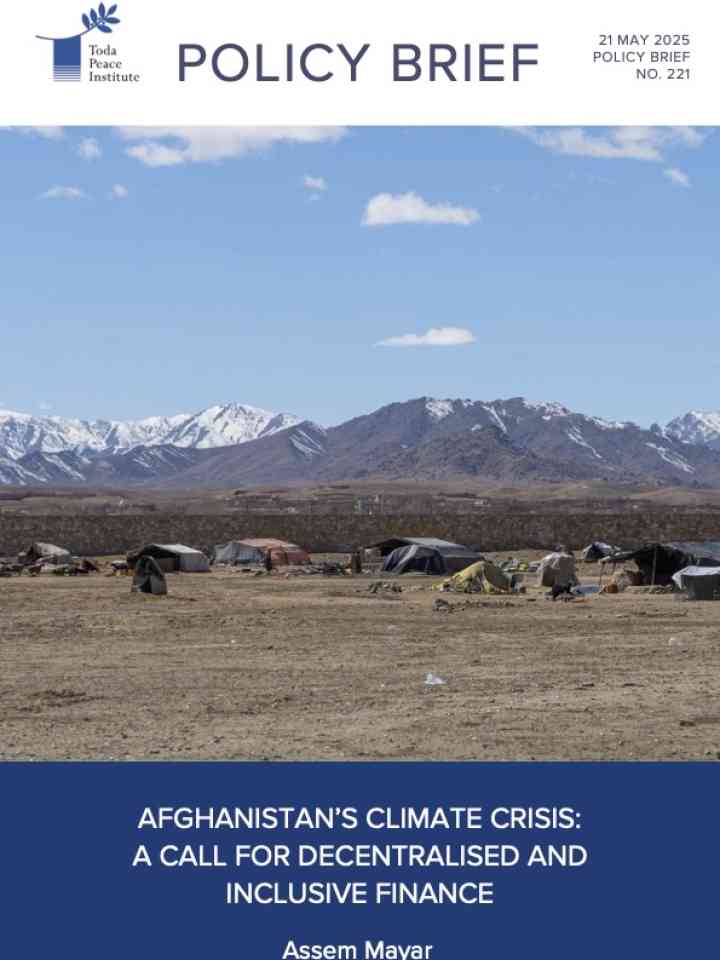
Afghanistan’s climate crisis: a call for decentralised and inclusive finance
Source
This policy brief, based on new data and analysis published by the author in the Afghanistan Analysts Network, outlines Afghanistan’s escalating economic losses due to climate change and mounting adaptation costs, institutional constraints, and possible financing pathways. Fragile governance, limited fiscal space, and international non-recognition have restricted access to climate finance, forcing the country to rely on declining humanitarian aid. It argues that, without targeted international action, Afghanistan may become a harbinger of climate injustice and systemic failure in fragile states.
The brief concludes with seven policy recommendations:
- Reform climate finance access rules to prioritize fragile states through decentralized funding channels.
- Increase adaptation funding for non-state actors that align with Afghanistan’s national climate plans.
- Integrate Afghanistan into regional initiatives and early warning systems for cross-border climate resilience.
- Support small-scale, nature-based adaptation solutions such as groundwater recharge and drought-resistant crops.
- Expand bilateral and South-South financing to directly support community-based adaptation without relying solely on multilateral funds.
- Appoint technically qualified leadership in NEPA to ensure effective climate governance and global representation.
- Facilitate NEPA’s engagement with UNFCCC, allowing submission of national climate plans and participation in COP events.
Explore further
Themes
Climate change
Financing DRR
Country and region
Afghanistan
Number of pages
9 p.
Publication year
2025