Items: 45
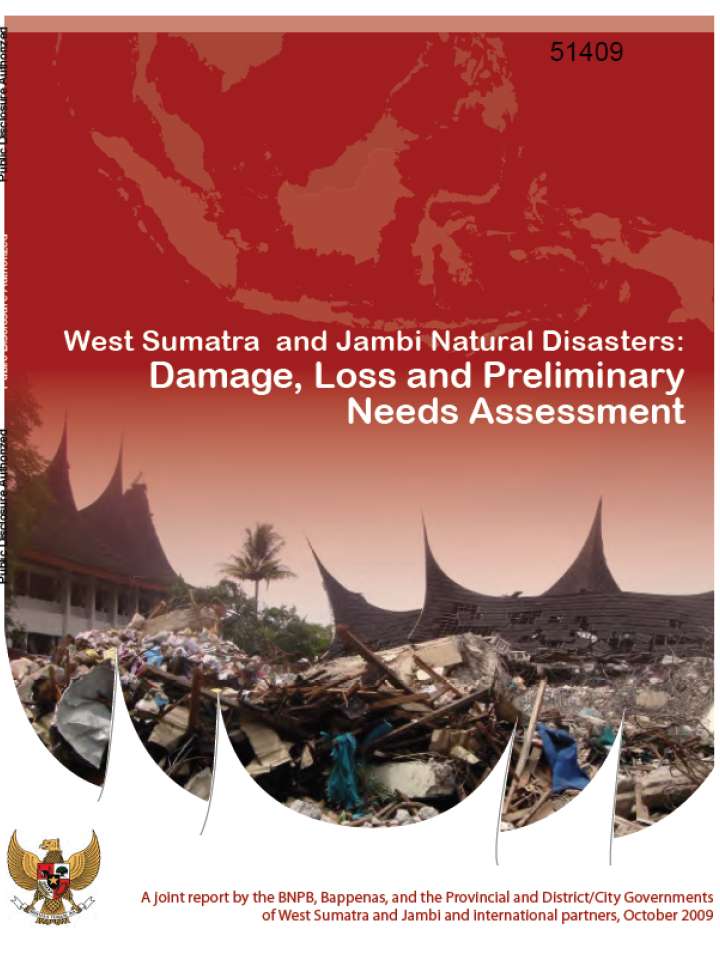
This report presents the assessment of the damage, losses and human recovery needs resulting from the earthquakes in West Sumatra and Jambi.

This document contains the ten most important management lessons learned over a period of four years by BRR, the coordinating agency responsible for the reconstruction of Aceh and Nias following the 2004 Indian Ocean tsunami.
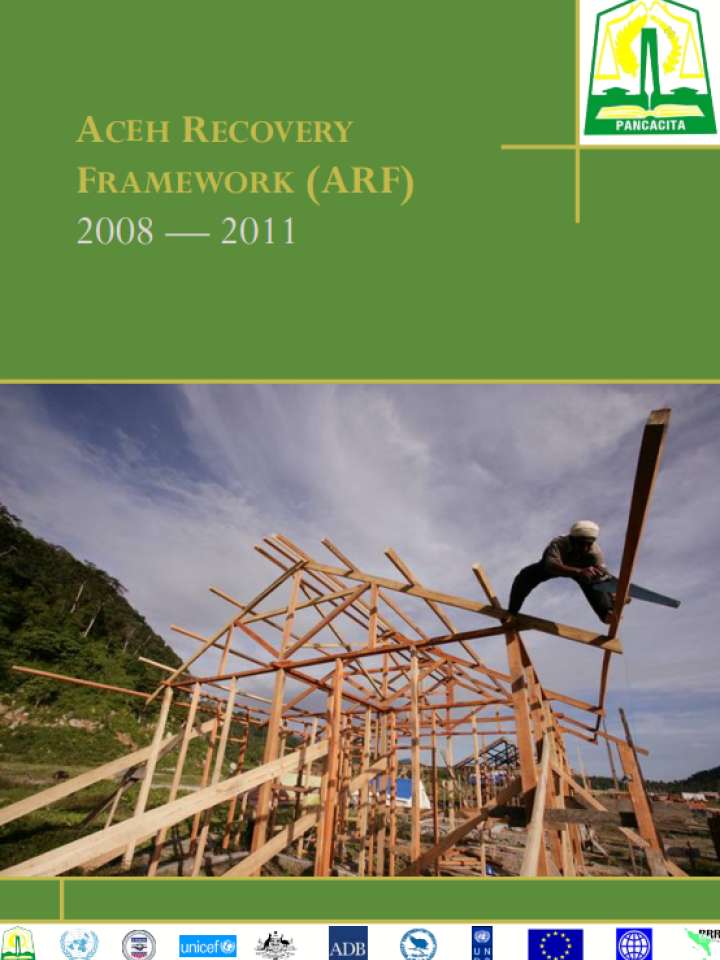
This document presents the major challenges in Aceh’s transition and governmental priorities, benchmarks and outcomes in virtually every sector of peace building, recovery and development activity in the aftermath of the 2004 earthquake and tsunami.

The Project “Disaster Awareness in Primary Schools” is an effort aiming to strengthen risk awareness in Indonesian Primary Schools and to prepare the school community to act in a way that the risk of becoming victim is reduced in case disaster str
ACDR2008 aims to further follow up the progress made towards the implementation of Hyogo Framework for Action (HFA) and identify the gaps and challenges in the Asian region.
The joint effort so far in reconstructing Aceh and Nias has been an enormous undertaking.
Some 80 people, including government officials at national and provincial level, representatives of UN agencies, as well as national and international NGOs, convened in Jakarta on 16 and 17 May 2005 for a two-day lessons learned and best practices

In an attempt to help translate some of the most urgent findings from this REA into concrete action, part of this REA process concentrated on prioritizing a small number of these from the extensive list of concerns and key issues identified.
Voluntary Commitments
The organization has no registered commitments.
The Sendai Framework Voluntary Commitments (SFVC) online platform allows stakeholders to inform the public about their work on DRR. The SFVC online platform is a useful toolto know who is doing what and where for the implementation of the Sendai Framework, which could foster potential collaboration among stakeholders. All stakeholders (private sector, civil society organizations, academia, media, local governments, etc.) working on DRR can submit their commitments and report on their progress and deliverables.