
Items: 495
The Chinese government has now adopted sponge cities as an urban planning and eco-city template to cope with monsoonal rain. The designs use soft material and terraces to capture water which can then be extracted for use, rather than the usual concrete and steel materials which do not absorb water.
The increasing strength, intensity and duration of tropical cyclones has climate scientists questioning whether a new classification needs to be created: a category-six storm. The new category would reflect the growing severity of tropical cyclones in the wake of warming sea temperatures and climate change.
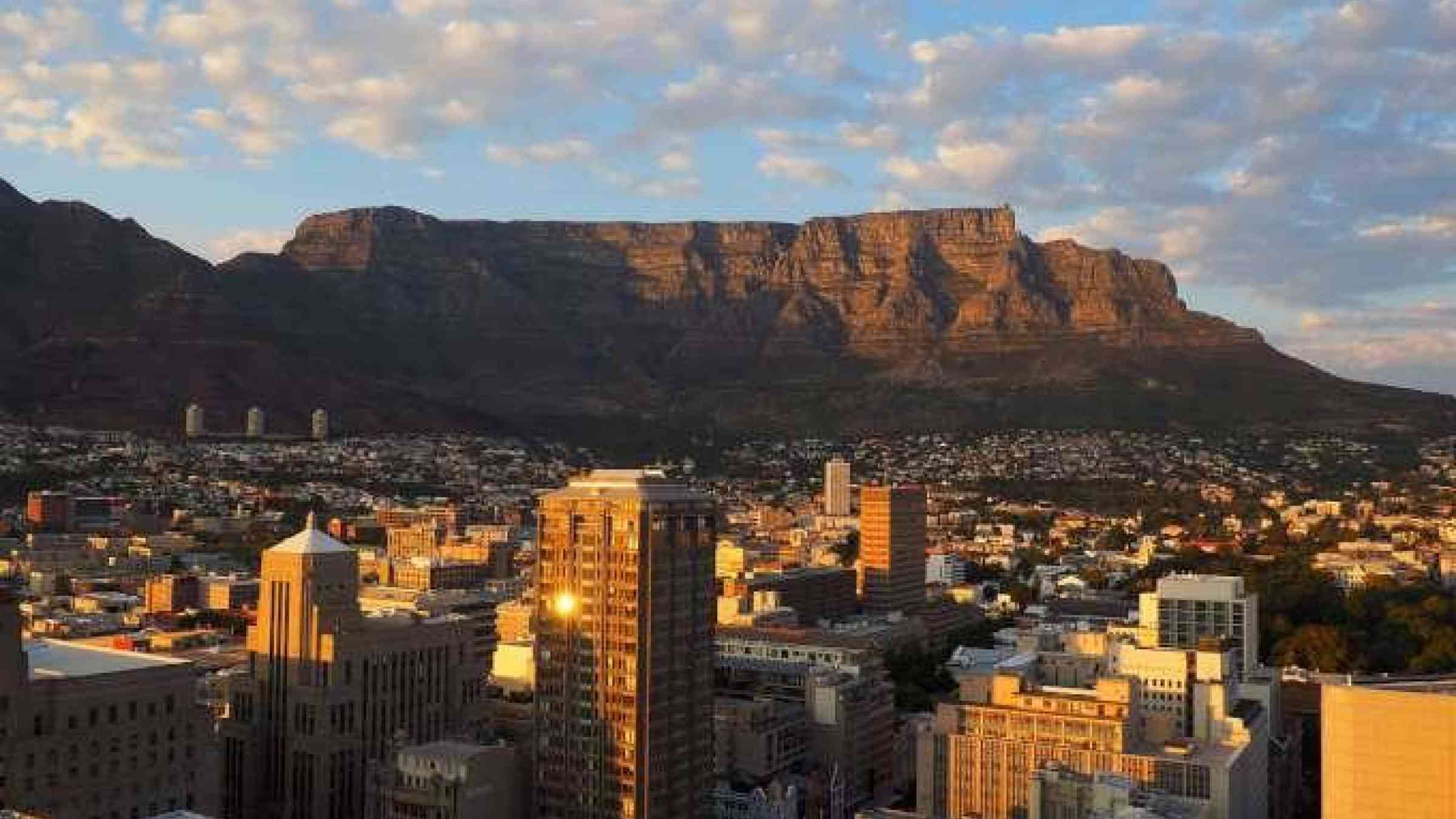
Cape Town (South Africa) has been in drought since 2015 and other major urban areas with comparable population and climatic characteristic could face a similar crisis. Experts say lessons learned during Australia's millennium drought, may help avert a global crisis.
A project harnessing data from a Japanese satellite could improve weather forecasting and allow officials to issue life-saving warnings before natural disasters, researchers say. The breakthrough is the result of pairing data collected by Japan’s Himawari-8 weather satellite with a programme run on a supercomputer at the country’s Riken science institute.
With 90% of Hull standing below the high-tide line, its devastating recent floods were a sign of things to come. Can the UK’s 2017 city of culture be retrofitted against disaster – or should its people think about moving on?
America’s fourth largest city is built on an ancient river network that flooded catastrophically after Hurricane Harvey. With 400,000 homes in the watershed, achieving resilience is the Texan boom town’s greatest challenge.
The UK government is funding a project which will have beavers released into the Forest of Dean to stop a village from flooding. The beavers' dam-building stores large quantities of water and slows peak flows during flood events. This has potential to work as a flood disaster reduction purpose, in a less expensive and environmentally friendly way.
The wildfires faced by Los Angeles are highly unusual at this time of the year, with Christmas only a few weeks away. There are several factors to the exceptionally strong fires, including unseasonably warm weather in California, high shrub growth creating more fuel, and warming temperatures due to climate change.
Voluntary Commitments
The organization has no registered commitments.
The Sendai Framework Voluntary Commitments (SFVC) online platform allows stakeholders to inform the public about their work on DRR. The SFVC online platform is a useful toolto know who is doing what and where for the implementation of the Sendai Framework, which could foster potential collaboration among stakeholders. All stakeholders (private sector, civil society organizations, academia, media, local governments, etc.) working on DRR can submit their commitments and report on their progress and deliverables.