
Items: 37
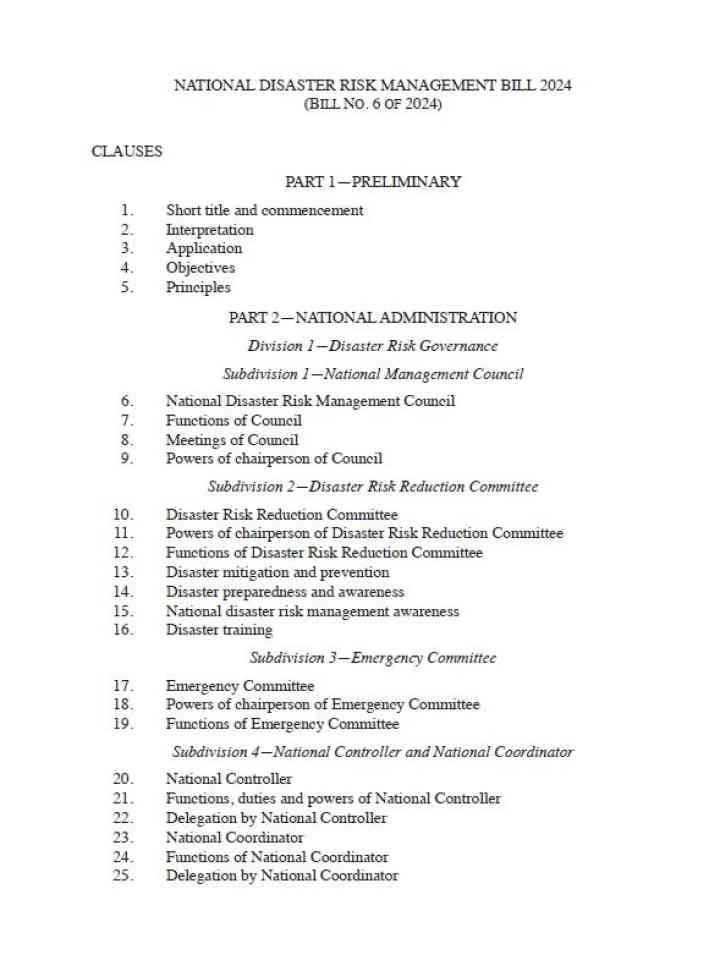
The National Disaster Risk Management Bill (Bill No 6 of 2024) is designed to build a more resilient Fiji.

Approximately 171,611 Fijians in the Rewa Delta, Naitasiri, and parts of Tailevu will now benefit from 17 newly installed Flood Early Warning Systems.
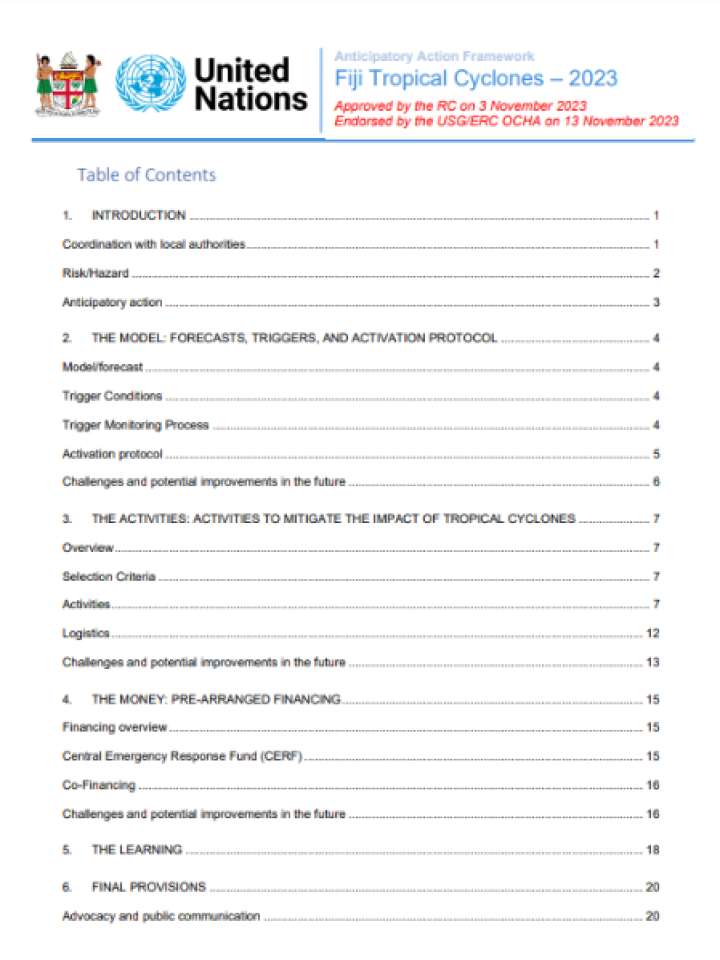
This pilot builds on existing disaster risk management capacity of Fiji for tropical cyclones, including well established climate and disaster risk governance, early warning systems and coordination structures.
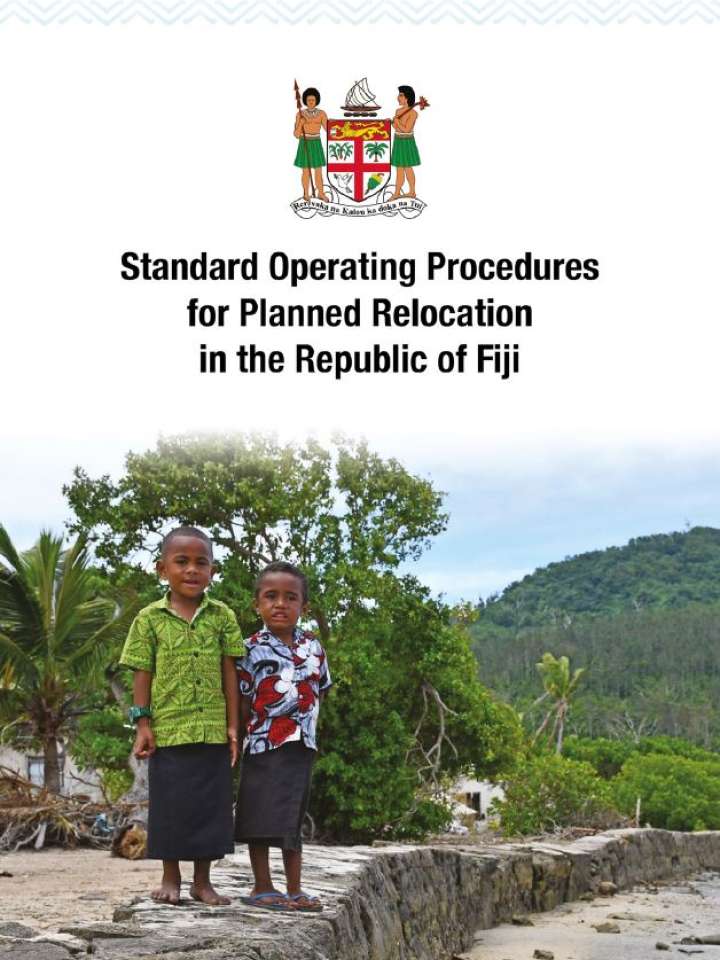
The Standard Operating Procedures for Planned Relocation (SOP) in Fiji is one of the most comprehensive national documents in the world, providing detailed instructions and guidance on processes for climate-induced planned relocation.
The Ministry of Rural and Maritime Development and Disaster Management has been preparing facilities and mobilising resources for the impending 2021-2022 Cyclone Season.
Fiji communicates this update to the United Nations Framework Convention on Climate Change for its existing Nationally Determined Contribution (NDC) pursuant to Article 4.11 of the Paris Agreement.
De-silting works along the Nakauvadra river in Rakiraki have commenced, helping minimize flooding along in the Rakiraki town and at neighboring communities.
FJ$18 million has been provided to Fiji by Japan through its Economic Social Development Programme, to enable tsunami early warning systems, a dredger and an ice plant.
Voluntary Commitments
The organization has no registered commitments.
The Sendai Framework Voluntary Commitments (SFVC) online platform allows stakeholders to inform the public about their work on DRR. The SFVC online platform is a useful toolto know who is doing what and where for the implementation of the Sendai Framework, which could foster potential collaboration among stakeholders. All stakeholders (private sector, civil society organizations, academia, media, local governments, etc.) working on DRR can submit their commitments and report on their progress and deliverables.