Items: 33
The Bangladesh Standing Orders were prepared with the objective of making the concerned persons understand their duties and responsibilities regarding disaster management at all levels, and accomplishing them.
This report provides an assessment of the achievements and progress made in disaster risk reduction (DRR) by Bangladesh during the International Decade for Natural Disaster Reduction (IDNDR).
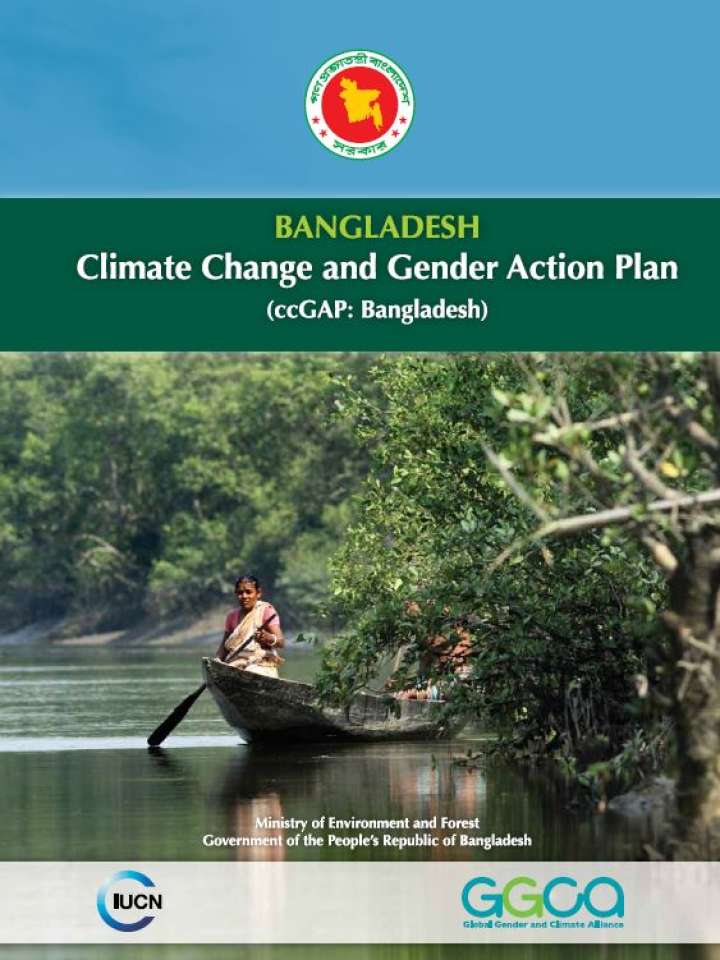
This document defines how the Ministry of Environment and Forest will promote gender equality and women empowerment internally as well as with partners while tackling climate change issues.
This report presents the institutional and legal framework for disaster risk reduction in Bangladesh, and describes its common disaster risks and natural hazards, such as flood, storm, drought, and cyclone.
This report presents country’s disaster risks and natural hazards, such as cyclone, flood, earthquake and drought, and describes governmental and institutional structures responsible for disaster management in Bangladesh.
This paper discusses disaster's impact upon Bangladesh and presents governmental and institutional structures responsible for disaster management.
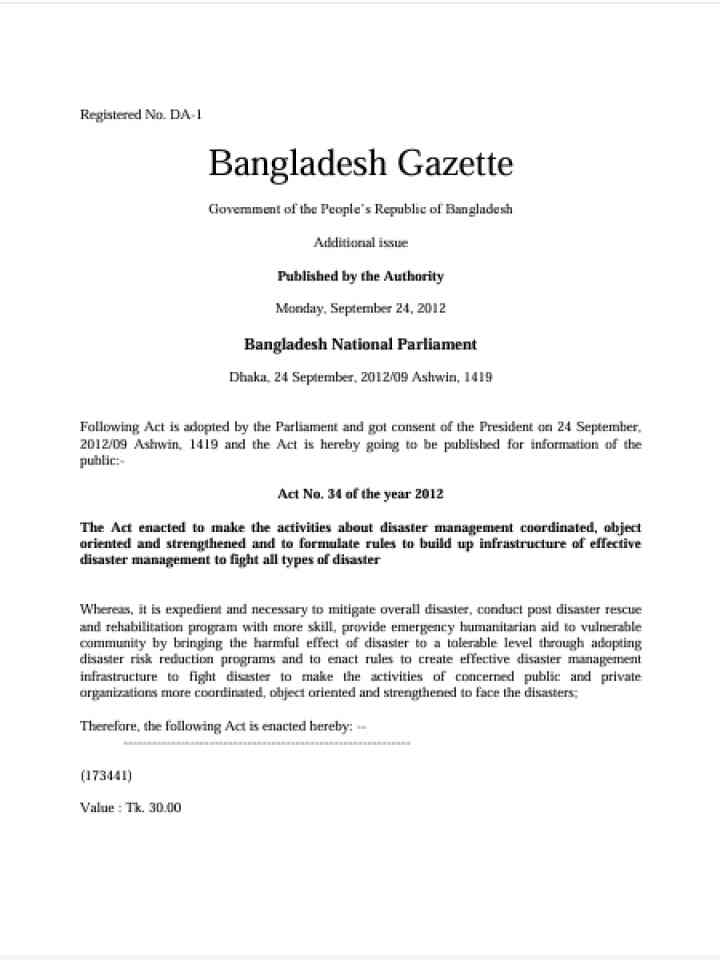
The Act enacted to make the activities about disaster management coordinated, object oriented and strengthened and to formulate rules to build up infrastructure of effective disaster management to fight all types of disaster.
A declaration, adopted by 19 climate vulnerable countries, reaffirming the commitment by climate vulnerable countries to focus on adaptation, particularly in the short term in order to minimise immediate danger, and calling on developed countries
Voluntary Commitments
The organization has no registered commitments.
The Sendai Framework Voluntary Commitments (SFVC) online platform allows stakeholders to inform the public about their work on DRR. The SFVC online platform is a useful toolto know who is doing what and where for the implementation of the Sendai Framework, which could foster potential collaboration among stakeholders. All stakeholders (private sector, civil society organizations, academia, media, local governments, etc.) working on DRR can submit their commitments and report on their progress and deliverables.