
Meta, X & YouTube threaten public safety by enabling and profiting from false claims during catastrophic weather events
As Texas reels from fatal floods, CCDH reveals how conspiracies about extreme weather spread faster than life-saving alerts.
New research from the Center for Countering Digital Hate (CCDH) reveals that the four leading social media platforms actively enable and profit from false information around extreme weather events, leading to increased risks to public safety, impeded emergency response, and erosion of public trust in disaster relief efforts. This new CCDH report reveals how, in the wake of extreme weather tragedies over the past year such as the Texas floods, LA fires, and Hurricane Helene, social media platforms amplified conspiracy theorists while sidelining vital emergency information, putting lives at risk.
"While families mourned and first responders combed through wreckage after climate disasters in Texas and California, social media companies shamelessly exploited these catastrophes for profit. The rapid spread of climate conspiracies online isn't accidental, it's baked into a business model that profits from outrage and division," said Imran Ahmed, CEO of CCDH. "LA County officials told me that after the fires earlier this year, scammers placed social media ads impersonating federal emergency aid agencies to steal victims' personal information. When distraught people can't distinguish real help from online deception, platforms become complicit in the suffering of innocent people."
Key Findings
Researchers analyzed 100 viral posts on each of three major platforms during recent extreme weather events, including the LA fires and Hurricanes Helene and Milton. They found:
- Meta (Facebook & Instagram) lacked fact-checks or Community Notes on 98% of posts analyzed.
- X lacked fact-checks or Community Notes on 99% of posts analyzed.
- YouTube failed entirely, with zero fact-checks or Community Notes on 100% of posts analyzed.
The influence of high-profile conspiracy theorists during climate disasters is drowning out emergency response efforts. For instance:
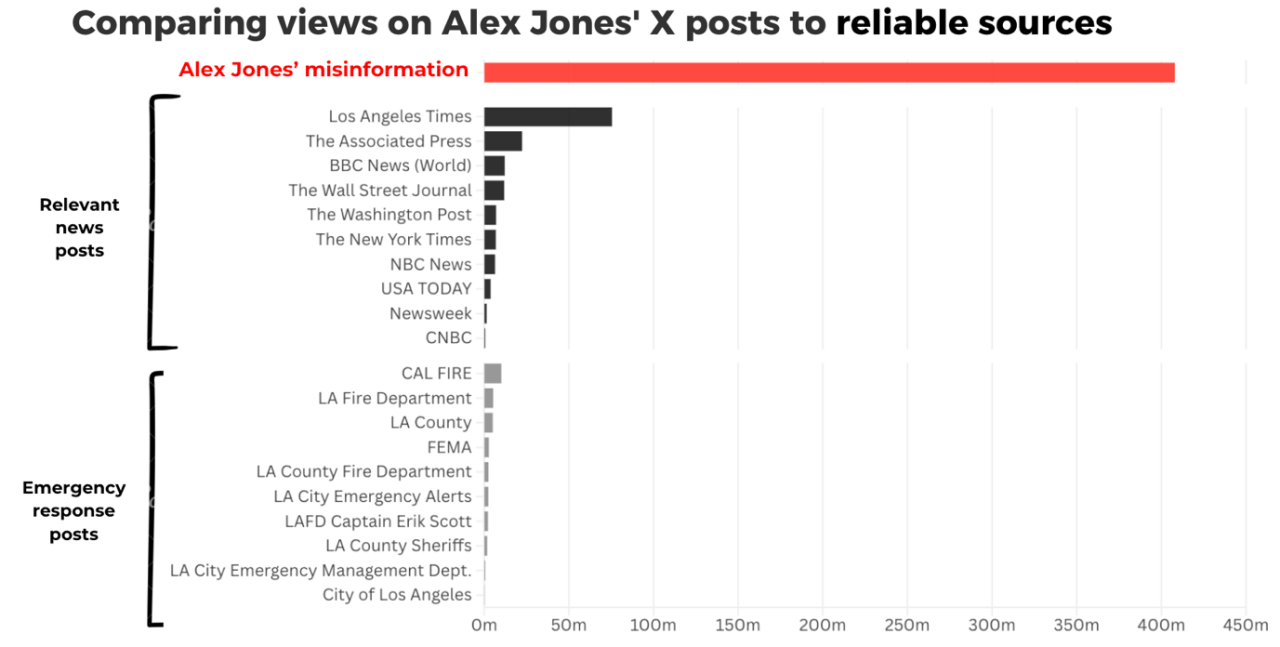
- Alex Jones' false claims during the LA wildfires, including conspiracies about food confiscation and "globalist" plots, amassed more views on X than the combined reach of FEMA, the LA Times, and ten major news outlets and emergency agencies from January 7th - January 31st, 2025.
The study also reveals that verified users who receive enhanced visibility and monetization privileges are among the worst offenders:
- 88% of misleading extreme weather posts on X came from verified accounts.
- 73% of such posts on YouTube were from verified accounts.
- 64% on Meta were from verified accounts.
"It is appalling that see how the climate science deniers and conspiracy theorists catalogued in DeSmog's database are manipulating extreme weather events to disseminate their fact-free fallacies. However, perhaps even more shocking is that social media companies are actively profiting from the disinformation that spreads like wildfire on their platforms," said Sam Bright, DeSmog's UK deputy editor. "This report unequivocally shows that climate disinformation costs lives. As extreme weather events become more and more frequent, these falsehoods will only get more dangerous."
Recent disasters revealed a dangerous pattern where falsehoods outpaced facts in weather disasters. Following Hurricanes Helene and Milton in late 2024 and the LA fires in early 2025, conspiracy theories flooded social media-baseless claims that hurricanes were "geo-engineered weapons" and wildfires were ignited by "government lasers" spread faster than updates from emergency officials and reliable news outlets. Lies that migrants were prioritized for aid incited public anger, while scammers exploited survivors through ads impersonating federal assistance programs. In one alarming case, a man influenced by online lies was arrested for threatening FEMA personnel at a relief site.
This report examines various themes in false or misleading posts about extreme weather, including:
- Misleading claims about the causes of severe weather events, e.g. false claims that the LA wildfires were intentionally set as part of a "globalist plot" or hurricanes controlled by "weather weapon technology".
- Misleading claims about disaster relief aid, e.g. misleading claims about the availability of Federal Emergency Management Agency (FEMA) relief funds, the use of FEMA budgets, and eligibility criteria for citizens accessing funds.
- Misleading claims about emergency responses, e.g. that firefighters failed to act and misleading claims about the availability of water for tackling wildfires.
- Misleading claims about the impact of climate change, e.g. misleading interpretations of data to suggest that the intensity and number of hurricanes is decreasing, or false characterizations of climate science as alarmism.
- Misleading claims about political responses, e.g. false claims that the Biden administration halted aid to hurricane victims, or that the LA wildfire water shortage was a result of environmental policies to protect a fish species.