
How Egypt is strengthening coastal adaptation in the Nile Delta
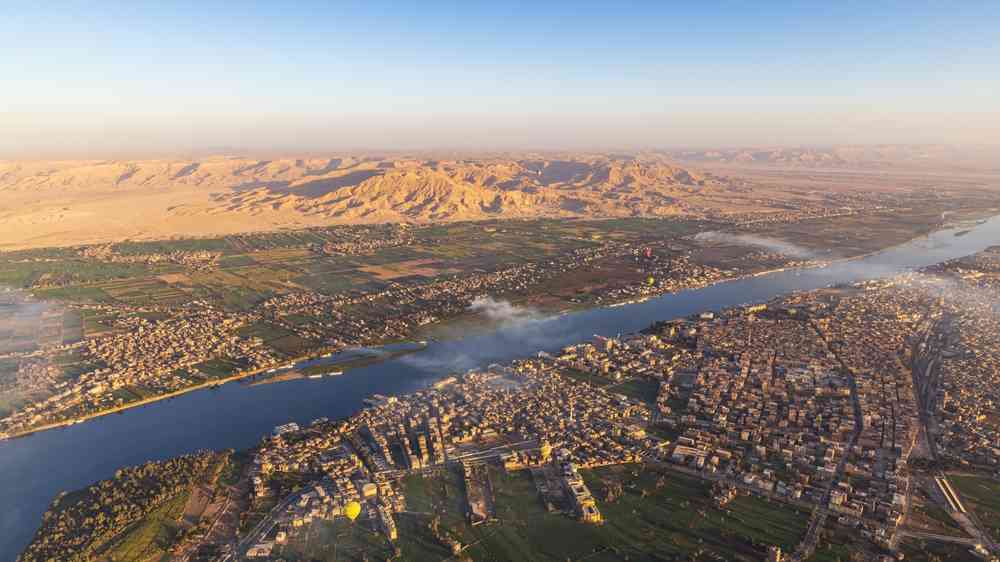
Stretching across the northern edge of the country, the Nile Delta is one of Egypt’s most productive and densely populated regions. Home to millions of people, it supports critical infrastructure, thriving coastal communities and some of the country’s most valuable agricultural land. Yet it is also among the areas most vulnerable to climate change.
Sea-level rise, coastal erosion, coastal flooding and saltwater intrusion are placing growing pressure on the Delta’s ecosystems and economy. Even relatively small increases in sea level can have significant consequences in the low-lying coastal zone, where agricultural land, settlements, roads and public services are concentrated close to the shoreline. At the same time, erosion steadily consumes beaches and natural coastal barriers that have protected communities for generations. Coastal flooding disrupts livelihoods and damages homes and infrastructure, while saltwater intrusion threatens soil quality and agricultural productivity.
Managing these challenges is particularly complex because the coastline serves many competing functions. It supports agriculture, fisheries, tourism, urban development, industry and transportation networks. Decisions made in one sector can have consequences for another, requiring a coordinated approach that balances environmental protection, economic development and climate resilience.
Historically, coastal management efforts have often been undertaken by different institutions working independently, making long-term planning difficult. But addressing climate risks at the scale required demands more than just individual infrastructure investments. It also needs stronger institutions, better climate data and effective coordination across government agencies and local stakeholders.
To help safeguard vulnerable communities and ecosystems in the Nile Delta, the Government of Egypt and UNDP started a seven-year project in 2018, with support from the Green Climate Fund (GCF). Egypt’s Ministry of Water Resources and Irrigation, through its Shore Protection Authority, is implementing the initiative.
With US$31.4 million in grant financing from the GCF and $73.8 million in co-financing from the Government of Egypt, the project represents one of the country’s largest climate adaptation investments focused on coastal resilience and is the largest grant the country has obtained for climate change adaptation.
The project was designed around a simple but ambitious goal: reduce the vulnerability of Egypt’s North Coast and Nile Delta to climate change while strengthening the institutions and systems needed to manage climate risks in the long term.
Rather than relying solely on hard infrastructure, the project combines nature-based solutions , climate-informed planning, institutional strengthening, capacity development and improved climate observation systems.
One of the project's most visible achievements has been the construction of low-cost environmentally friendly coastal protection measures along vulnerable stretches of shoreline. By 2025, the project had completed 69 kilometres of coastal protection works across five priority hotspots in the Nile Delta, helping reduce erosion and coastal flooding risks in some of the country's most vulnerable areas. The nature-based solutions implemented, such as sand dunes and woven reed fences, cost a fraction of conventional hard defences. They are maintained with local materials and skills and have performed effectively during severe winter storms. For instance, communities in Kafr El-Sheikh have passed storm seasons without inundation for the first time in decades.
Building on this success, construction of an additional six kilometres of soft coastal protection systems was carried out in the Beheira and Kafr El-Sheikh governorates. The benefits of these protections extend beyond the shoreline by safeguarding agricultural land, infrastructure, homes and economic activities that support local livelihoods. At launch, the project was expected to directly benefit approximately 768,000 people living in vulnerable coastal areas, while contributing to improved resilience for an estimated 17 million more. By the end of 2024, these numbers had already been reached.
However, physical protection is only one part of the solution.
Another defining feature of the project has been its focus on strengthening the systems and institutions needed to sustainably manage climate risks in the long run. The project has delivered Egypt’s first climate-risk-informed Integrated Coastal Zone Management (ICZM) plan, covering the entire Mediterranean coastline — approximately 1,200 kilometres. The plan has been finalized and adopted, and pilot implementation has been carried out in the Damietta and Matrouh governorates.
The plan provides a strategic framework for balancing climate resilience, economic growth and environmental sustainability across the coastal zone. Developed through extensive technical studies, climate risk assessments and stakeholder consultations, it offers a roadmap for managing coastal risks while supporting sustainable development.
To ensure broad ownership, the project convened ministries, local authorities, technical experts and community representatives throughout the planning process. Feedback from these consultations was incorporated into the final plan, helping build consensus around adaptation priorities and strengthening coordination among institutions responsible for managing the coast.
Importantly, the project also supported the development of institutional arrangements needed to put the plan into practice. Working closely with the Ministry of Water Resources and Irrigation, the Ministry of Environment, the Ministry of Housing, the Ministry of Local Development and other partners, the initiative helped establish a governance framework for implementing the ICZM plan. This framework was submitted to Egypt’s Cabinet for ratification in February 2026, and its foundations are already being laid: ICZM committees have been formed in eight Mediterranean coastal governorates, and the governors of Kafr El-Sheikh and Damietta have issued decrees anchoring coastal management standards in local decision-making.
Scientific evidence has been central to this effort. The project commissioned specialized studies examining erosion, flooding, saltwater intrusion and socio-economic vulnerabilities along the North Coast. By integrating climate science into planning processes, Egypt is improving its ability to anticipate future risks and design adaptation measures based on robust evidence.
At the same time, the project has invested in people.
Training programmes have strengthened the capacity of technical staff across government institutions, focusing on climate modelling, data management, system monitoring and climate risk management. The project also expanded its ICZM ‘climate ambassadors’ programme which is now in its fourth phase, with 160 members. This programme supports government officials in coastal governorates and national ministries to advance climate-informed coastal planning and implementation.
Another important milestone has been the roll-out of Egypt’s first integrated coastal monitoring system, spanning the entire Mediterranean coastline. Seven sea-level monitoring stations now operate between Arish and Salum, alongside wave, weather and groundwater monitoring equipment, transmitting data to the National Water Research Center. This system lays the foundation for stronger collection, analysis and dissemination of climate and coastal data and helps inform adaptation decisions and strengthen early responses to emerging risks.
The project has also carried out awareness campaigns and outreach activities in areas benefiting from coastal protection measures. Working with local authorities and civil society organizations, these initiatives have helped to increase understanding of climate risks and the role communities can play in maintaining and supporting adaptation measures. Surveys conducted during implementation indicated that public awareness of climate change impacts and adaptation options has improved.
As the project approaches completion in late 2026, its legacy will continue well beyond its lifetime. The Government of Egypt has committed to operating and maintaining the 75 kilometres of coastal protection for the next 40 years, while ICZM committees, a coastal building code, a national monitoring network and hundreds of trained officials and climate ambassadors will carry the work forward.
However, adapting to sea level rise will require continued action and the introduction of new techniques as risks evolve. To support this long-term challenge, UNDP continues to assist the government in positioning adaptation to sea-level rise at the national planning level, enabling national and local authorities to lead the design and implementation of further interventions needed to protect its vulnerable low-lying lands for decades to come.