
As climate change expands mosquito ranges, better monitoring is key to preventing disease
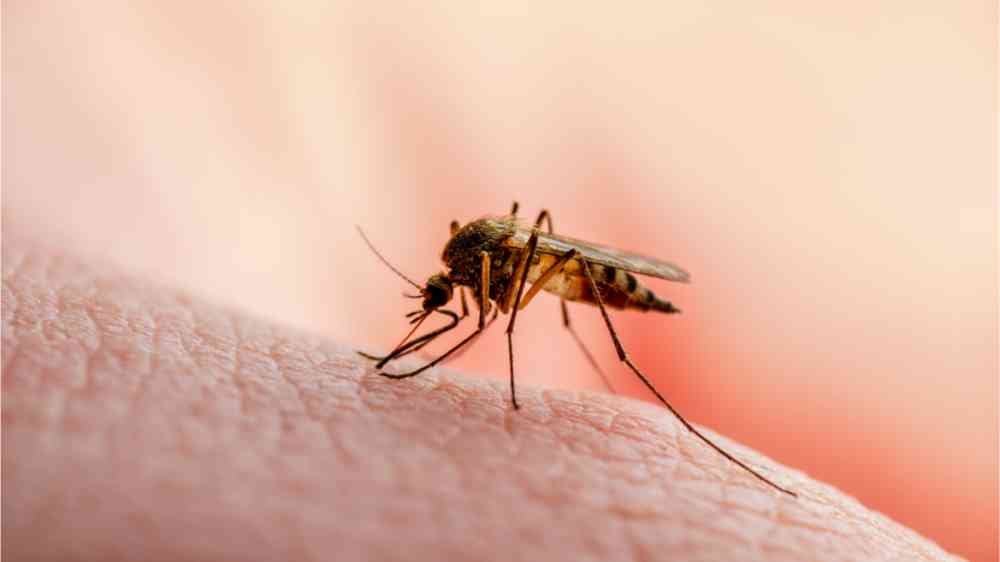
With summer heat comes pool parties, beach days, backyard cookouts and, of course, swarms of bloodthirsty mosquitos.
But while insect bites have always been a side effect of time spent outdoors, the species doing the biting are changing in historically temperate regions like New England. As climate change makes these areas warmer and wetter, their ranges are expanding—and any diseases they carry come with them.
In Connecticut, for example, a statewide mosquito monitoring program has detected 54 different species, including invasives like the Asian tiger mosquito, which can transmit potentially serious diseases including dengue and Zika. The mosquito’s historical territory is in hot and humid climates farther south, but it has been moving north.
“There are a number of new species that are creeping into our area,” said Philip Armstrong, chief scientist at the Connecticut Agricultural Experiment Station, which coordinates the state’s mosquito trapping and testing program.
Programs like these are key for preventing mosquito-borne diseases, especially as climate change alters the risks. “You really do have to test the mosquitoes to know where the hot spots are for these viruses,” Armstrong said. “By the time we learn about human cases, it’s usually too late to do anything.”
There aren’t statewide monitoring programs in much of the country. Instead, a patchwork quilt of more than 1,000 mosquito control agencies tries to keep ahead of an evolving problem. Most are run at the local level, with a wide range of organizational structures and monitoring practices.
The U.S. ought to have a national surveillance database collecting and sharing information from all monitoring programs, said Dan Markowski of the American Mosquito Control Association, a nonprofit that works to reduce mosquitos and vector-transmitted diseases. But, he added, “it all obviously comes back to money.”
“There’s these cycles of increased virus activity, and we didn’t see that before, historically. It has the hallmarks of something that’s being affected by climate change.”
— Philip Armstrong, Connecticut Agricultural Experiment Station
Last week, Connecticut announced that mosquitos in the state have already tested positive for West Nile virus this season. The virus, which appears every summer, has become the leading cause of mosquito-borne disease in the Northeast. While most infections are asymptomatic, it can cause flu-like symptoms and has resulted in more than 3,300 deaths since it first appeared in the U.S. in 1999.
Connecticut established its monitoring program two years before that to monitor for a different virus: Eastern equine encephalitis, a rare but serious mosquito-borne disease that can cause neurological issues and has a roughly 30 percent fatality rate. While it is still uncommon, outbreaks are becoming more frequent in New England.
“There’s these cycles of increased virus activity, and we didn’t see that before, historically,” Armstrong said. “It has the hallmarks of something that’s being affected by climate change.”
In temperate regions like the Northeast, global warming can alter mosquito-borne disease risks not only by expanding the range of virus-carrying insects but also by lengthening the transmission season, reducing the number of mosquito predators and changing habitats, among other factors. Researchers predict that tropical mosquito-borne diseases like Zika, dengue, chikungunya and malaria will likely become established in temperate areas because of climate change.
“As the temperatures rise, you can actually speed up mosquito development, so you can have multiple cycles of mosquitoes every year in new areas,” said Brian Leydet, who studies mosquito and tick-borne diseases at the State University of New York College of Environmental Science and Forestry.