
Assessment of multiple predictors to the psychological effects of flooding for residential and business sectors in Peninsular Malaysia
Experiencing a severe flood can lead to profound emotional and mental distress, including anxiety, depression, and long-term stress. These mental health struggles often stem from the trauma of losing cherished possessions, disrupted daily routines, or the terrifying threat to personal safety and the lives of loved ones. Yet, because mental well-being is an “intangible” loss, it is frequently excluded from traditional flood damage calculations and public investment planning. If we cannot measure peace of mind, how do we convince policymakers to fund emotional and psychological recovery?
A new emerging research was conducted to understand the severity of psychological impacts of flooding in flood-prone regions in Peninsular Malaysia. By using multivariate analysis, the study quantifies the specific factors that intensify the psychological burden on families and businesses, providing a data-driven roadmap for authorities to invest in human resilience alongside physical infrastructure.
To understand the severity of the psychological impact, the research team carried out field work in affected communities in Kuala Lumpur, Selangor, and Kelantan areas with a long history of devastating, large-scale evacuations to collect first-hand information from people who have experienced flood impacts. Rather than asking residents to simply rate their stress on a scale, the researchers utilised a concept from disaster economics: determining the monetary amount a person would be willing to pay for flood mitigation services that specifically alleviate their psychological distress. While it might sound unusual to put a price tag on mental health, asking residents how much they would financially contribute to prevent future anxiety and stress serves as a powerful proxy. It translates human suffering into a language that cost-benefit analysts and government planners can understand and integrate into risk-based decision-making.
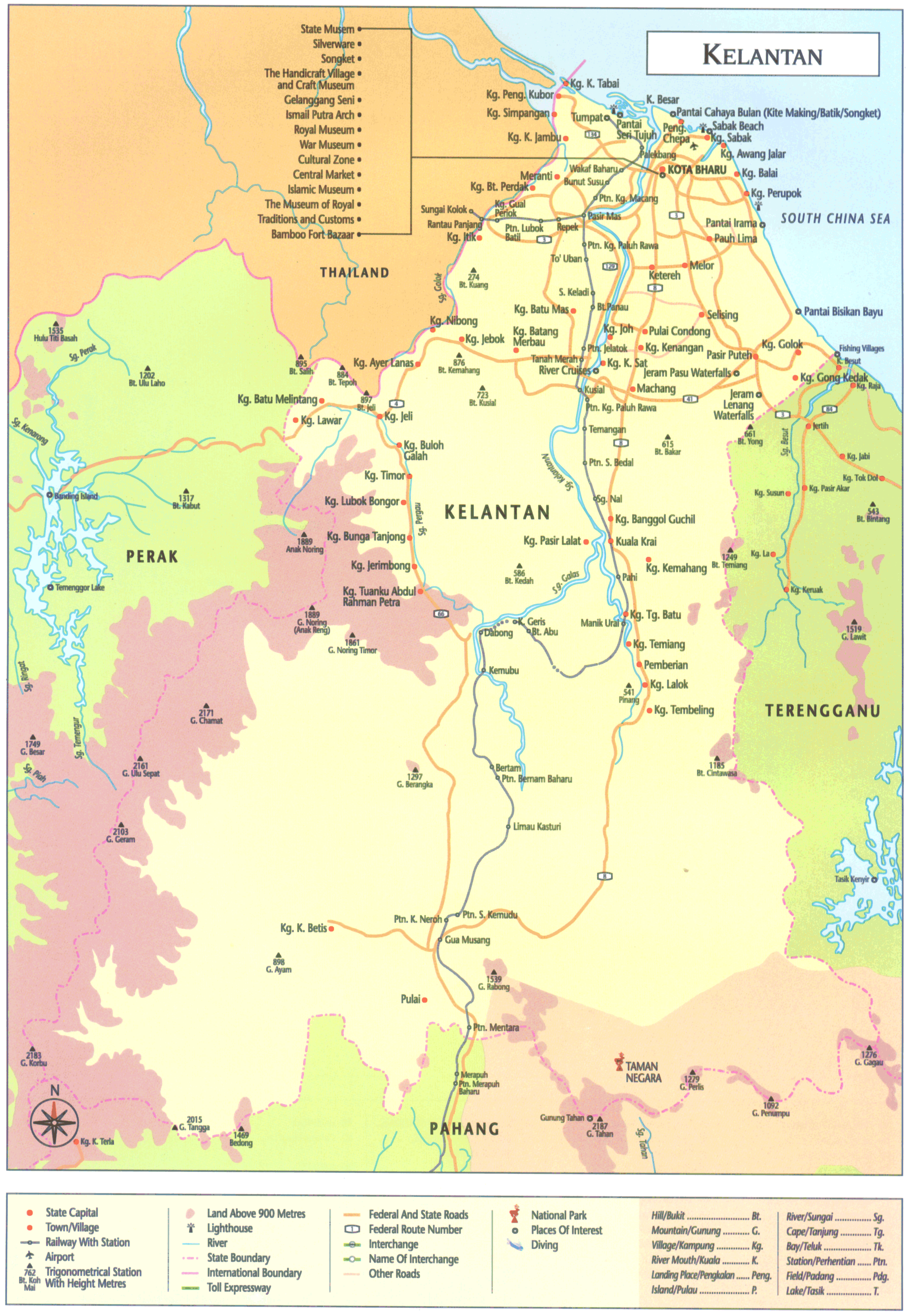
The study focused on 217 respondents across residential households and business premises. Through careful face-to-face interviews, researchers explored whether specific flood conditions (e.g., flood depth) or social characteristics (e.g., household income) worsened a person’s psychological suffering. This indicates their willingness to spend in order to reduce the burden of flood impact. When analysing residential households, the researchers uncovered two key statistical drivers of psychological distress:
- Flood duration (Flood characteristics): Interestingly, the depth of the floodwater was not the primary driver of psychological distress. Instead, the critical factor was time. The longer the floodwaters lingered around a home, the higher the psychological damage. Every additional day that families were displaced or forced to live in a submerged environment drastically increased their anxiety and stress.
- Family size (socio-economic characteristics): The study also revealed that larger households experience significantly more intangible damage. Specifically, the data showed that adding just one more individual to a family household could lead to a relative increase in the family’s psychological distress by approximately 12.5 percent. This is likely because larger families carry a heavier burden of responsibility during a disaster, increasing the stress of ensuring everyone’s safety, managing evacuations, and recovering lost resources.
While the study also looked at local businesses, quantifying the mental health impact on business owners proved more difficult. However, the data tentatively suggested that larger, more established companies are better equipped to cope with the psychological shocks of a disaster compared to micro-businesses, likely due to greater resources and adaptive capacity.
The findings from the Peninsular Malaysia offer a crucial lesson for global flood management: building resilience is not just about high-strength concrete for higher dams or deeper drainage canals. It is also about protecting human welfare. Because flood duration is such a massive driver of psychological trauma, emergency response mechanisms must be optimised to reduce the time victims spend waiting in flooded areas or temporary evacuation centres. Authorities must focus on rapid water clearance and rapid community recovery. Furthermore, because larger families are disproportionately affected by the stress of flooding, disaster relief programs need to provide targeted protection, early warning systems, and specialised evacuation planning for vulnerable, large households. Ultimately, intangible damages can sometimes be more severe than the physical losses of a disaster. By recognising and measuring the psychological impacts of extreme weather events, we can push for holistic policies that value human well-being just as much as the buildings we live in.