1. Home
  2. Knowledge Base | PreventionWeb
  3. Hazards

Landslide

Landslide is the downslope movement of soil, rock and organic materials under the effects of gravity, which occurs when the gravitational driving forces exceed the frictional resistance of the material resisting on the slope. Landslides could be terrestrial or submarine (Varnes, 1978).

Landslides can be triggered by geological and physical causes such as glacier or snow melts, heavy rains and water pressure, earthquakes, volcanic eruptions and overly steep slopes. Landslides can also be triggered by human action, the most common being building on unstable slopes. Submarine landslides, or massive slides and rock falls hitting the sea can also cause tsunamis.

Landslides can reach speeds of over 50 km/h and can bury, crush or carry away people, objects and buildings. Landslides cannot be predicted but warning systems measuring rainfall levels can provide warning to people living in landslide-prone areas.

Instrumental monitoring to detect movement and the rate of movement can be implemented, for example, extensometers, global positioning system (GPS), seismometers, aerial photography, satellite images, LiDaR (Highland and Bobrowsky, 2008), with varying degrees of success. Increasingly, the science of landslide physics is allowing the nature of these hazards to be understood, which is leading to better techniques through which they can be managed and mitigated (HIP).

Risk factors

  • Population growth
  • Rapid urbanisation
  • Environmental degradation (deforestation and inappropriate use of lands and slopes)
  • High population density, heavy rainfall and rapid land use changes increase the instability of slopes

Risk reduction measures

  • Early warning systems to observe and alert before landslides happen
  • Hazard maps to identify landslides risk and vulnerabilities
  • Integrate landslide risk assessment into urban planning strategies
  • Building codes and standards for materials that reinforce landslide resilience
  • Improve drainage, building tunnels and trenches to stabilise slopes
  • Protect forest cover and regulate logging
  • Raise awareness of landslide risk
  • Regular drills and community evacuation exercises
  • Establish national, regional, and local evacuation plans

Latest Land Slide additions in the Knowledge Base

Uploaded on
The new building of District Hospital Dolpa built by Urban Development and Building Division Office, Nepal
Update

The Anandaban Trauma Centre, which was built in the wake of the earthquakes that struck Nepal in 2015, proved its resilience in the face of disaster in September last year when deadly monsoon rains hit the Kathmandu valley.

Global Network of Civil Society Organisations for Disaster Reduction (GNDR)
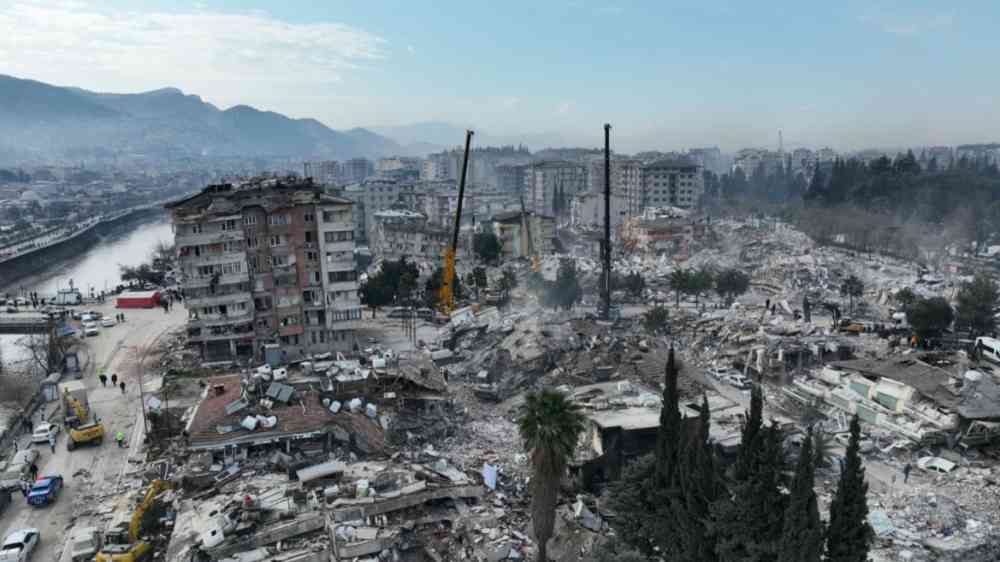
Azerbaijani soldiers take part in search and rescue efforts after 7.7 and 7.6 magnitude earthquakes hit Kahramanmaras, Turkiye on February 10, 2023.
Research briefs

A paper has examined this effect in detail in relation to the 2023 Türkiye-Syria earthquake, the threat of landslides after an earthquake will depend on the timing of the mainshock, as atmospheric river events are strongly seasonal in the affected area.

Eos - AGU
Update

A mobile and website application in the Philippines can soon help the public check if their area is vulnerable to landslides.

Philippines - government
Update

Wildfires increase postfire debris flow risks, causing hazards like floods and infrastructure damage. A conference identified key research priorities: understanding regional drivers, creating a centralized data hub, and improving public communication.

Eos - AGU
Cover
Documents and publications

This research aims to compare the Atami landslide with previous landslides occurring between 2013 and 2021, focusing on their causes and impacts, particularly on elderly people.

Natural Hazards Research (KeAi - ScienceDirect)
Update

Over 45% of Himachal Pradesh's area is highly prone to disasters such as floods, landslides, and avalanches, according to a study by researchers from the Indian Institute of Technology (IIT), Ropar.

Times of India, the
Big storm approaching the coastal front in Australia
Update

Severe Tropical Cyclone Zelia is bearing down on the northwest coast of Australia and is likely to make landfall. Zelia is strong enough to flatten homes, trees, power lines and other infrastructure. A new category is needed to the scale.

Conversation Media Group, the
Eruption of the Anak Krakatau volcano in Indonesia (2011). Belikova Oksana/Shutterstock
Research briefs

A new analysis of satellite data of the Anak Krakatau volcano showed the mountainside was slipping for years and accelerated before its 2018 eruption - information that could have potentially offered a warning of the collapse.

Pennsylvania State University
Uploaded on