1. Home
  2. Knowledge Base | PreventionWeb
  3. Hazards

Insect infestation

An insect pest infestation is a recently detected insect pest population, including an incursion, or a sudden significant increase of an established insect, disease agents or weed population in an area leading to damage to plants in production fields, forests or natural habitats and causing substantial damage to productivity, biodiversity or natural resources (adapted from FAO, 2019).

This planting technique reduces crop losses and improves food security.

Risk factors

Higher temperature, severe and extreme weather events and drought stress can all result in reduced vigour of trees, making them more vulnerable to outbreaks of native and introduced pests and diseases. For example, the dieback of millions of hectares of pine forests caused by outbreaks of native bark beetles in Central America, Europe and North America is associated with climate change, impacts of extreme weather events, and, in some cases, inadequate forest management practices (FAO, 2020b).

Favourable climatic conditions, disruption of ecosystems and negligence of crop/forest hygiene contribute to growth in insect populations which can cause substantial damage regularly. In many cases, long distance spread of insects results from transportation of infested goods.

Risk reduction measures

Following principles of sustainable plant production, sustainable forest management and integrated pest management practices are the best approach for control, focusing on diversified production systems, regular surveillance, preparedness before potential outbreaks, and a rapid response to prevent escalation to unmanageable scales (Guzewich et al., 1997). Post disaster needs assessment (PDNA) is designed to evaluate immediate needs for recovery and restoration for better disaster response (HIP).

Latest Insect infestation additions in the Knowledge Base

Uploaded on
Update

Rural farming communities in Zambia will benefit from new ACIAR-supported research helping to manage a devastating pest wiping out crops and impacting food security.

Australia - government
Update

Climate change is increasing the risk of plant-destroying insects, diseases and invasive weeds entering Aotearoa New Zealand. Border security is not enough to protect us from the next biosecurity threat – it’s time to be proactive in preventing the risks.

Conversation Media Group, the
Research briefs

A new study led CABI scientists has examined the potential for collective action to fight the fall armyworm (FAW) pest with biological controls in rural Zambia.

CAB International
Research briefs

Researchers at INRAE, Sorbonne University, and the Chinese National Institute of Plant Protection have reconstructed the evolutionary history of a highly specific olfactory receptor in the Egyptian cotton leafworm, a crop pest.

National Research Institute for Agriculture, Food and Environment
Research briefs

The impact of the fall armyworm pest on maize crops and communities in Sub-Saharan Africa were worsened by the COVID-19 pandemic, according to new CABI-led research published as a Current Opinion article in the journal Environmental Sustainability.

CAB International
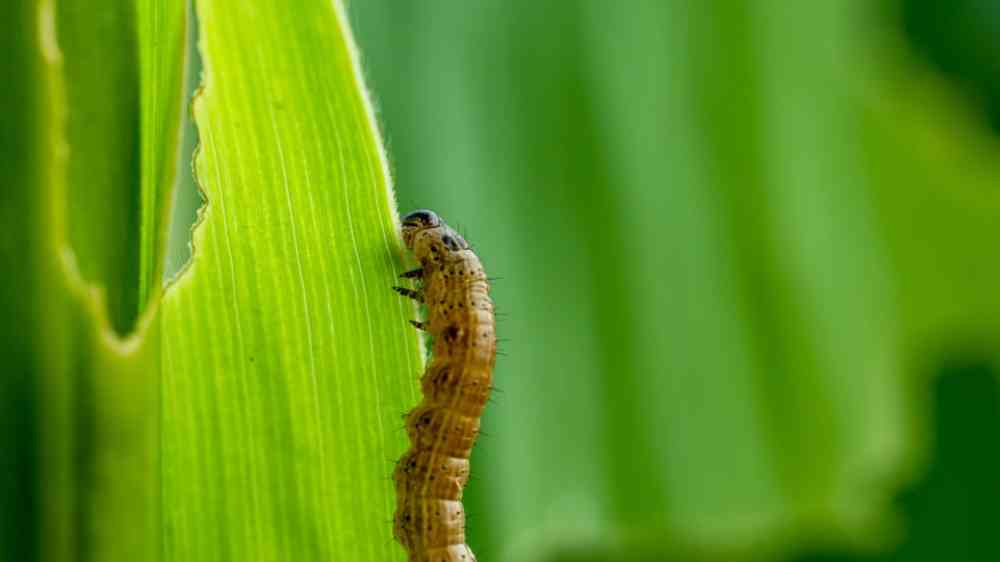
Fall armyworm eating leaves.
Update

Most smallholder farmers surveyed in Uganda believe they can reduce damage caused by the fall armyworm with several management and control options available to help them mitigate the impacts of the potentially devastating crop pest.

PhysOrg, Omicron Technology Ltd
Update

Amid rising temperatures and prolonged rainless periods due to climate change, large-scale attacks of pests and diseases in tea plantations across the country have become worrisome for planters with an estimated annual crop loss of around 147 million kg.

OutlookIndia - Outlook Group, the
Update

The University of Queensland is working with the Queensland Department of Agriculture and Fisheries (DAF) to develop guidelines to help Australian grain growers decide when and how to treat fall armyworm (FAW) to save their crops and finances.

University of Queensland
Uploaded on