1. Home
  2. Knowledge Base | PreventionWeb
  3. Hazards

Insect infestation

An insect pest infestation is a recently detected insect pest population, including an incursion, or a sudden significant increase of an established insect, disease agents or weed population in an area leading to damage to plants in production fields, forests or natural habitats and causing substantial damage to productivity, biodiversity or natural resources (adapted from FAO, 2019).

This planting technique reduces crop losses and improves food security.

Risk factors

Higher temperature, severe and extreme weather events and drought stress can all result in reduced vigour of trees, making them more vulnerable to outbreaks of native and introduced pests and diseases. For example, the dieback of millions of hectares of pine forests caused by outbreaks of native bark beetles in Central America, Europe and North America is associated with climate change, impacts of extreme weather events, and, in some cases, inadequate forest management practices (FAO, 2020b).

Favourable climatic conditions, disruption of ecosystems and negligence of crop/forest hygiene contribute to growth in insect populations which can cause substantial damage regularly. In many cases, long distance spread of insects results from transportation of infested goods.

Risk reduction measures

Following principles of sustainable plant production, sustainable forest management and integrated pest management practices are the best approach for control, focusing on diversified production systems, regular surveillance, preparedness before potential outbreaks, and a rapid response to prevent escalation to unmanageable scales (Guzewich et al., 1997). Post disaster needs assessment (PDNA) is designed to evaluate immediate needs for recovery and restoration for better disaster response (HIP).
Latest Insect infestation additions in the Knowledge Base

Uploaded on
Update

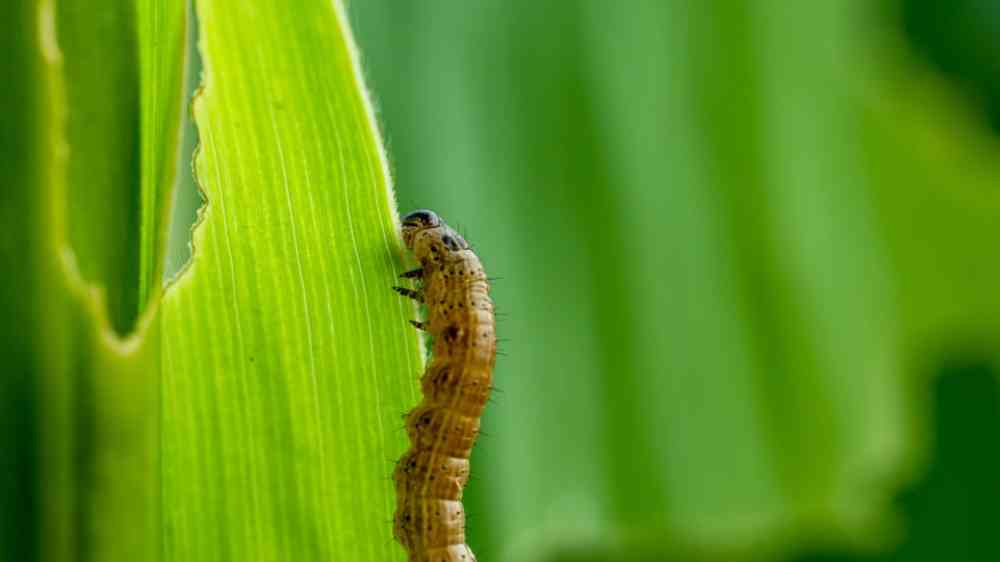
Management methods solely addressing fall armyworm's damage to maize risk leaving communities that rely on other crops, like sorghum, at a disadvantage. Sorghum is vitally important to Africa and the armyworm's second host preference, so the IPM Innovation Lab will soon implement biological control in several African nations to weaken the spread of the pest.

Entomological Society of America
Documents and publications

This paper presents a framework for reducing wildfire risk at its actual landscape scale. The framework is based on a scientific breakthrough: a new planning tool that gives the wildland fire community the ability to manage fire risk across broad

United States Department of Agriculture
Research briefs

New research finds that a warmer, drier climate is expected to increase the likelihood of larger-scale disturbances, such as wildfires, insect outbreaks, disease and drought, in temperate forests across the world. The study also finds that landscapes outside protected areas will experience larger but simpler disturbance patches than their unprotected counterparts.

Portland State University
Update

A tiny beetle that was detected for the first time in South Africa last year has since attacked an alarmingly high number of tree species. Given that the beetle can permanently damage urban landscapes and natural forest ecosystems, as well as subvert food production, the government must defy convention and eradicate the pest through cross-departmental coordination.

Conversation Media Group, the
Update

The USDA has announced that U.S. cotton is free — after more than 100 years — of the devastating pink bollworm. This pest has cost U.S. producers tens of millions of dollars in yearly control costs and yield losses, but it is now eliminated thanks to rigorous control and regulatory activities.

United States Department of Agriculture
Research briefs

New research shows that garlic, oranges, chillies and sex pheromones are among the potentially viable natural control measures that could be used against fall armyworm. These biopesticides serve as a viable alternative to synthetic chemicals and are also safer for both humans and the environment, but their higher costs may impede farmers.

Science and Development Network
Research briefs

New research shows that climate warming affects farmlands by increasing pests but not their natural predators, resulting in reduced crop yields. The study provides the first experimental evidence of how the interactions between agricultural plants, greenflies and tiny parasitoid wasps are affected in a world where temperatures are increased by 1.4°C.

Newcastle University
Update

Indian farmers are deploying an early warning app that uses artificial intelligence to identify plant disease and stop the advance of fall armyworm, which is having a devastating impact on maize crops in Africa. The Plantix app uses geo-tagging software to create a live tracking map of verified cases of the pest, informing farmers of where to plant crops.

Ethical Corporation
Uploaded on