1. Home
  2. Knowledge Base | PreventionWeb
  3. Hazards

Insect infestation

An insect pest infestation is a recently detected insect pest population, including an incursion, or a sudden significant increase of an established insect, disease agents or weed population in an area leading to damage to plants in production fields, forests or natural habitats and causing substantial damage to productivity, biodiversity or natural resources (adapted from FAO, 2019).

This planting technique reduces crop losses and improves food security.

Risk factors

Higher temperature, severe and extreme weather events and drought stress can all result in reduced vigour of trees, making them more vulnerable to outbreaks of native and introduced pests and diseases. For example, the dieback of millions of hectares of pine forests caused by outbreaks of native bark beetles in Central America, Europe and North America is associated with climate change, impacts of extreme weather events, and, in some cases, inadequate forest management practices (FAO, 2020b).

Favourable climatic conditions, disruption of ecosystems and negligence of crop/forest hygiene contribute to growth in insect populations which can cause substantial damage regularly. In many cases, long distance spread of insects results from transportation of infested goods.

Risk reduction measures

Following principles of sustainable plant production, sustainable forest management and integrated pest management practices are the best approach for control, focusing on diversified production systems, regular surveillance, preparedness before potential outbreaks, and a rapid response to prevent escalation to unmanageable scales (Guzewich et al., 1997). Post disaster needs assessment (PDNA) is designed to evaluate immediate needs for recovery and restoration for better disaster response (HIP).

Latest Insect infestation additions in the Knowledge Base

Uploaded on
Update

Farmers in parts of Western, Rift Valley and Nyanza are staring at losses after fall armyworm invaded their farms, destroying maize, sorghum and finger millet.

The Standard
Cover of the summary brief
Documents and publications

FAO's Office of Evaluation conducted a real time evaluation across three phases spread over one year, covering specific aspects of the response: coordination between June to October 2020, management at country level, and lessons learnt.

Food and Agriculture Organization of the United Nations (FAO)
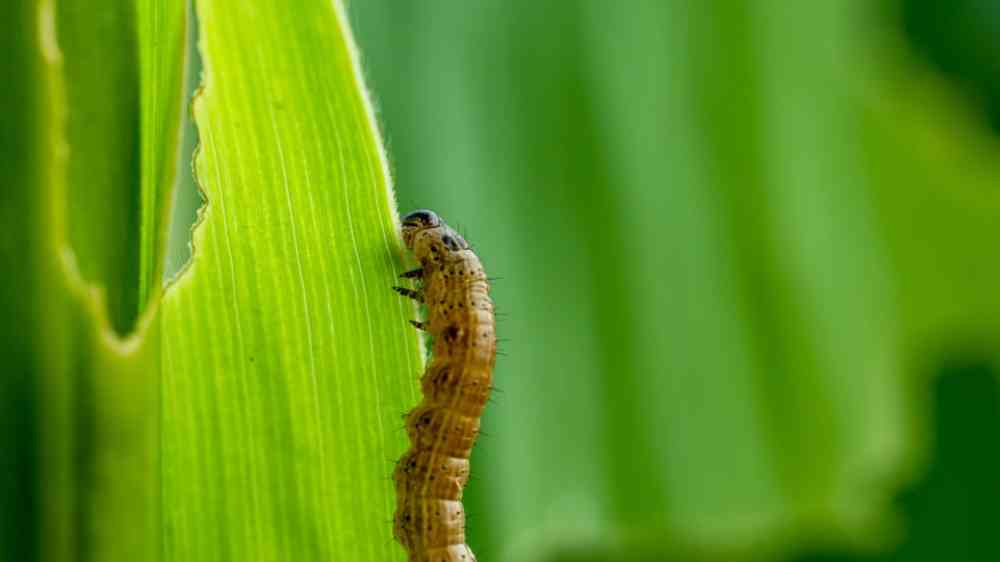
Armyworm feeding on a corn plant
Research briefs

Adopting a novel planting technique known as “push-pull farming” can help massively reduce crop losses to pests and improve food security in sub-Saharan Africa, new research has found.

Keele University
Fall armyworm larva
Research briefs

A CABI-led study has developed the first forecasting models targeting the larval stages of fall armyworm– using near real-time earth observation data and pest occurrence within a farmer's field, the models will assist in the fight against the pest.

CAB International
Cover
Documents and publications

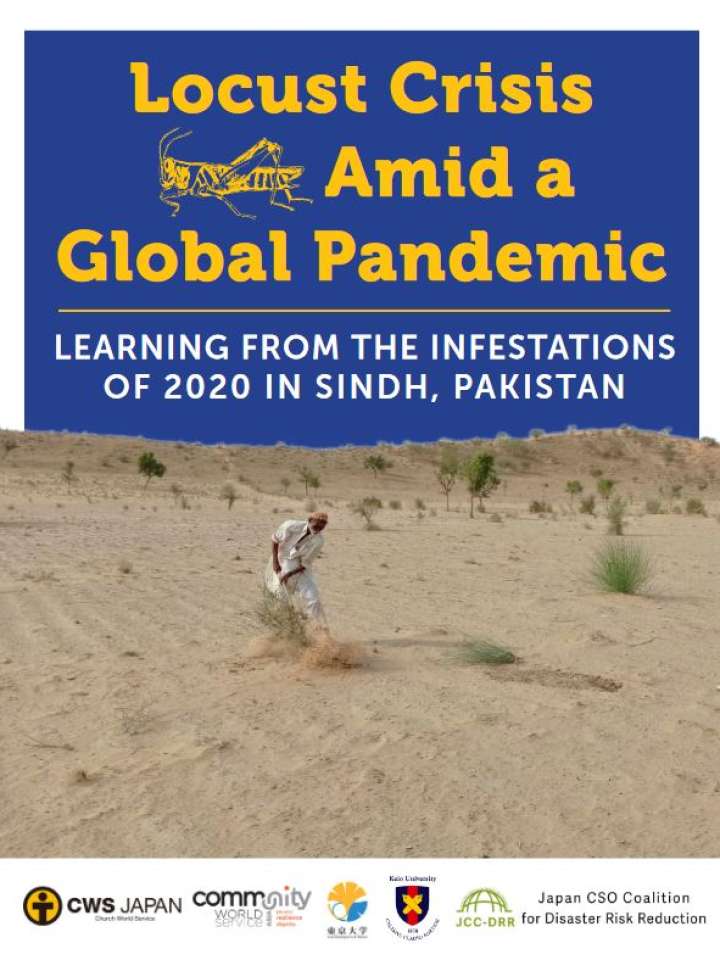
In 2020, CWS Japan, in partnership with Community World Service Asia (CWSA) and with support from Japan Platform, responded to this compound disaster in the Sindh province of Pakistan in two phases.

Church World Service Japan
Cover
Documents and publications

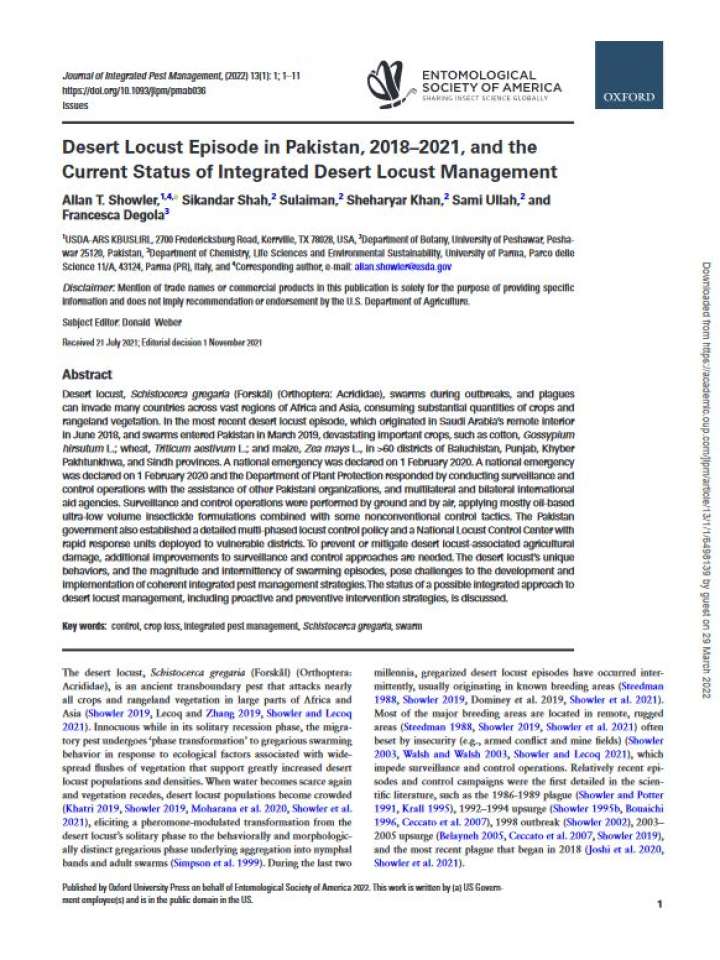
The purpose of this article is to describe the chronology, responses to, and impacts of the recent desert locust episode in Pakistan, including risks to food security and possible approaches for preventing future desert locust incursions.

Journal of Integrated Pest Management
FAO Sub-Saharan Africa - Strengthening resilience
Documents and publications

This publication highlights how FAO is working with partners and governments to strengthen the ability of communities in sub-Saharan Africa and food systems to withstand and rapidly recover from crises.

Food and Agriculture Organization of the United Nations (FAO)
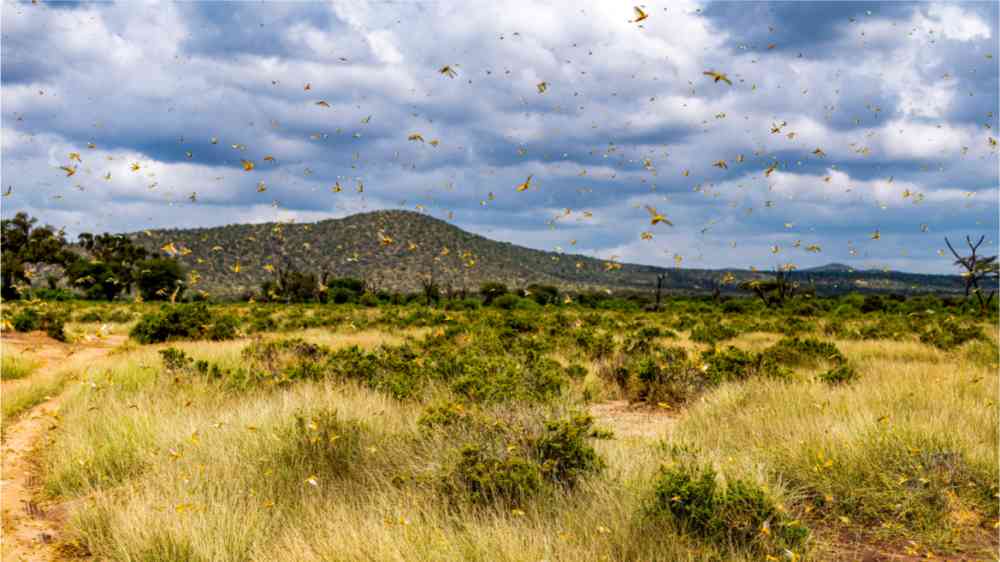
Samburu landscape viewed through swarm of invasive, destructive Desert Locusts.
Update

Somalia has opened the National Desert Locust Monitoring and Control Centre in Somalia. The Centre, which opened on 3 November 2021 in Qardho, will not only serve Puntland but will also act as the National Desert Locust Early Warning and Control base.

Food and Agriculture Organization of the United Nations (FAO)
Uploaded on