My account
Navigation loading…
Your experience on PreventionWeb

Please help us improve PreventionWeb by taking this brief survey. Your input will allow us to better serve the needs of the DRR community.

See the survey

Published on
17 December 2020
Status
Completed

Raise DRR awareness through faith-based organisations

Expected duration
Mar 2015 - May 2020
SFVC commitment ID
20190121_002
Version
3.0
Author
Phichet Munpa
Upload your content

ACT will use the extraordinary reach of its network of faith-based organizations to raise DRR awareness at grassroots level, by influencing local leadership and educating community members

    Description

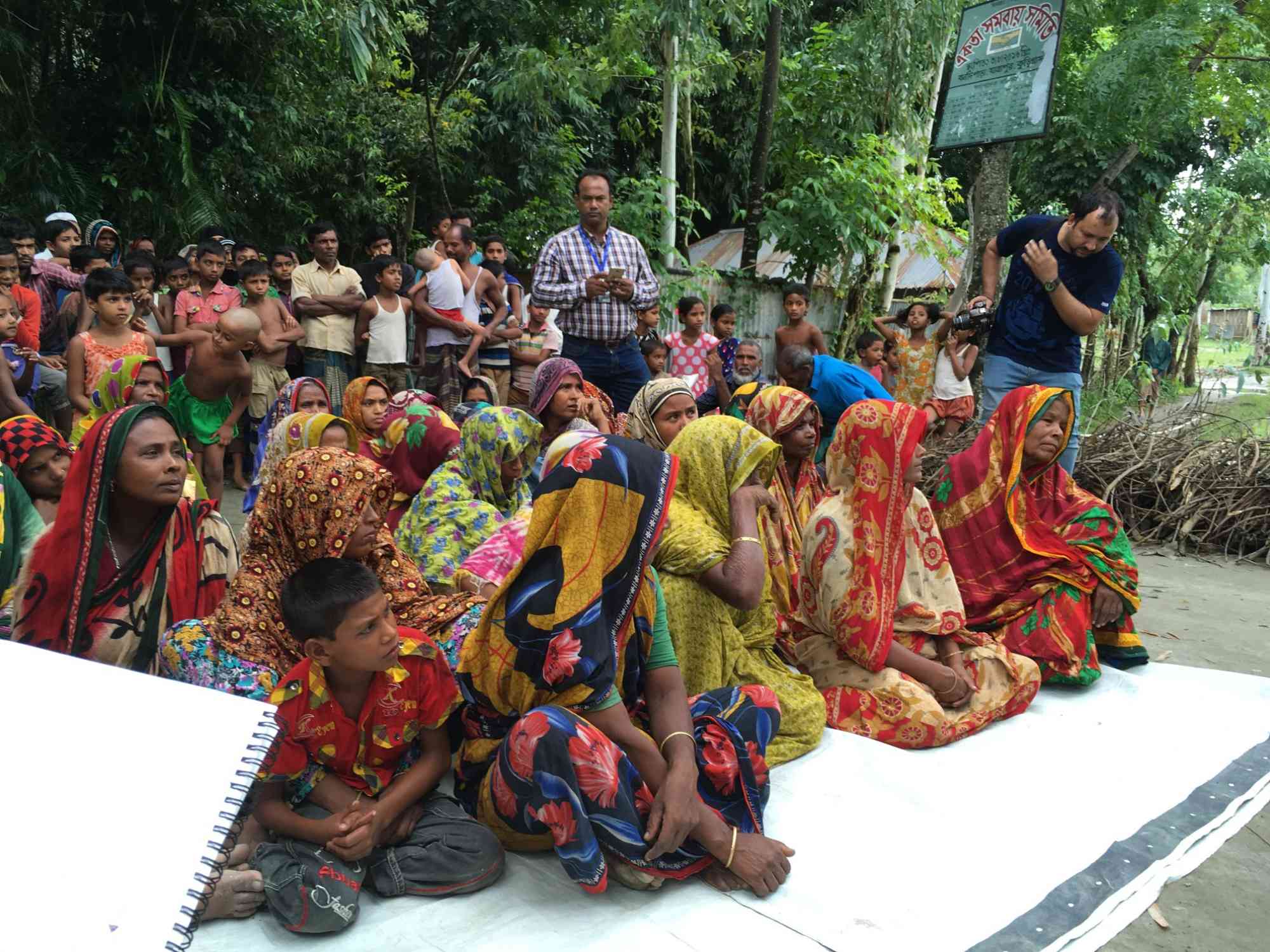
    In line with the strategic priority we accord to community resilience, the ACT Alliance will use the extraordinary reach and trust of its network of faith-based and church-based organizations to raise disaster risk reduction awareness at grassroots level, including in hard-to-reach locations, by influencing local leadership and educating community members, including through the deployment of church volunteers.
    Indicators:
    Number of examples cited by ACT country-level Forums of:
    (i) influencing local leadership to accord greater priority to community resilience and DRR
    (ii) educating community members about community resilience and DRR, and
    (iii) deploying church volunteers to promote community resilience and DRR awareness
    Means of verification:
    The ACT Alliance Humanitarian Policy and Practice Advisory group will undertake a survey of ACT country-level forums to gather information about progress on a country-by-country basis

    Did the Sendai Framework change or contribute to changes in your activities/organization? If so, how?

    The growing global consensus that it represents helped us to advocate to our member agencies that community-based resilience should be a high priority

    What led you to make this commitment/initiative?

    What was your position before making this Voluntary Commitment / prior to the Sendai Framework?

    The Sendai process encouraged us to think of ambitious commitments that we could make to help the process to gather momentum. This commitment fitted our niche comparative advantage as a grassroots faith alliance. We were already working on resilience with a faith lens pre-Sendai, but the process stimulated us to more concretely articulate our intent

    Deliverables and Progress report

    Deliverables

    Deliverables are the end-products of the initiative/commitment, which can include issuance of publications or knowledge products, outcomes of workshops, training programs, videos, links, photographs, etc.

    Deploying church volunteers to promote resilience
    Intended date of delivery
    31 May 2020

    Number of examples cited by ACT country-level Forums of deploying church volunteers to promote community resilience and DRR awareness
    This output will be presented via a list of instances where ACT members have executed relevant local level resilience initiatives plus case studies providing more depth and detail of a sample of examples.

    File
    Links to ACT case study repository.pdf (215.53 KB)
    Educating community members about resilience
    Intended date of delivery
    31 May 2020

    Number of examples cited by ACT country-level Forums of educating community members about community resilience and DRR
    This output will be presented via a list of instances where ACT members have executed relevant local level resilience initiatives plus case studies providing more depth and detail of a sample of examples.

    File
    Links to ACT case study repository.pdf (215.53 KB)
    Influencing local leadership to prioritise resilience
    Intended date of delivery
    31 May 2020

    Number of examples cited by ACT country-level Forums of
    influencing local leadership to accord greater priority to community resilience and DRR
    This output will be presented via a list of instances where ACT members have executed relevant local level resilience initiatives plus case studies providing more depth and detail of a sample of examples.

    File
    Links to ACT case study repository.pdf (215.53 KB)

    Porgress report

    Progress date
    1 December 2020
    Summary

    ACT Alliance has collected case studies of progress against the commitment. Detailed case studies collected so far describe 22 examples of influencing local leadership to accord greater priority to community resilience and disaster risk reduction; 29 examples of educating community members about community resilience and disaster risk reduction; and 4 examples of deploying church volunteers to promote community resilience and disaster risk reduction awareness.

    Achievements at a glance

    Influencing leadership: ACT Alliance country forums and members have influenced local leadership including in Afghanistan, Bangladesh, Bolivia, Chad, Guatemala, Haiti, Honduras, India, Indonesia, Kenya, Myanmar, Nepal, Pakistan, Peru and Uganda.

    Educating communities: ACT Alliance country forums and members have educated community members including in Afghanistan, Bangladesh, Bolivia, Chad, Ethiopia, Guatemala, Haiti, Honduras, India, Indonesia, Kenya, Malawi, Myanmar, Nepal, Pakistan, Peru and Uganda.

    Deploying volunteers: ACT Alliance country forums and members have deployed church volunteers, including in Afghanistan, India, Nepal and Peru.
    More detailed descriptions are in the attachments

    Supporting documents
    Case Study on DRR and CCA LWSIT (1).pdf (936.79 KB)
    Case study on DRR and CCA LWSIT (2).pdf (969.09 KB)
    Links to ACT case study repository.pdf (215.53 KB)
    CWSA Afghanistan DRR.pdf (388.35 KB)
    Progress_Report2020-08-04_04_27_38.pdf (537.42 KB)
    Organizations and focal points

    Implementing Organization(s)

    • ACT Alliance

    Focal points

    Main focal point
    Phichet Munpa (Regional Program Officer for Asia/ the Pacific, ACT alliance)

    Explore further

    Sendai priorities
    Priority 1Understanding disaster risk
    Priority 4Enhancing disaster preparedness for effective response, and to «Build Back Better», rehabilitation and reconstruction
    Sendai targets and indicators
    B-1 (Compound)Number of directly affected people attributed to disasters, per 100,000 population
    B-5Number of people whose livelihoods were disrupted or destroyed, attributed to disasters
    Hazards Cyclone, Hurricane and Typhoon Drought and Desertification Flood Landslide Storm surge Tornado
    Themes Capacity development Civil Society/NGOs Community-based DRR Traditional and Indigenous knowledges Social impacts and social resilience
    Country and region Africa Americas Asia
    Sustainable Development Goals SDG11: Sustainable cities and communities SDG13: Climate action
    Budget scale
    USD 50,000 to < 100,000
    Scope
    Regional - Africa, Americas, Asia
    Scale of beneficiaries
    5,000 to < 10,000
    Secured budget size
    0%
    Commitment previously announced at WCDRR?
    Raise DRR awareness through faith-based organisations
    X (Twitter)
    https://twitter.com/actalliance
    Videos

    Is this page useful?

    Yes No
    Report an issue on this page

    Thank you. If you have 2 minutes, we would benefit from additional feedback (link opens in a new window).

    PreventionWeb is the global knowledge sharing platform for disaster risk reduction (DRR) and resilience.

    • Newsletter
    • Submit your content
    • Blog pitches
    • Submission and publishing policy
    • About PreventionWeb
    • Contact us

    Hazards

    • Avalanche
    • Cold Wave
    • Cyclone, Hurricane and Typhoon
    • Drought and Desertification
    • Earthquake
    • Epidemic and pandemic
    • Flood
    • Heatwave, extreme heat and heat stress
    • Insect infestation
    • Land subsidence
    • Landslide
    • Nuclear, biological, chemical (NBC)
    • Sea level rise
    • Technological hazard
    • Thunderstorm
    • Tornado
    • Tsunami
    • Volcano
    • Wildfire

    Regions

    • Africa
    • Americas
    • Asia
    • Europe
    • Oceania

    Themes

    Understanding & managing risk

    • Preparedness
    • Early warning
    • GIS and mapping
    • Data and information management
    • Risk identification and assessment
    • Small Island Developing States
    • Earth Observation

    Natural environment

    • Climate change
    • Environment and ecosystems
    • Food security and agriculture
    • Water

    Cross-cutting

    • Systemic risk
    • Recovery

    Human development

    • Capacity development
    • Children and youth
    • Civil society / NGOs
    • Community-based DRR
    • Cultural heritage
    • Gender
    • Human mobility
    • Inclusion
    • Social impacts and resilience

    Science, knowledge & advocacy

    • Disaster risk communication
    • Traditional and Indigenous knowledges
    • Science-policy-practice interface

    State, governance & economy

    • Financing DRR
    • Fragility and conflict
    • Governance
    • Insurance and risk transfer
    • Private sector

    Infrastructure & critical services

    • Critical infrastructure
    • Education and school safety
    • Health and health facilities
    • Structural safety
    • Urban risk and planning
    Loading