My account
Navigation loading…

Navigation failed to load. If you are on the UNDRR office network, your browser may be blocking access to external resources. Learn how to allow access.

Menu
Your experience on PreventionWeb

Please help us improve PreventionWeb by taking this brief survey. Your input will allow us to better serve the needs of the DRR community.

See the survey

Published on
29 July 2021
Status
Progress not updated

Promoting the Making Cities Resilient and Sustainable Campaign in Asia Pacific

Expected duration
Jan 2016 - Dec 2024
SFVC commitment ID
20190307_007
Version
3.0
Author
Mohammad Helmi Abidin
Upload your content

The programme contributes to the increase in the number of Local Governments (LGs) that sign the Making Cities Resilient (MCR) Campaign. It fosters the implementation of the Sendai Framework for Disaster Risk Reduction at the local level and supports city DRR action plans to meet Target E.

    Description

    UCLG ASPAC has been promoting Disaster Risk Reduction (DRR) and the Making Cities Resilient Campaign (MCR) over the past years. It has been strengthening the capacity of cities and local governments in DRR and the implementation of the SFDRR 2015-2030. UCLG ASPAC’s Statement of Action by Local Authorities Stakeholder Group was produced and adopted at the 6th AMCDRR held in New Delhi, India. It highlighted the major stakeholder group’s determination to play a much bigger role in the Sendai Framework through actions, such as to improve cooperation with the community for risk assessment and local DRR planning and implementation, as well as to strengthen local government’s capacity to mainstream DRR into spatial planning and local development programmes. The MCR campaign includes the series of workshops targeted at LGs in Asia Pacific (specifically Indonesia, Philippines, Bangladesh, Nepal, Malaysia, Vietnam, and Cambodia) to increase number of signed cities and local DRR strategy and resilience.

    Did the Sendai Framework change or contribute to changes in your activities/organization? If so, how?

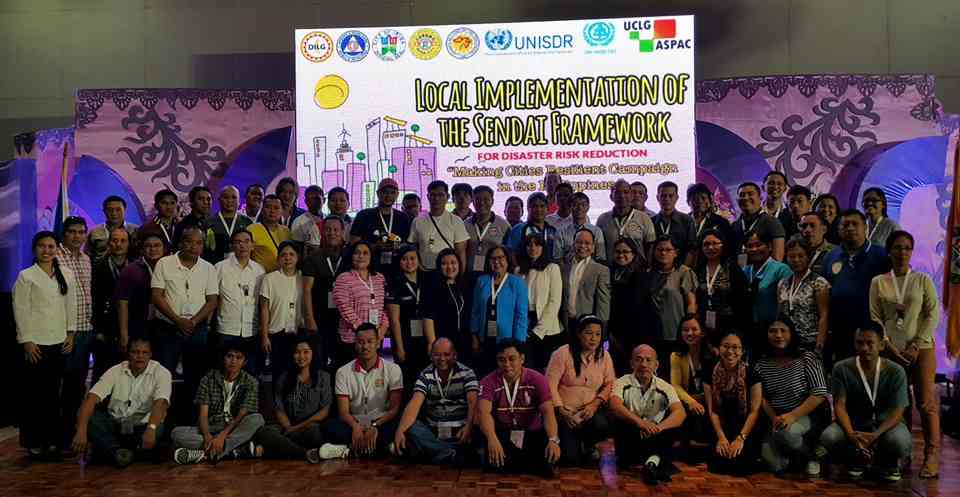
    Prior to SFDRR adoption, UCLG ASPAC and local government associations in the Asia Pacific region have agreed to raise the awereness of city mayors and officials on DRR. In 2016, UCLG ASPAC in collaboration with UNISDR and League of Cities of the Philippines (LCP) organised MCR Campaign in the Philippines. The event was participated by 40 mayors from Bicol region including Iriga City Mayor as the host city. In total, 80 LGs have signed the commitment letter for the campaign and it was a milestone for SFDRR localisation and awareness raising among local authorities in the country. In 2018, with UCLG ASPAC initiative, there were 460 cities in Bangladesh that have signed the MCR campaign.

    What led you to make this commitment/initiative?

    What was your position before making this Voluntary Commitment / prior to the Sendai Framework?

    Most disasters occur locally. As LG is the closest administrative body to the society, LG has extremely important role to play, not only in responding to the disasters but also in preventing disaster and reducing the risks.
    UCLG ASPAC as the association of LGs has an important mandate to advocate the significant role of LGs in SFDRR amongst the international players, and to strengthen the capacity of LGs and connect our member with the global agenda including SDGs and SFDRR and ensure their implementation at the local level.

    Deliverables and Progress report

    Deliverables

    Deliverables are the end-products of the initiative/commitment, which can include issuance of publications or knowledge products, outcomes of workshops, training programs, videos, links, photographs, etc.

    Making Cities Resilient Campaign and Localising the SFDRR in Asia Pacific
    Intended date of delivery
    31 December 2018

    UCLG ASPAC has conducted five workshops in Asia (Bangladesh, India, Indonesia, Nepal, Philippines), and produced a publication advocacy that help LGs become aware about SFDRR. The publication has become a useful resource for LGAs as well in working on DRR activities.

    Peer-Learning on Building a Local Government Alliance for Localising the SFDRR
    Intended date of delivery
    31 December 2018

    Prior to conducting the peer learning workshops in Indonesia (in conjuction with UCLG ASPAC Congress in Surabaya, Indonesia, we compiled the best practices and produced the learning note on localising SFDRR.

    File
    note 24-v2 (1).pdf (1.01 MB)
    MCR Campaign workshop and localising SFDRR in the Philippines
    Intended date of delivery
    31 May 2021

    Output will be the MCR preliminary scorecard assessment report and module local guideline for DRR action plan

    File
    SUMMARY REPORT - MAGUINDANAO TOTV3 (1).pdf (3.08 MB)
    Peer-Learning on Building a LGs Alliance for Localising the SFDRR in Indonesia
    Intended date of delivery
    31 May 2021

    Prior to conducting the peer learning workshops (in conjuction with Open Government Week Forum to be held in 17-18 May 2021, we will compile the best practices and produce the publication on localising SFDRR. It will include local action plan smart practice among Indonesian cities.

    File
    Resilience of MCR 2030_ToT 17-18 May 2021.pdf (386.68 KB)
    Organizations and focal points

    Implementing Organization(s)

    • United Cities and Local Governments Asia-Pacific

    Focal points

    Main focal point
    Mohammad Helmi Abidin (DRR Coordinator , UCLG ASPAC )

    Partners

    • United Cities and Local Governments (UCLG)
    • United Nations Office for Disaster Risk Reduction (UNDRR)

    Explore further

    Sendai priorities
    Priority 1Understanding disaster risk
    Priority 2Strengthening disaster risk governance to manage disaster risk
    Sendai targets and indicators
    E-2 (Compound)Percentage of local governments that have adopted and implemented local disaster risk reduction strategies in line with national strategies
    Hazards Cyclone, Hurricane and Typhoon Earthquake Flood Landslide Tsunami Volcano
    Themes Disaster risk communication Capacity development Preparedness Governance Recovery Urban risk and planning
    Country and region Asia Oceania
    Sustainable Development Goals SDG11: Sustainable cities and communities SDG13: Climate action
    Scope
    Regional - Asia, Oceania
    Secured budget size
    50%
    Umbrella initiative(s)
    Making Cities Resilient 2030 (MCR2030)
    X (Twitter)
    https://twitter.com/uclglearning?lang=en
    Videos
    Related links
    MCR Campaign in Asia Pacific
    Peer learning on disaster risk reduction and the localization of the Sendai Fra…

    Is this page useful?

    Yes No
    Report an issue on this page

    Thank you. If you have 2 minutes, we would benefit from additional feedback (link opens in a new window).

    PreventionWeb is the global knowledge sharing platform for disaster risk reduction (DRR) and resilience.

    • Newsletter
    • Submit your content
    • Blog pitches
    • Submission and publishing policy
    • About PreventionWeb
    • Contact us

    Hazards

    • Avalanche
    • Cold Wave
    • Cyclone, Hurricane and Typhoon
    • Drought and Desertification
    • Earthquake
    • Epidemic and pandemic
    • Flood
    • Heatwave, extreme heat and heat stress
    • Insect infestation
    • Land subsidence
    • Landslide
    • Nuclear, biological, chemical (NBC)
    • Sea level rise
    • Technological hazard
    • Thunderstorm
    • Tornado
    • Tsunami
    • Volcano
    • Wildfire

    Regions

    • Africa
    • Americas
    • Asia
    • Europe
    • Oceania

    Themes

    Understanding & managing risk

    • Preparedness
    • Early warning
    • GIS and mapping
    • Data and information management
    • Risk identification and assessment
    • Small Island Developing States
    • Earth Observation

    Natural environment

    • Climate change
    • Environment and ecosystems
    • Food security and agriculture
    • Water

    Cross-cutting

    • Systemic risk
    • Recovery

    Human development

    • Capacity development
    • Children and youth
    • Civil society / NGOs
    • Community-based DRR
    • Cultural heritage
    • Gender
    • Human mobility
    • Inclusion
    • Social impacts and resilience

    Science, knowledge & advocacy

    • Disaster risk communication
    • Traditional and Indigenous knowledges
    • Science-policy-practice interface

    State, governance & economy

    • Financing DRR
    • Fragility and conflict
    • Governance
    • Insurance and risk transfer
    • Private sector

    Infrastructure & critical services

    • Critical infrastructure
    • Education and school safety
    • Health and health facilities
    • Structural safety
    • Urban risk and planning
    Loading