Disaster Waste Management Capacity Development for Local Governments in the Philippines
Disaster waste management (DWM) is a critical task during the initial phase of disaster recovery. The Philippine Association for Disaster Waste Management will promote the implementation of DWM through awareness raising, capacity development, and technical assistance.
Description
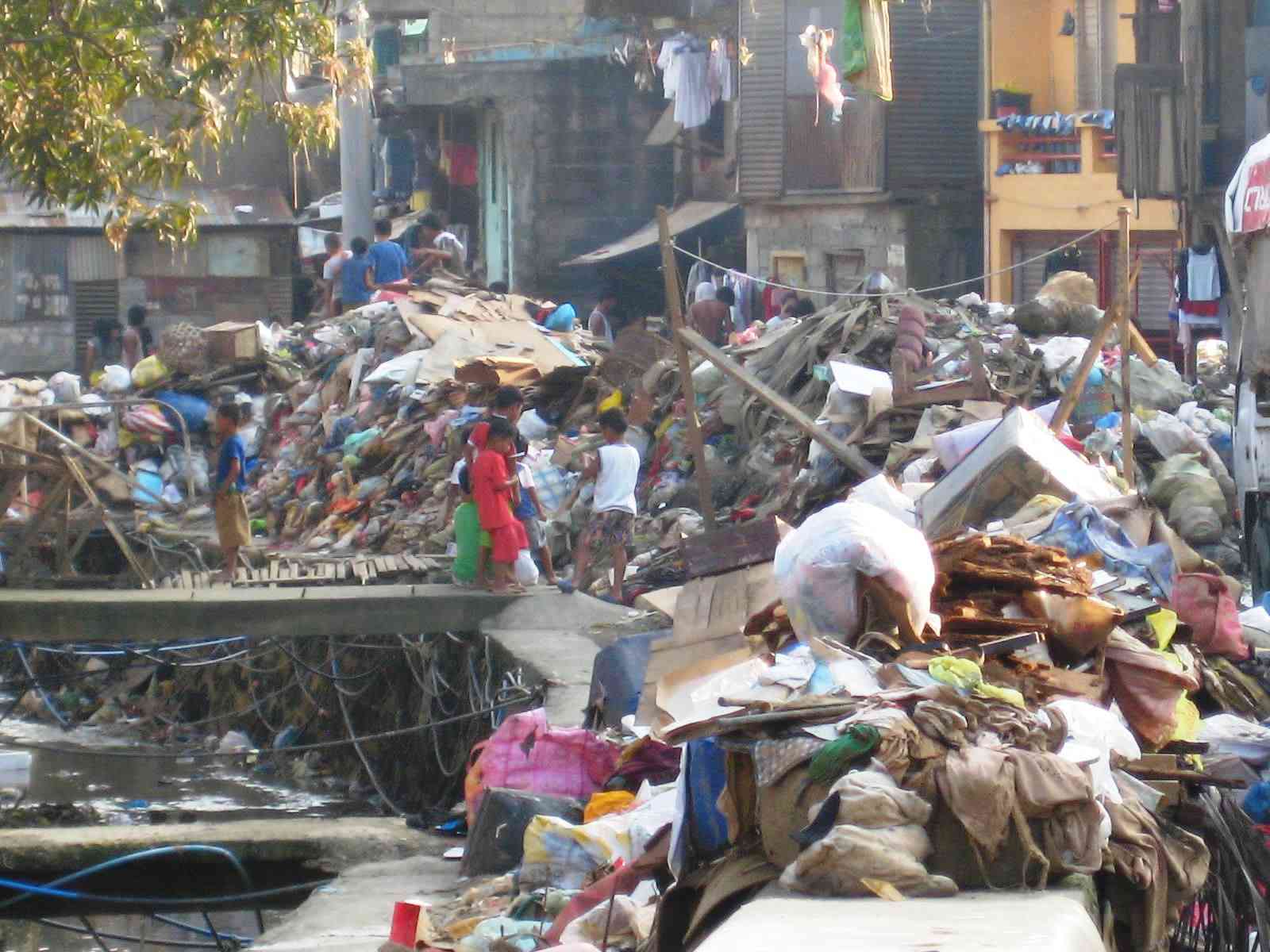
In catastrophic events, such as Typhoon Haiyan in 2013, the sheer volume of waste generated can easily overwhelm local waste management capacity, impeding rescue operations and the delivery of humanitarian aid. It is therefore crucial to prepare in advance for scenarios where significant amounts of waste are generated by such disasters. Pre-disaster planning and capacity-development could significantly reduce disaster waste management (DWM) costs. Funding mechanisms, institutional arrangements, and assignment of roles to different stakeholders should be put in place before disasters strike. DWM can help to recover valuable materials, reduce pressure on the environment for virgin raw materials, and minimize greenhouse gas emissions. Effective DWM can thus support the promotion of circular economy and climate change mitigation initiatives. Our voluntary commitment aims to contribute to the DWM capacity development of local governments in the Philippines by providing appropriate knowledge and training to various stakeholders. Specifically, we would like to: (A) raise awareness in and develop the capacity of cities to promote resource conservation and resource efficiency through waste prevention and by recovering valuable materials from disaster waste; (B) assist cities to develop their DWM contingency plan; and (C) promote cooperation among cities, government agencies, academic institutions, and volunteers to facilitate knowledge sharing on DWM.
Did the Sendai Framework change or contribute to changes in your activities/organization? If so, how?
Our disaster waste management activities directly align with the Sendai Framework, particularly with Priority 4, enhancing post-disaster readiness. We specifically contribute to achieving Target D (Substantially reduce disaster damage to critical infrastructure and disruption of basic services), emphasizing the crucial role of effective waste management in rapid recovery and resilience building. This focus ensures sustainable development, mitigates future risks, and supports the broader objectives of disaster risk reduction, demonstrating our commitment to fostering resilient communities and infrastructure.
What led you to make this commitment/initiative?
What was your position before making this Voluntary Commitment / prior to the Sendai Framework?
During the World Bosai Forum in Sendai in 2019, we were encouraged to contribute to the implementation of the Sendai Framework. It was an easy decision to make as we also aligned our activities previously to the Hyogo Framework for Action (HFA), the predecessor of the Sendai Framework. Our current initiative is a timely contribution as this year (2023) is the 10th anniversary of the 2013 Super Typhoon Haiyan, which produced the biggest volume of disaster wastes in the history of the Philippines.
Deliverables and Progress report
Deliverables
Deliverables are the end-products of the initiative/commitment, which can include issuance of publications or knowledge products, outcomes of workshops, training programs, videos, links, photographs, etc.
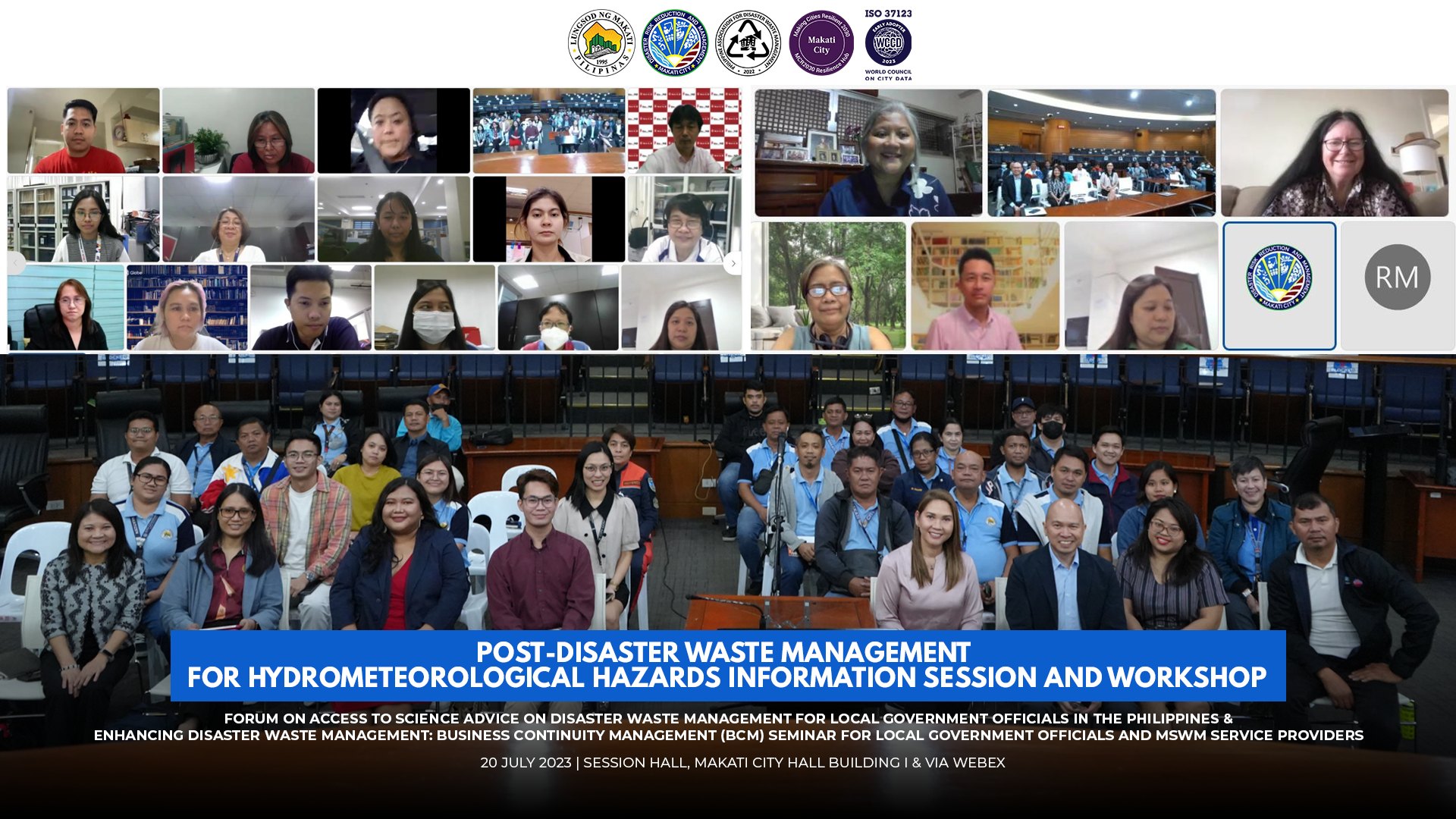
It is crucial for local government officials and municipal solid waste management (MSWM) service providers to have effective strategies in place to ensure the continuity of waste management operations during and after disasters. Business Continuity Management (BCM) provides a framework for identifying potential risks, developing strategies to minimize disruptions, and ensuring the swift recovery of essential services. This seminar aims to introduce and promote the application of BCM principles and practices among local government officials and MSWM service providers in the Philippines, specifically in the context of disaster waste management.
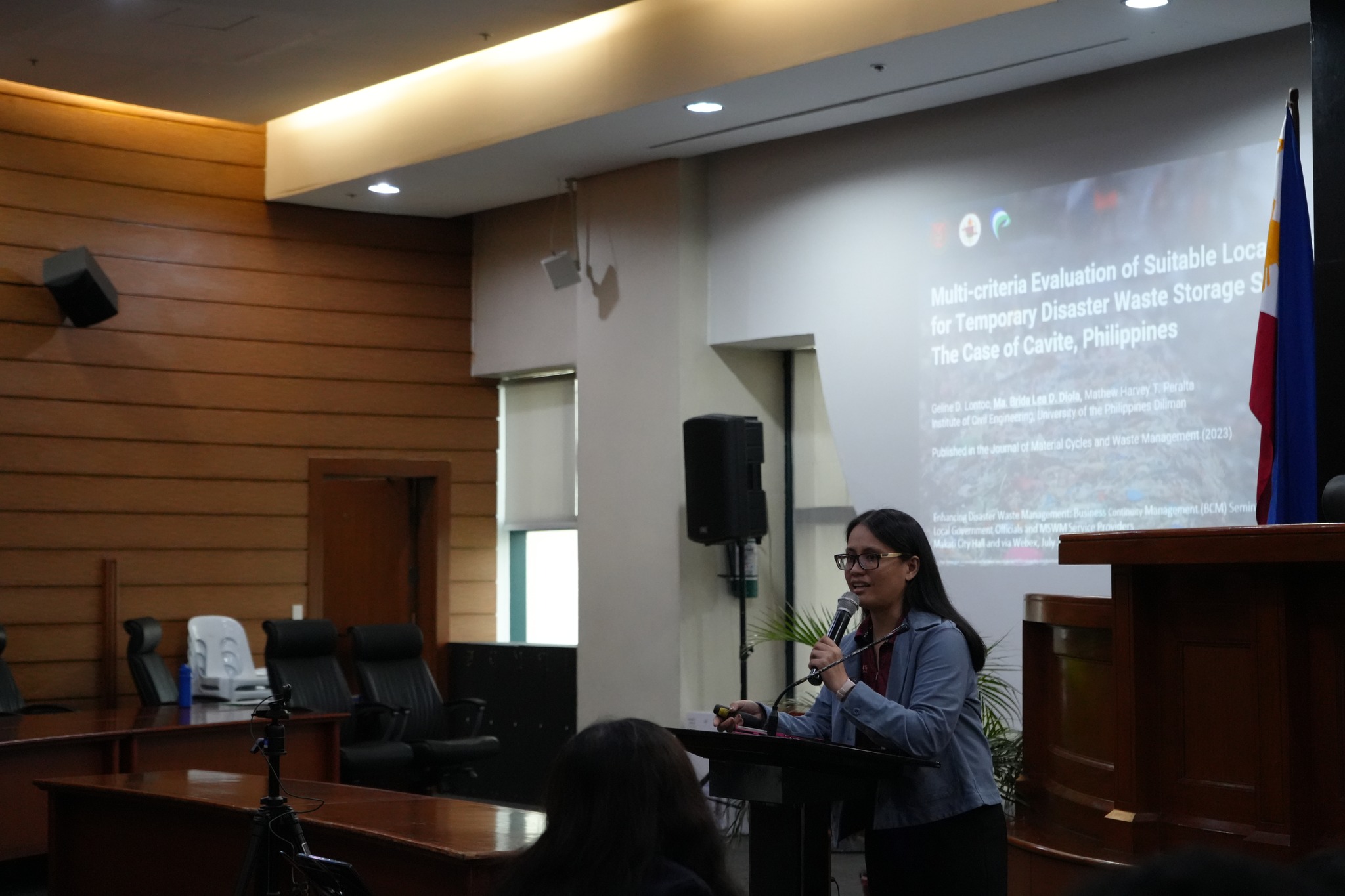
Scientific knowledge and expertise play a vital role in formulating effective waste management strategies to mitigate the public health and environmental risks associated with disaster waste. Local government officials in the Philippines are at the forefront of disaster response and recovery efforts. However, accessing accurate and timely science advice related to disaster waste management can be challenging. This forum aims to address this issue by bringing together stakeholders to discuss ways to enhance access to science advice for local government officials in the Philippines, specifically in the context of disaster waste management.
The Philippine Association for Disaster Waste Management (PADWM) was established in July 2022 at the end of the “Developing Capacity for Post-typhoon Disaster Waste Management in Coastal Cities in China, Fiji, and the Philippines” project funded by the Asia-Pacific Network for Global Change Research (APN). The main aim of the organization will be to promote and support disaster waste management by local governments in the Philippines. By June 2024, we aim to recruit 100 members and to prepare the constitution and by-laws of the organization so that it can be registered with the Philippine Securities and Exchange Commission (SEC) as a non-profit organization.
To contribute to the scientific literature on disaster waste management, we commit to publish at least two journal articles within the next 12 months:
(1) Disaster Waste Management in the Philippines: A Policy Review
(2) Findings from Training Needs Assessments (TNAs) on Disaster Waste Management
Organizations and focal points
Implementing Organization(s)
Focal points
If a VC's contact information has been hidden, the SFVC team can forward a message.