Creating a "plaza" where young volunteers, practitioners, and researchers working on disaster prevention can gather in Japan
U-INSPIRE Japan provides a plaza where young volunteers, practitioners, and scientists can meet and exchange ideas.
Description
U-INSPIRE Japan provides a plaza where young volunteers, practitioners and scientists can meet and exchange ideas. U-INSPIRE Japan recognizes that young volunteers, practitioners and researchers may have challenges in knowledge sharing and resource mobilization for disaster prevention. At the same time, youth-led efforts for disaster risk reduction are not being fully recognized or valued. Thus, U-INSPIRE Japan was created with the aim of providing opportunities for information exchange, collaboration, and growth for young people interested in disaster prevention.
U-INSPIRE Japan is part of the U-INSPIRE Alliance, which is a network of young people and young practitioners who contribute to disaster prevention through science, engineering, technology and innovation. As of May 2020 and with the support of the UNESCO Jakarta Office, 12 U-INSPIRE branches have been established in Asia, particularly in Afghanistan, Central Asia, Huaxia, Japan, India, Indonesia, Maldives, Malaysia, Nepal, Pakistan, Philippines and Thailand. These branches work together to contribute to disaster risk reduction in the Asia-Pacific region.
U-INSPIRE Japan conducts general meetings, consultations, mentoring and other events that will benefit young people and motivate them to further contribute to disaster risk reduction efforts.
Did the Sendai Framework change or contribute to changes in your activities/organization? If so, how?
The SFDRR has fostered creative minds and attitudes among youth towards DRR. It inspired us to design and establish youth-led DRR activities and platform - U-INSPIRE Japan. SFDRR is an important beacon for youth and young professionals to unite efforts towards the promotion of DRR through science, engineering, technology, and innovation (SETI) and bring various bodies of knowledge together. We would like to continue to contribute to increasing domestic and international communication among youth and bring changes to the DRR landscape based on and beyond the SFDRR through jointly-created ideas and science-based actions among youth.
What led you to make this commitment/initiative?
What was your position before making this Voluntary Commitment / prior to the Sendai Framework?
We would like to promote our pioneering youth-led DRR activities by taking part in this voluntary commitment. Established in 2019, U-INSPIRE Japan is a young organization with huge potentials to launch new initiatives to shape our resilient future. As students, volunteers, practitioners, and scientists, members have experienced and involved in the tragic disasters in Japan and other countries both directly and indirectly. Yet, ideas developed and experienced stored among youth have not yet been recognized and valued as of now. We would like to be actively involved in the process to create a disaster-prepared society.
Deliverables and Progress report
Deliverables
Deliverables are the end-products of the initiative/commitment, which can include issuance of publications or knowledge products, outcomes of workshops, training programs, videos, links, photographs, etc.
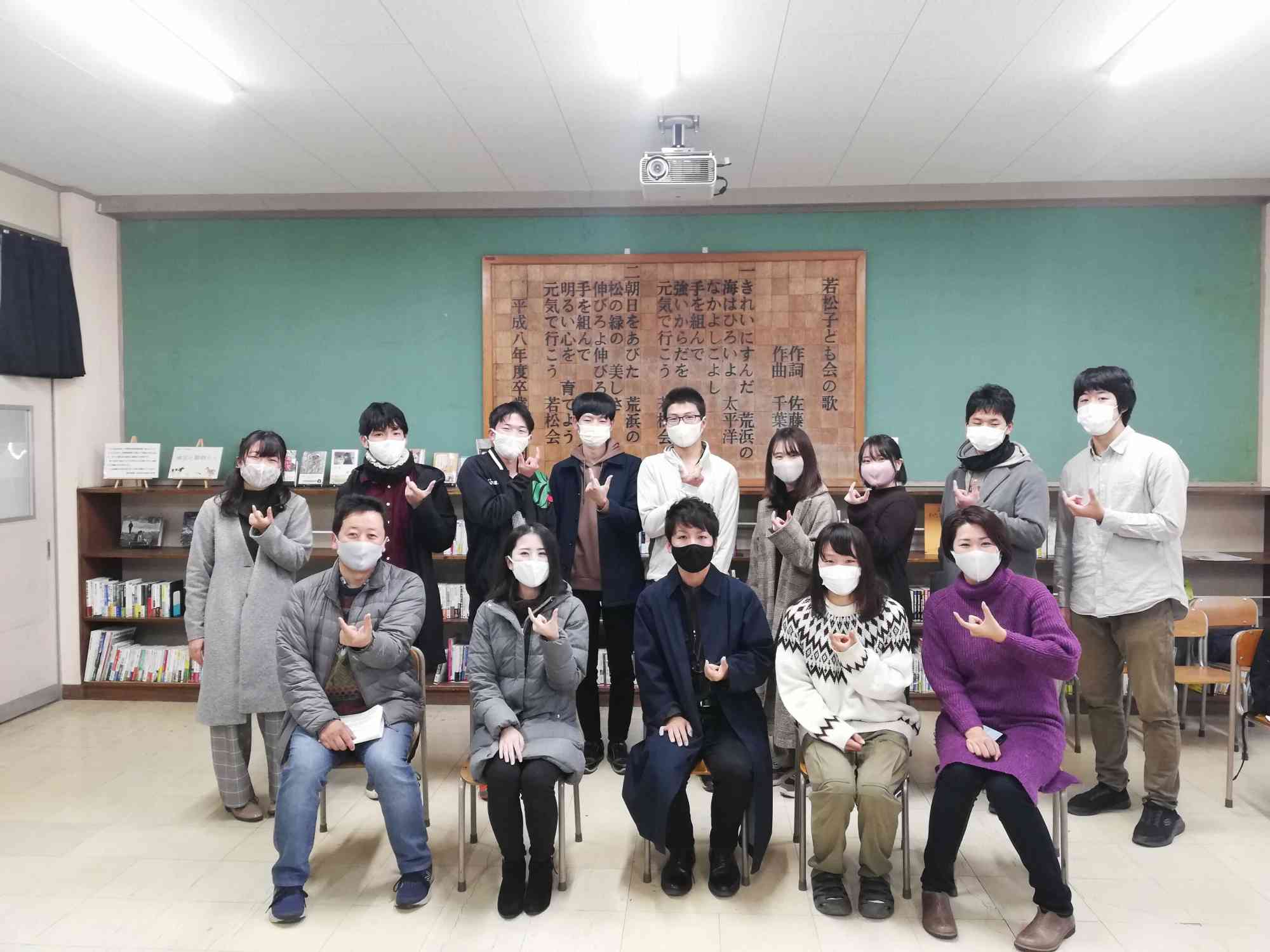
Bosai (Disaster Risk Reduction) Night is a place for exchanges where people can learn about disaster prevention from a variety of perspectives. In 2021, six events were planned.
One example of them is the study session of the Sendai Framework for Disaster Risk Reduction, which was held under the theme of “learning about careers,” with the aim of learning about career paths involved in disaster risk reduction and what young people can do. In this session, we conducted a questionnaire survey on young people’s awareness of social issues related to the SDGs, discovered issues such as the lack of awareness of the Sendai Framework for Disaster Risk Reduction, and reported the results to the outside for a wide range of activities.
In addition, under the theme of “learning minority disaster prevention”, events such as thinking about disaster prevention with hearing impaired student speakers are planned and implemented.
Organizations and focal points
Implementing Organization(s)
Focal points
If a VC's contact information has been hidden, the SFVC team can forward a message.