My account
Menu
Your experience on PreventionWeb

Please help us improve PreventionWeb by taking this brief survey. Your input will allow us to better serve the needs of the DRR community.

See the survey

Published on
7 December 2020
Status
Completed

Community Based Adaptation and Resilience Against Disasters (CBARAD) in the City of Iloilo

Expected duration
Mar 2013 - Mar 2017
SFVC commitment ID
20191121_002
Version
2.0
Author
Kendra Hirata
Upload your content

This project effected community-level adaptation and resiliency schemes in the City of Iloilo in the Philippines and increased the awareness levels of citizens in order to create self-sustaining communities.

    Description

    This project, implemented in two phases over five years, aimed to increase the capacities of citizens and allow the City Government of Iloilo in the Philippines to develop self-sustaining communities that can prevent, prepare, and respond to disasters, along with the creation of a systematic operation for the City Disaster Risk Reduction Management Council (CDRRMC). This project helped build capacity of the City of Iloilo’s disaster management strategies by providing tools and programs for citizens to learn how to help themselves in times of disaster.

    CBARAD placed heavy focus on inclusiveness of the vulnerable sector throughout the entire project, from the planning stage, to the implementation stage, and beyond. These vulnerable groups, including children, people with disabilities, and the elderly, were included in order to prepare all sectors for disasters and further make the community resilient.

    Another key element of this project is the impact to city legislation and disaster preparedness plans. The project helped develop eight ordinances and resolutions in city legislation and a number of localized initiatives such as hazard maps, evacuation maps and protocols, disaster education programs for schools, the profiling of vulnerable groups, development of the CDRRMC and Barangay Disaster Risk Reduction and Management Committee (BDRRMC), and establishment of an early warning system, among others.

    In addition, CBARAD helped to formally establish the City of Iloilo’s disaster management campaign, KABALAKA. This campaign, backed by legislation created in the project scheme, includes the establishment of the KABALAKA disaster education learning center where people can learn about ways to prevent and mitigate disasters. Furthermore, KABALAKA has produced child DRR education camps for primary and secondary school children throughout Iloilo.

    Did the Sendai Framework change or contribute to changes in your activities/organization? If so, how?

    The Sendai Framework helped set the guiding principles for this project, establishing the two-fold approach of community-based education and capacity-building initiatives, and the top-down capacity building institutional approach with the Government of Iloilo.

    What led you to make this commitment/initiative?

    What was your position before making this Voluntary Commitment / prior to the Sendai Framework?

    The initiative was established after a formal request by the City of Iloilo for assistance with strengthening city resilience against disasters, particularly those caused by floods. Prior to the Sendai Framework, CYO (CityNet Yokohama Project Office) adhered to the guidelines set out by the Hyogo Framework for Action.

    Deliverables and Progress report

    Deliverables

    Deliverables are the end-products of the initiative/commitment, which can include issuance of publications or knowledge products, outcomes of workshops, training programs, videos, links, photographs, etc.

    Technical Advisory Visits
    Intended date of delivery
    31 March 2014

    Three technical advisory visits were held (for example, see pages 10, 15, and 16 of the Completion Report), during which experts from Yokohama were dispatched to Iloilo to lead programs and seminars on DRR items such as: evacuation drills; evacuation shelter management; creek profiling; river basin mapping; disaster education and drills for children; and more. See the full Completion Report in the link below

    Link
    http://citynet-yh.org/english/wp-content/uploads/2015/10/2015-CBARAD-Annual-Rep…
    IIoilo City Disaster Drill November 2014
    Intended date of delivery
    31 August 2014

    As part of CBARAD ,Iloilo City strengthened their disaster preparedness plan, introducing quarterly disaster drills.

    Link
    https://www.youtube.com/watch?v=wkXDR1m3Vx4
    Regulation Ordinance No. 2015-282
    Intended date of delivery
    30 June 2015

    An ordinance amending sec 3, 5, 6 of Regulation Ordinance No. 2014-262, which further strengthened the Iloilo City Risk Reduction Management Council.

    Link
    http://iloilocitycouncil.org/iloilo-city-regulation-ordinance-2015-282/
    Regulation Ordinance No. 2015-424
    Intended date of delivery
    31 October 2015

    An ordinance requiring the posting of emergency hotlines in all establishments, government offices and venues for events in
    Iloilo City.

    Link
    http://iloilocitycouncil.org/iloilo-city-regulation-ordinance-2015-424/
    Regulation Ordinance No. 2015-431
    Intended date of delivery
    31 October 2015

    An ordinance requiring both public and private business establishments, offices, agencies, schools, and hospitals in the City of Iloilo to conduct emergency drills among the tenants, occupants, students, and employees therein and providing penalty for violations thereof and for other purposes.

    Link
    http://iloilocitycouncil.org/iloilo-city-regulation-ordinance-2015-431/
    Regulation Ordinance No. 2016-335
    Intended date of delivery
    31 December 2016

    An ordinance establishing the water efficiency, protection, and conservation council of Iloilo City.

    Link
    http://iloilocitycouncil.org/iloilo-city-regulation-ordinance-2016-335/
    KABALAKA Camps
    Intended date of delivery
    31 January 2017

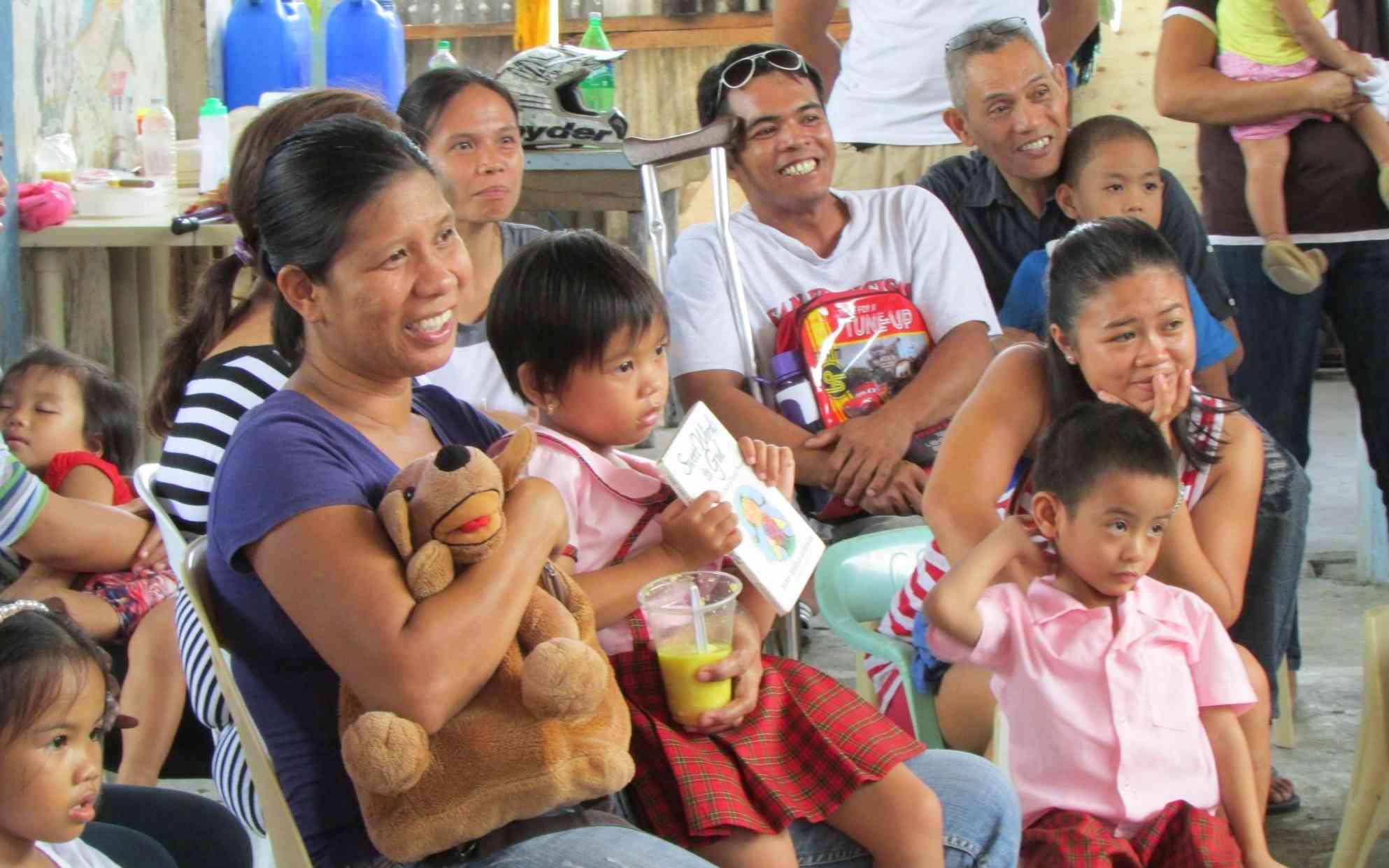
    Eight KABALAKA Camps were held over the duration of the project, which brought together students and teachers from schools around Iloilo to participate in DRR education activities.

    File
    Facilitation at a KABALAKA Camp (160.01 KB)
    KABALAKA Gallery (Iloilo City DRR Information and Exhibit Center)
    Intended date of delivery
    31 January 2017

    This facility provides citizens of Iloilo to learn about the disasters they are at risk of and about how they can prepare themselves for them. This interactive DRR learning center offers an opportunity for citizens to be engaged in self-help and mutual help efforts on disaster preparedness and learn about the City of Iloilo's official disaster preparedness plans.

    Link
    https://kathyvillalon.blogspot.com/2019/02/learning-center-helps-prepare-ilongg…
    Over 13,000 DRR facilitators trained.
    Intended date of delivery
    31 March 2017

    Over the course of 5 years, various facilitators and trainers were trained to work on specific DRR areas including the vulnerable sector and the education sector (for example, see pages 9, 12, 19, and 20 of the Completion Report). The city councilors and officials from various departments were also trained and oriented on developing DRR centered policies as well as integrating sustainable programs. See the full Completion Report in the link below.

    Link
    http://citynet-yh.org/english/wp-content/uploads/2015/10/2015-CBARAD-Annual-Rep…

    Porgress report

    Progress date
    1 December 2020
    Summary

    The project was completed in March 2017 with concrete outcomes as indicated in the deliverables.

    However, many of the activities are now run under the city government's initiatives including the DRR education activities at schools. While the COVID-19 pandemic is having an impact on organizing school-based activities, it is expected to resume once schools start operating normally. This also includes the DRR learning center which were being hosted by different universities in the city.

    Achievements at a glance

    The project helped initiate a practice of inclusive and participatory planning for DRR programs and activities including response. Residents in the communities, private sector, academic sector and the city government now work closely to exchange opinions for planning and implementation of the necessary activities.

    Among the active participants in the program are the People With Disabilities (PWD) who are now core members of the DRRM planning. Ownership of the DRR activities now are realized by many participating sectors and has enhanced the overall resiliency of the city.

    Organizations and focal points

    Implementing Organization(s)

    • CITYNET Yokohama Project Office

    Focal points

    Main focal point
    Kendra Hirata (Executive Director, CityNet-Plus Arts Center for Creative Partnerships)

    Partners

    • Plus Arts NPO
    • City of Yokohama
    • Iloilo City Government

    Explore further

    Sendai priorities
    Priority 1Understanding disaster risk
    Priority 2Strengthening disaster risk governance to manage disaster risk
    Priority 4Enhancing disaster preparedness for effective response, and to «Build Back Better», rehabilitation and reconstruction
    Sendai targets and indicators
    B-1 (Compound)Number of directly affected people attributed to disasters, per 100,000 population
    B-2Number of injured or ill people attributed to disasters
    B-3Number of people whose damaged dwellings were attributed to disasters
    B-4Number of people whose destroyed dwellings were attributed to disasters
    B-5Number of people whose livelihoods were disrupted or destroyed, attributed to disasters
    E-2 (Compound)Percentage of local governments that have adopted and implemented local disaster risk reduction strategies in line with national strategies
    G-3Number of people per 100,000 that are covered by early warning information through local governments or through national dissemination mechanisms
    G-4Percentage of local governments having a plan to act on early warnings
    G-5Number of countries that have accessible, understandable, usable and relevant disaster risk information and assessment available to the people at the national and local levels
    G-6Percentage of population exposed to or at risk from disasters protected through pre-emptive evacuation following early warning
    Hazards Cyclone, Hurricane and Typhoon Flood Storm surge
    Themes Capacity development Children and Youth Climate change Community-based DRR Preparedness Social impacts and social resilience
    Country and region Philippines
    Sustainable Development Goals SDG11: Sustainable cities and communities SDG13: Climate action SDG16: Peace, justice and strong institutions SDG17: Partnerships for the goals
    Budget scale
    USD 100,000 to < 500,000
    Scope
    National (or local) - Philippines
    Scale of beneficiaries
    More than 10,000 people
    Estimated number of beneficiaries
    13,000 people
    Secured budget size
    100%
    Donors
    Japan International Cooperation Agency
    Umbrella initiative(s)
    CityNet Disaster Cluster
    Videos
    Related links
    Project Webpage
    Facebook

    Is this page useful?

    Yes No
    Report an issue on this page

    Thank you. If you have 2 minutes, we would benefit from additional feedback (link opens in a new window).

    PreventionWeb is the global knowledge sharing platform for disaster risk reduction (DRR) and resilience.

    • Newsletter
    • Submit your content
    • Blog pitches
    • Submission and publishing policy
    • About PreventionWeb
    • Contact us

    Hazards

    • Avalanche
    • Cold Wave
    • Cyclone, Hurricane and Typhoon
    • Drought and Desertification
    • Earthquake
    • Epidemic and pandemic
    • Flood
    • Heatwave, extreme heat and heat stress
    • Insect infestation
    • Land subsidence
    • Landslide
    • Nuclear, biological, chemical (NBC)
    • Sea level rise
    • Technological hazard
    • Thunderstorm
    • Tornado
    • Tsunami
    • Volcano
    • Wildfire

    Regions

    • Africa
    • Americas
    • Asia
    • Europe
    • Oceania

    Themes

    Understanding & managing risk

    • Preparedness
    • Early warning
    • GIS and mapping
    • Data and information management
    • Risk identification and assessment
    • Small Island Developing States
    • Earth Observation

    Natural environment

    • Climate change
    • Environment and ecosystems
    • Food security and agriculture
    • Water

    Cross-cutting

    • Systemic risk
    • Recovery

    Human development

    • Capacity development
    • Children and youth
    • Civil society / NGOs
    • Community-based DRR
    • Cultural heritage
    • Gender
    • Human mobility
    • Inclusion
    • Social impacts and resilience

    Science, knowledge & advocacy

    • Disaster risk communication
    • Traditional and Indigenous knowledges
    • Science-policy-practice interface

    State, governance & economy

    • Financing DRR
    • Fragility and conflict
    • Governance
    • Insurance and risk transfer
    • Private sector

    Infrastructure & critical services

    • Critical infrastructure
    • Education and school safety
    • Health and health facilities
    • Structural safety
    • Urban risk and planning
    Loading