
Telecross Redi: Heatwave service
Extreme weather events pose significant risks to vulnerable populations, especially those who are isolated or have underlying health conditions. In response to this challenge, Telecross Redi, a free life-saving service, was developed to support individuals during such critical times.
Activated when extreme heat is declared, Telecross Redi ensures that at-risk individuals receive the necessary support to navigate these hazardous conditions safely, this case study explores the preparedness, activation, and operational strategies of the service.
Background
The service started as a result of the heatwave that swept across South Australia in January and February 2009, which resulted in numerous fatalities and hospitalizations. By providing regular check-in calls, Telecross Redi not only helps individuals prepare for and cope with extreme weather but also offers peace of mind to their families and carers.
This proactive approach involves Red Cross volunteers who call registered clients, checking on their wellbeing and reminding them of vital measures to stay safe. In cases where calls go unanswered, an emergency procedure is promptly activated to ensure client safety.
Telecross Redi is designed to assist isolated community members who live alone and who are particularly at risk during extreme weather events, including those who have disabilities, are housebound, frail, elderly, or recovering from illness.
This case study explores the operational framework of Telecross Redi, its impact during critical weather events, and its role in enhancing community resilience against climate-related challenges.
Implementation: support and self-efficacy
In South Australia, the Telecross Redi Service was developed to support community members during extreme heatwaves, which have a high global mortality and morbidity rate. The program aims to mitigate the adverse effects of heatwaves by providing essential support to vulnerable populations.
Preparedness is a critical component of the Telecross Redi Service. Prior to heatwave events, the program focuses on enabling self-efficacy and promoting proactive behaviors among its clients. This includes ensuring that emergency contacts and addresses are up to date, discussing strategies to expand resilience, and encouraging reliance on neighbors or other safe contacts. The goal is to build a network of support and ensure that vulnerable individuals are ready to handle extreme heat conditions.
During heatwaves, each client receives a daily call from volunteers to check on their well-being. If a client feels unwell, an escalation process is activated immediately. This service primarily targets individuals who live alone or with another vulnerable person, such as the elderly or those with health issues who are at risk of falling through the cracks of attention systems and health care. Clients are sourced through self-registration, family referrals, and healthcare providers, with approximately 38% of clients registering privately and 62% being referred by healthcare providers.
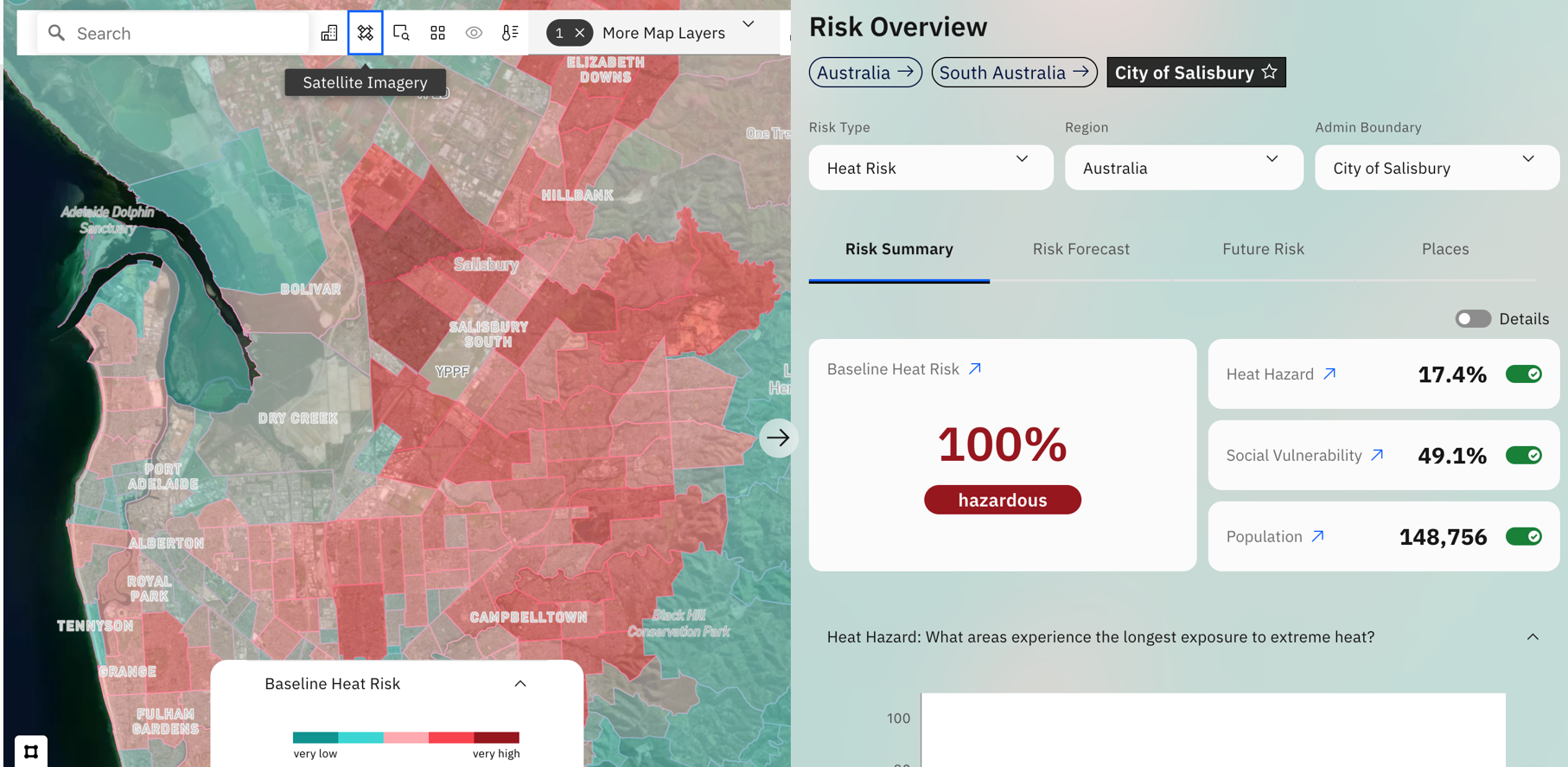
Screenshot of Climasens, a climate risk analytics platform used by the Australian Red Cross to assess heat risk and identify vulnerable populations.
The program leverages a sophisticated platform known as Climasens, funded by Humanitech and the Australian Red Cross. It uses real-time data to overlay heat risk maps with baseline heat risks, exposure levels, and vulnerabilities. This platform helps identify the most at-risk areas and individuals, ensuring targeted outreach and efficient use of resources. The service is promoted through various channels to ensure those most vulnerable are aware and can enroll. The platform also supports advocacy efforts with local councils to secure funding and improve service delivery.
Service activation is tightly coordinated with meteorological forecasts and state emergency services. The Bureau of Meteorology (BOM) provides early heatwave weather data forecasts. The State Emergency Service (SES), as the control agency for extreme weather events in South Australia, releases aligned forecasts based on the Bureau's data and heatwave warnings when required. When a heatwave is imminent, the Department of Human Services activates the Telecross Redi service, which is then implemented by the Australian Red Cross. Volunteers, who can log in from anywhere in the country, conduct telephone welfare checks on clients, monitoring both physical and mental health. If a client reports feeling unwell, emergency contacts are notified of a home visit. In cases where there are no emergency contacts, the service escalates to providers, or police visit the client in-person, and providers have their own process, which may include telephone and home visits.
The period of activity for the Telecross Redi Service has expanded due to increasing heatwave events. While the hottest months are typically December - February, an extreme heatwave occurred in the second week of March 2024. As we navigate longer summers due to a changing climate, a longer period of service readiness is required. This shift requires continuous reflection, reporting, and adaptation of strategies. Each year, the service undergoes a comprehensive review from March to April to evaluate performance and develop recommendations for improvement. This process ensures that the service remains responsive and effective in the face of changing climate patterns.
The Telecross Redi Service represents a proactive and adaptive approach to managing the risks associated with heatwaves. By focusing on preparedness, utilizing advanced data platforms, and maintaining flexible operational strategies, the service effectively supports the most vulnerable members of the community during extreme heat events.
Key good practices
Expanding Through Training and Knowledge Sharing
One of the exemplary practices in expanding the Telecross Redi Service is the training and knowledge-sharing initiatives facilitated by the International Federation of Red Cross and Red Crescent Societies (IFRC) and the Hellenic Red Cross in Athens. These training sessions were designed to introduce the Telecross Redi program and provide comprehensive guidance on how to establish similar services. By engaging directly with new regions and equipping them with the necessary skills and knowledge, the program ensures a standardized approach to addressing heatwave-related risks globally. This method has also been adopted by the Canadian Health Community of Practice, further underscoring the importance of international collaboration in enhancing community resilience against heat hazards.
Integrating Heat Hazards into Educational Programs
A notable good practice is the integration of heat hazard education into the Pillowcase Program, which targets children. This initiative combines lessons on various hazards, including heat, with household preparedness strategies. By educating children about the dangers of extreme heat and how to prepare for it, the program fosters a culture of preparedness from a young age. This early education is pivotal in creating informed and resilient communities that are better equipped to handle heatwaves and other emergencies.
Framework for Continuous Improvement
A good practice is the establishment of a framework for continuous improvement through regular training and assessments. By continually updating standard operating procedures and training materials, the program can adapt to new challenges and integrate the latest best practices. This commitment to ongoing evaluation and enhancement ensures that the program remains effective and relevant, capable of meeting the evolving needs of vulnerable populations during increasingly frequent and severe heatwaves.
Data Security
Given that the service relies heavily on personal information to reach out to clients and escalate calls for home visits, maintaining privacy and confidentiality is key in maintaining the program. Every volunteer undergoes thorough training in confidentiality to ensure that client information is handled appropriately. It's important to collect data that is really needed. Accordingly, data is securely backed up offline and is accessible only on a need-to-know basis, minimizing the risk of unauthorized access. For reporting purposes, all personal identifiable information is anonymized; only aggregate demographics and analytics are shared with funders, stakeholders, and the Australian Red Cross.
This approach not only protects client privacy but also builds trust and ensures compliance with data protection regulations, enhancing the overall integrity and effectiveness of the service.
Key Lessons Learned
Service Continuity
One of the most significant lessons learned over the 13-year operation of the Telecross Redi Service is the importance of maintaining service continuity. The program's success hinges on its ability to function seamlessly, even when staff members are absent. This has been achieved through the development and constant refinement of standard operating procedures and comprehensive guides for both administrators and volunteers. These documents ensure that all activities are clearly defined and can be executed without interruption, guaranteeing that vulnerable individuals receive consistent support during heatwaves.
"Many of our clients are socially isolated and heat waves just makes it worse; during every heat wave we talk to a lot of lonely people. For many, the phone call from the Red Cross heatwave response may have been their only connection with another person on those days. We remind people to stay hydrated and not to do too much - simple advice but it makes a big difference to how they feel and how well they can cope with the challenges of the heat."
- Peg, one of the Volunteers
Importance of Relationships with Stakeholders
Maintaining strong relationships with stakeholders and agencies is crucial for the program's success. As any organization or government's policies can change over time, it's important to keep in contact with stakeholders to ensure changes are navigated proactively. For example, the South Australian Police (SAPOL) changed the threshold for delivering welfare checks, which would have significantly impacted the later stages of the escalation process. Negotiations led to a continued partnership with SAPOL, and reinforced the need to maintain and build strong relationships with stakeholders. This adaptability underscores the importance of having a robust network of partners who can step in and provide support, ensuring that the program can continue to operate effectively despite policy shifts or other external changes.
Clarity in Agreements
Clear understanding and management of Memoranda of Agreements (MOAs) are essential. These agreements guide the actions of the program and provide necessary legal coverage when delivering services. Ensuring that legal teams from all participating agencies review and confirm practices related to privacy, confidentiality, and consent for data usage can become a best practice in the long run. This legal clarity not only protects the program but also ensures that all parties are aligned in their expectations and obligations, facilitating smooth operations.
Importance of Indicators
Once the program is underway, having clear indicators to measure both internal and external actions is crucial. These indicators provide a baseline for monitoring progress, evaluating performance, and identifying areas for improvement. They are also essential for securing additional funding, as they offer concrete evidence of the program's impact and effectiveness. By establishing and regularly reviewing these indicators, the program can adapt and improve its strategies, ensuring it meets its objectives and provides maximum benefit to its clients.
Effective Reporting
Setting up a systematic reporting cycle that aligns with the seasonal calendar and timeline of events is vital. This approach ensures that reporting is timely and relevant, focusing on periods when heatwaves are most likely to occur and delivering performance review after the heatwave occurrence cycle has winded down. Prioritizing actions during heatwave alert periods and reporting during off-season periods enhance the program's responsiveness and effectiveness. Regular, structured reporting also helps in maintaining transparency, accountability, and continuous improvement, as it provides clear documentation of activities and outcomes which can be reviewed and analyzed for future planning.